アバター→マスコット着ぐるみ:アイデンティティ固定の着替えプロンプト
avi を唯一のアイデンティティの権威として固定し、キャラクターデザインにインスパイアされた mascot suit に着せる;顔の形/目の色/比率を厳密に固定。ファンアート/OCグッズの画像生成テンプレート。
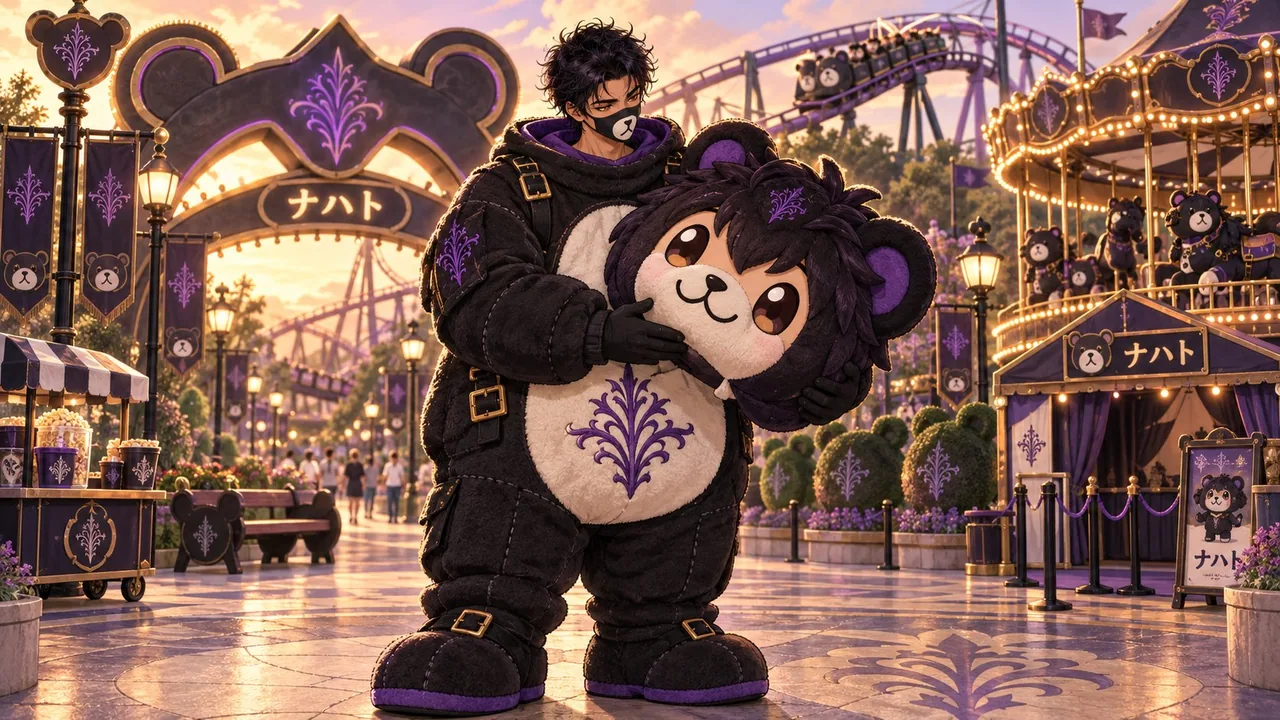
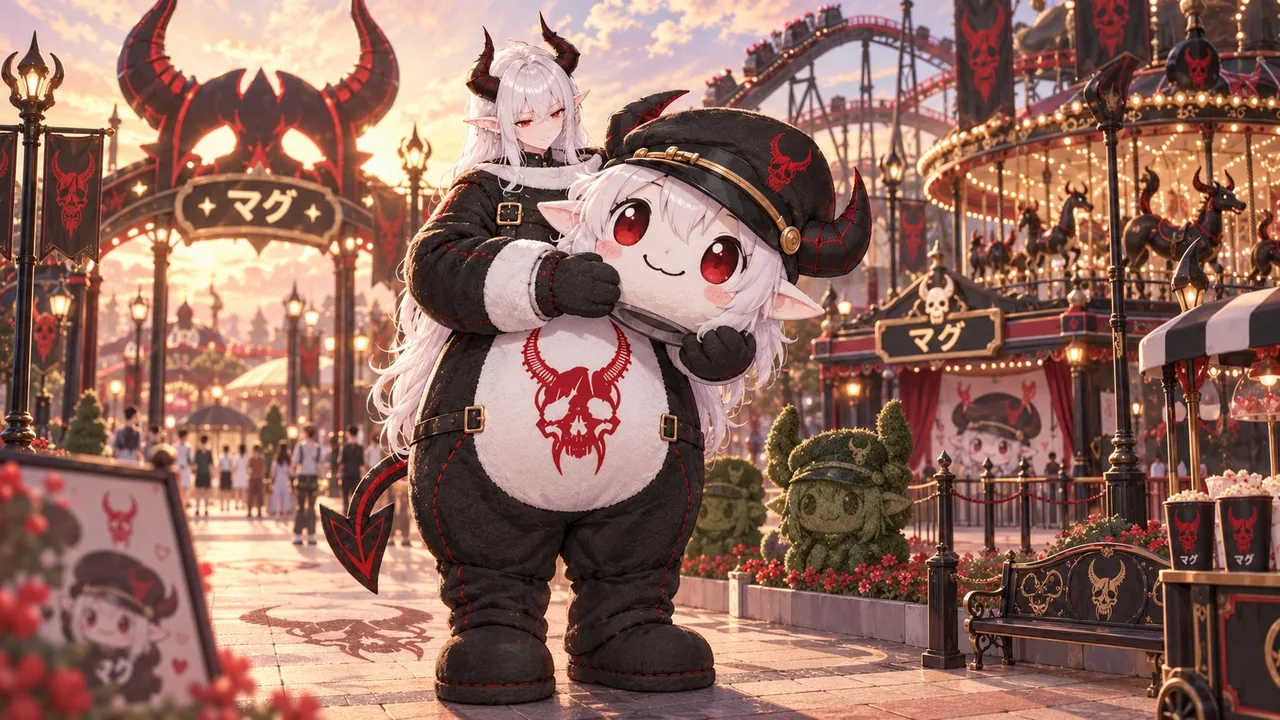
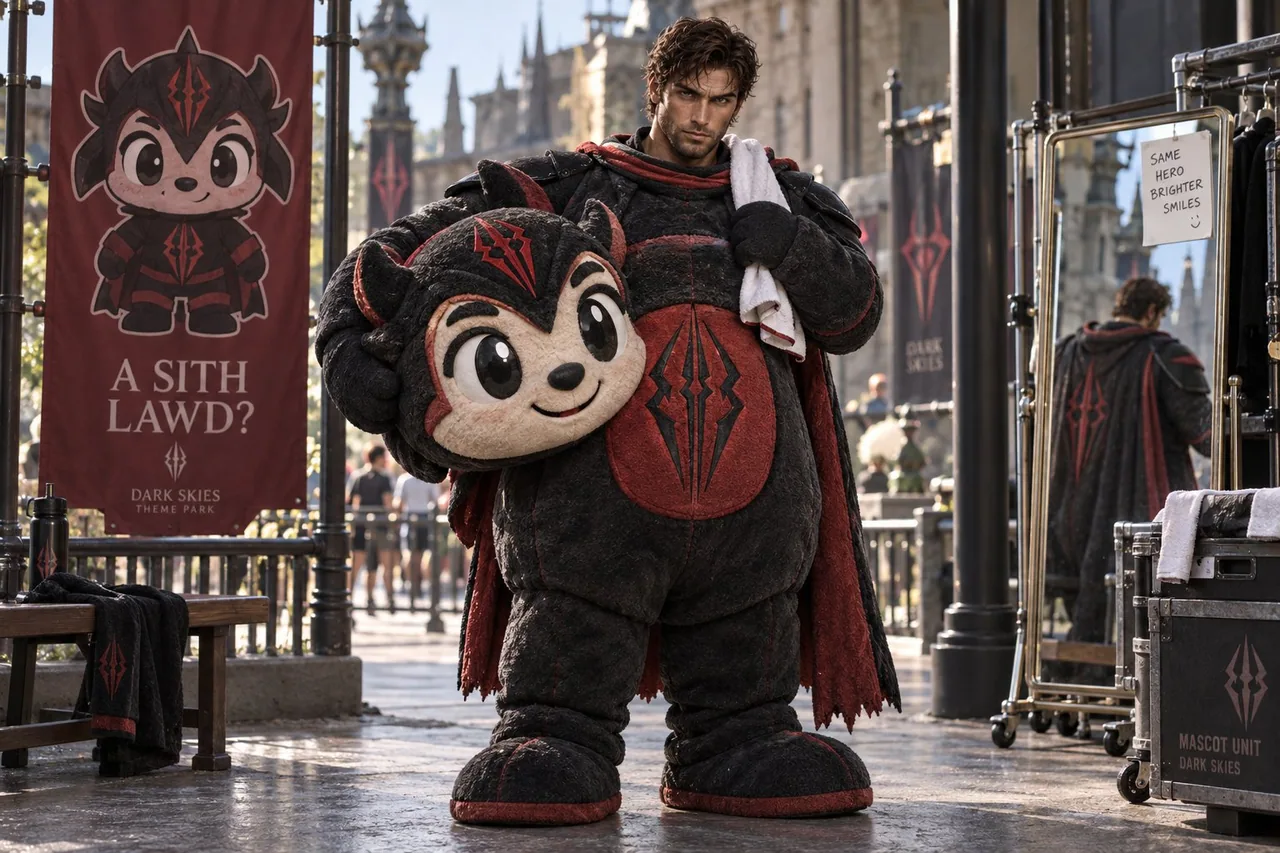
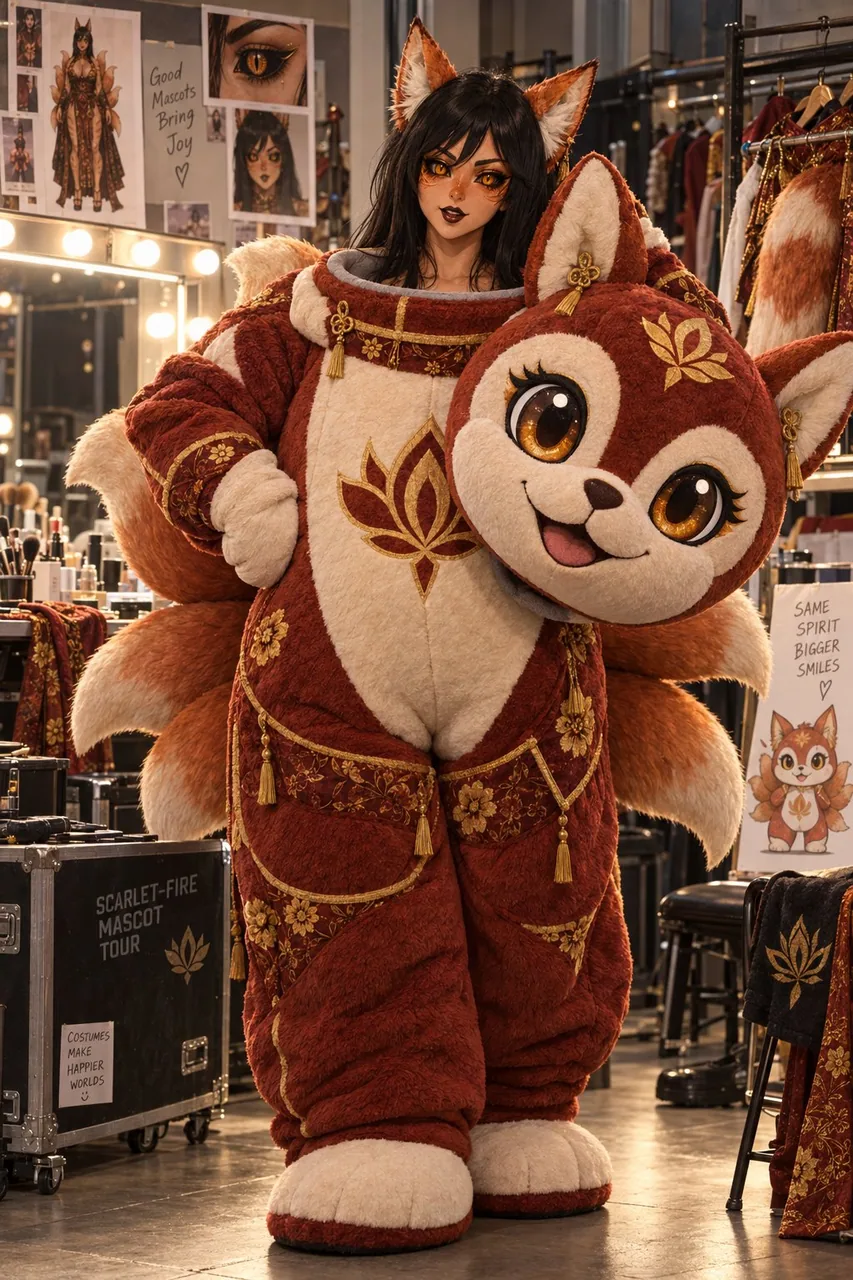
プロンプト
⚠️New Prompt⚠️
Your avi wearing a mascot suit inspired by their design

Examples are Me, @MagsNoctis @ASithLawd and @RaelinAI

⚠️Prompt👇

@Image1 = Character Identity Authority. It is the complete and only source of truth for the character's face shape, eye shape, eye color, hairstyle, hair color, species traits, body type and build, signature outfit, accessories, color palette, key motifs, silhouette and overall vibe. Every single element of this image is derived from @Image1 and from nothing else. @Image1 contains exactly ONE character, and that character is the only main character in the output image.

STEP 1 — DESIGN READ (perform this analysis first, before composing anything).
Read @Image1 and extract, in this order:

1. The exact palette — the two dominant colors and up to three accent colors, recorded by name.
2. The signature motif or emblem — the shape, symbol or hardware that repeats across the design and reads as this character's personal logo.
3. The silhouette — hair volume and shape, shoulder line, leg line, and the forms of any tail, wings, horns, fins or extra limbs.
4. The species traits and exactly how they sit on the body (animal ears, horns, antennae, tail, markings, plating, scales, feathers).
5. The material language of their outfit — fabric weights, textures, trims, hardware, stitching, sheen, wear and tear.
6. Their vibe — the emotional register the entire design projects.
Everything built later in this prompt must be traceable back to this read. If an element cannot be traced to @Image1, delete it.

STEP 2 — THE MASCOT CHARACTER (the park's mascot, which the suit represents).
Design a mascot character that is a chibi caricature of the person in @Image1 — the same individual, translated into a Japanese yuru-chara mascot. It must be instantly recognizable as this character and simultaneously a soft, friendly, plush toy. Requirements:

- Chibi proportions: roughly 2.5 heads tall, no neck, head mass equal to about half the total body, dome-shaped skull wider than the shoulders, cylindrical padded torso, short stubby arms that cannot reach past its own chest, short rounded legs, wide flat oval feet.
- The face is a stylized plush mask face, never a realistic fur-covered replica of a real face: two large glossy oval eyes with a single hard specular highlight each, a soft sculpted foam brow, a small rounded stitched nose, and a wide friendly embroidered smile line.
- The mascot wears the character's signature motif as a large appliqué patch on its belly bib, and repeats it smaller on the skull.
- Skin, fur, hair and fabric colors are taken directly from the character's palette read in Step 1 — a two-tone color break is expected where the character's hair color meets their outfit colors.
- Species traits (ears, horns, antennae, tail, fins, wings) are rebuilt as oversized rounded foam-and-plush forms at two to three times their natural scale, clearly soft and toy-like, never anatomically real.
- Any signature accessory from @Image1 is rebuilt as a chunky plush version of itself, scaled up, with stitched and appliquéd hardware instead of metal.
- The mascot's expression is permanently cheerful, wide and inviting — the fixed, endearing smile of a park mascot.

STEP 3 — THE SUIT ITSELF (Japanese kigurumi construction).
The costume is a real, physically constructed mascot suit, and it must read as a suit, not as a living creature and not as a flat onesie pyjama. Model the construction honestly:

- Padded plush shell over an interior foam armature, visibly thick and slightly quilted at the seams.
- Short-pile boa / shag plush pile surface with a soft, fuzzy, light-catching nap; rooted or needle-punched blocks of color; visible raised seam ridges running over the shoulders, chest and legs.
- Panel seams and sewn panel breaks where the color blocks change; darts and topstitching in a slightly darker thread.
- The head piece is a separate sculpted foam-and-fabric unit with a wide collar skirt at its base, sized so the wearer's shoulders fit inside it.
- Mitten hands with stitched finger lines and no visible claws; flat wide oval feet with a thick sole rim.
- A hidden zipper at the back of the neck, a walking slit at the back of the legs, a small fabric brand tag sewn into a hem, and the inside of the neck opening showing a ring of grey foam and a hint of dark interior mesh.
- The whole suit is generously stuffed and slightly too round for the person wearing it, so it holds the plush toy silhouette even when occupied.

STEP 4 — THE WEARER (the character, mid-costume-change).
The character from @Image1 is wearing the suit — the body of the costume is fully on, fastened up to the shoulder cowl — but the suit's HEAD PIECE is OFF. The character's own head, face, hairstyle, hair color, eyes and species traits are fully visible and unchanged above the rolled-down collar of the suit, exactly as in @Image1. Their own identity is the point: the face in this image is the reference's face, unmistakable and untouched.
The huge plush head piece is cradled in the character's arms at hip and waist height, held under one arm and across the body, its chin tilted upward and its plush face turned outward toward the viewer's side of the frame. One hand supports it from beneath, the other rests flat on its side. Because the head piece is oversized and soft, it sags and tips slightly in their grip.
The padding of the suit makes the performer's real head look small and delicate on top of those enormous plush shoulders — that contrast is the charm of the shot. The suit's cowl sits low and loose around the character's collar and does not cover their chin, jaw, ears, hair or any part of their face or head.
There is exactly one mascot head in the image, and exactly one character: the head piece exists only as the object in their arms. Nobody is wearing it.

STEP 5 — THE THEME PARK (entirely derived from @Image1).
Build a full theme park whose every structure, sign, ride, prop and color is derived from this specific character's design language. Nothing here may be generic.

- The entrance arch is constructed from the character's signature motif, scaled up as an architectural form.
- The main avenue is lined with lamp posts whose finials repeat the character's emblem, and with banners printed with the character's motif as a repeating pattern in their palette.
- At least one ride is a direct translation of the character: a carousel whose figures are the character's motif repeated, or a teacup ride whose cars are shaped as their signature accessory, or a coaster whose track and trains carry their two dominant colors and their emblem on the lead car.
- Topiary hedges are clipped into the mascot's own rounded silhouette, standing in a row.
- A parade float sits parked at the kerb, built as a larger version of the same mascot, its plush surfaces matched to the suit's fabric.
- A meet-and-greet pavilion with a queued rope line, a small stage and a painted backdrop of the character's motif.
- Snack carts, popcorn boxes and drink cups carry the character's palette and emblem.
- Water fountains, planters, paving inlay, benches and bins all repeat the palette and motif.
The park's color scheme IS the character's color scheme. Nothing in the park uses a color that does not appear in @Image1, apart from neutral concrete, asphalt and living greenery. Do not import generic theme-park iconography: no fairytale castle, no mouse-eared silhouette, no generic rockets or planets, no universally recognizable ride shapes — every silhouette must be traceable to this character.
Signage lettering is kept short: one to three characters' worth of a kana-style display logotype per sign, ideally just the mascot's short name on the pavilion signboard, with a simple emblem. No paragraphs of text, no signage covered in words.

Background visitors are permitted as soft, heavily out-of-focus secondary figures in everyday summer park clothes, at a distance, occupying less than a fifth of the frame. They are anonymous, generic and never resemble the main character, never wear this mascot suit, and never wear the character's outfit or colors.

STEP 6 — POSE, CAMERA AND COMPOSITION.
16:9 widescreen. The character stands full-body in the foreground, slightly right or left of centre, occupying most of the frame height, weighted onto one hip, relaxed, mid-moment, as though they have just stepped out of the meet-and-greet tunnel and paused.
Their gaze is directed DOWN at the plush face in their arms, warm and amused. The character does not look at the camera; the camera does not exist to them.
Camera: eye level to slightly low, medium-wide lens, close enough that the plush pile of the suit and every stitch line is legible, far enough to include the avenue and pavilion behind. Depth layering is explicit: the character and the held head piece in sharp focus in the foreground, the avenue and rides in the midground, the park's far structures and sky softening into the background. Shallow depth of field, but the character's face is the sharpest point in the frame. The character's real face sits in the upper third and stays the clear focal point, brighter and more contrasty than the park behind.

STEP 7 — LIGHTING AND MOOD.
Late golden-hour afternoon, low warm sun raking across the frame from behind the pavilion, catching the plush pile and outlining the character's shoulders and hair in a soft warm rim. Neon and bulb string lights on the avenue and pavilion are already warming up and spill a soft candy-colored bounce light in the character's own accent colors onto the underside of the plush head and across the character's face. Park signage emits a gentle glow. Airy, joyful, candid, bright — a sunny behind-the-scenes moment with a slight nostalgic filmic warmth, no heavy shadows, no gloom.

STEP 8 — QUALITY AND RENDERING BAR.
Highly detailed 2.5D anime realism, keeping the exact stylization of @Image1 — never photorealism, never 3D-CGI renders, never a photograph. Polished, premium-quality stylized illustration with clean linework, crisp readable forms, rich tactile material rendering (plush pile, foam, stitched seams, appliqué, painted signage) and confident, appealing character acting. Anatomy Quality: correct proportions, five fingers on each hand, natural wrists and elbows, hands that grip the head piece convincingly without sinking into or merging with its surface, no extra or missing limbs, no warped joints, no distorted or melting fingers, no feet vanishing into the ground.

GPT Image Guidelines: this is a family-friendly, fully-clothed, tasteful theme-park illustration. All depictions are clearly fictional, stylized and illustrated. The character is fully covered by the costume. Nothing is revealing, nothing is explicit, nothing is fetishized, and no suggestive framing is used.

NEGATIVE PROMPT: extra characters, second mascot suit, someone wearing the mascot head, mascot head worn on the character's head, two mascot heads, duplicate character, clone, mirrored figure, background figure that resembles the main character, extra limbs, extra fingers, missing fingers, fused fingers, malformed hands, deformed feet, distorted face, melting anatomy, asymmetrical eyes on the character's real face, changed identity, different person, off-model character, photorealism, real photograph, live-action costume, furry fursuit realism, anatomically real animal features, horror animatronic, creepy empty eyes, dead stare, scary mascot, western sports muscle mascot suit, inflatable costume, flat fabric onesie pyjama, plain kigurumi blanket, cheap cosplay, generic theme park, fairytale castle, mouse-ear silhouette, crowded frame, subject too small, subject blurry, busy background, garbled text, misspelled signage, paragraphs of text on signs, watermark, signature, logo, cropped head, cut-off feet, flat lighting, murky colors.

FINAL GOAL: one clearly illustrated scene — the character of @Image1 standing in a theme park built entirely out of their own design language, wearing a hand-built Japanese-style chibi mascot suit of themselves from the neck down, their real face and hair bright and unchanged above the collar, the oversized plush chibi head piece cradled in their arms and turned outward, everything in the frame traceable to their own colors, motifs and silhouette.

DO NOT: redesign, restyle or reimagine the character's identity, face, hairstyle, hair color, eye color or species traits. Do not put the mascot head on the character's head. Do not add a second character, a second suit, or any figure that mirrors, duplicates or resembles the reference character. Do not turn the suit into a living creature, a real animal, a photoreal fursuit or a CGI mascot. Do not use a generic theme park or generic theme-park iconography. Do not make the background busier or brighter than the main subject. Do not render the character tiny, distant, blurry, cropped or unreadable. Do not produce malformed anatomy, extra limbs, distorted hands, warped faces or muddy textures. Do not use photorealism or photographic rendering. Do not cover, hide, soften or obscure the character's face and hairstyle. Do not add text longer than a short sign name. Do not let the park's palette introduce colors that are absent from @Image1.
日本語訳
⚠️新しいプロンプト⚠️
あなたの avi が、そのデザインにインスパイアされたマスコットスーツを着ている

例は私、@MagsNoctis @ASithLawd、@RaelinAI

⚠️プロンプト👇

@Image1 = キャラクター・アイデンティティの権威。これはキャラクターの顔の形、目の形、目の色、髪型、髪色、種族の特徴、体型と体格、トレードマークの衣装、アクセサリー、カラーパレット、主要モチーフ、シルエット、そして全体的な雰囲気についての、完全かつ唯一の情報源である。この画像のすべての要素は @Image1 から導かれ、それ以外の何ものからも導かれない。@Image1 にはちょうど1人のキャラクターだけが含まれており、そのキャラクターが出力画像における唯一のメインキャラクターである。

ステップ1 — デザインの読み取り(何かを構成する前に、まずこの分析を行う)。
@Image1 を読み、次の順序で抽出する:

1. 正確なパレット — 2つの主要色と最大3つのアクセント色を、名前で記録する。
2. トレードマークのモチーフまたはエンブレム — デザイン全体で繰り返され、このキャラクターの個人的なロゴとして読める形、記号、または金具。
3. シルエット — 髪のボリュームと形、肩のライン、脚のライン、そして尻尾、翼、角、鰭、その他の追加の手足の形。
4. 種族の特徴と、それらが体のどこにどのように位置するか(動物の耳、角、触角、尻尾、模様、装甲、鱗、羽毛)。
5. 衣装の素材言語 — 生地の厚み、テクスチャ、縁飾り、金具、縫い目、光沢、着古し感。
6. その雰囲気 — デザイン全体が醸し出す感情的なトーン。
このプロンプトで後から構築されるすべてのものは、この読み取りに遡って辿れなければならない。@Image1 に辿れない要素は削除する。

ステップ2 — マスコットキャラクター(パークのマスコットであり、スーツがそれを表す)。
@Image1 の人物をちびキャラ化したマスコットキャラクターをデザインする — 同じ個人を、日本のゆるキャラマスコットに翻訳したもの。それはこのキャラクターだと瞬時に認識でき、同時に柔らかく親しみやすいぬいぐるみでなければならない。要件:

- ちびの比率:およそ頭身2.5、首なし、頭の質量は全身の約半分、肩より広いドーム型の頭蓋、円筒形で詰め物をした胴、自分の胸までしか届かない短くずんぐりした腕、短く丸い脚、幅広で平らな楕円形の足。
- 顔は様式化されたぬいぐるみマスクの顔であり、本物の顔を毛皮で覆った写実的な複製では決してない:大きな光沢のある楕円形の目が2つ、それぞれに硬い鏡面ハイライトが1つ、柔らかく彫られたフォームの眉、小さく丸い縫い付けられた鼻、幅広く友好的な刺繍の微笑みライン。
- マスコットはキャラクターのトレードマークのモチーフを、腹のよだれかけに大きなアップリケパッチとして着け、頭蓋にもより小さく繰り返す。
- 肌、毛皮、髪、生地の色は、ステップ1で読み取ったキャラクターのパレットから直接取る — キャラクターの髪色と衣装の色が出会うところで、2トーンの色分けが生じることが想定される。
- 種族の特徴(耳、角、触角、尻尾、鰭、翼)は、自然な大きさの2〜3倍の、特大で丸いフォームとぬいぐるみの形として再構築され、明らかに柔らかくおもちゃのようで、解剖学的に本物では決してない。
- @Image1 のトレードマークのアクセサリーは、それ自体のずんぐりしたぬいぐるみ版として再構築され、拡大され、金属の代わりに縫い付けとアップリケの金具を用いる。
- マスコットの表情は常に陽気で、大きく開かれ親しみを誘う — パークのマスコットの、変わらない愛らしい笑顔。

ステップ3 — スーツそのもの(日本の着ぐるみの構造)。
この衣装は実際に物理的に作られたマスコットスーツであり、生き物としてでも、平らなつなぎパジャマとしてでもなく、スーツとして読めなければならない。その構造を正直にモデリングする:

- 内部のフォームアーマチュアの上に詰め物をしたぬいぐるみの外殻、目に見えて厚く、縫い目でわずかにキルティングされている。
- 短毛のボア/シャグのぬいぐるみパイル表面、柔らかく毛羽立ち光を捉える毛並み;植毛またはニードルパンチによる色のブロック;肩、胸、脚の上を走る、浮き上がった縫い目の隆起。
- 色のブロックが変わる箇所のパネル縫い目と縫い分け;やや濃い糸によるダーツとトップステッチ。
- 頭部は別体の、彫刻されたフォームと布によるユニットで、その基部に幅広い襟のスカートがあり、着用者の肩がその中に収まる大きさ。
- ミトンの手には縫い付けられた指のラインがあり、目に見える爪はない;厚いソールの縁を持つ、平らで幅広の楕円形の足。
- 首の後ろの隠しファスナー、脚の後ろの歩行用スリット、裾に縫い付けられた小さな布のブランドタグ、そして首の開口部の内側には灰色のフォームのリングと暗い内部メッシュがわずかに見える。
- スーツ全体はたっぷりと詰め物をされ、着ている人にはやや丸すぎるほどで、人が入っていてもぬいぐるみのおもちゃのシルエットを保つ。

ステップ4 — 着用者(キャラクター、着替えの途中)。
@Image1 のキャラクターがこのスーツを着ている — 衣装の胴体は完全に装着され、肩のカウルまで留められている — しかしスーツの頭部パーツは外れている。キャラクター自身の頭、顔、髪型、髪色、目、種族の特徴は、スーツの折り返された襟の上で完全に見えており、@Image1 とまったく同じである。彼ら自身のアイデンティティが要点である:この画像の顔は参照元の顔であり、紛れもなく、手を加えられていない。
巨大なぬいぐるみの頭部パーツは、腰と胴の高さでキャラクターの腕に抱えられ、片腕の下に抱えられ体を横切るように保持され、その顎は上向きに傾けられ、ぬいぐるみの顔はフレームの鑑賞者側へ向けられている。片方の手が下から支え、もう片方の手がその側面に平らに添えられている。頭部パーツは特大で柔らかいため、その握りの中でわずかに垂れ、傾く。
スーツの詰め物のせいで、演者の本物の頭はそれら巨大なぬいぐるみの肩の上で小さく繊細に見える — その対比がこのショットの魅力である。スーツのカウルはキャラクターの襟の周りで低く緩く位置し、顎、あごのライン、耳、髪、顔や頭のどの部分も覆わない。
画像内のマスコットの頭はちょうど1つ、キャラクターもちょうど1人である:頭部パーツは彼らの腕の中の物体としてのみ存在する。誰もそれを被っていない。

ステップ5 — テーマパーク(完全に @Image1 から導かれる)。
あらゆる構造物、看板、アトラクション、小道具、色が、この特定のキャラクターのデザイン言語から導かれる完全なテーマパークを構築する。ここで汎用的なものであってはならない。

- 入口のアーチは、キャラクターのトレードマークのモチーフから、建築形態として拡大されて構築されている。
- メインの並木道には、その頂部飾りがキャラクターのエンブレムを繰り返す街灯が並び、キャラクターのモチーフをパレットの反復パターンとして印刷したバナーが掛かっている。
- 少なくとも1つのアトラクションはキャラクターの直接的な翻訳である:そのフィギュアがキャラクターのモチーフの繰り返しであるメリーゴーラウンド、その車両がトレードマークのアクセサリーの形をしたティーカップ、またはその軌道と列車が2つの主要色を帯び、先頭車両にエンブレムを載せたコースター。
- トピアリーの生け垣は、マスコット自身の丸いシルエットに刈り込まれ、一列に並んでいる。
- パレードのフロートが道端に停められており、同じマスコットのより大きな版として作られ、そのぬいぐるみの表面はスーツの生地に合わせられている。
- 行列用のロープを備えたグリーティングパビリオン、小さなステージ、キャラクターのモチーフを描いた背景。
- スナックカート、ポップコーンの箱、ドリンクカップは、キャラクターのパレットとエンブレムを帯びている。
- 噴水、プランター、舗装のインレイ、ベンチ、ゴミ箱はすべてパレットとモチーフを繰り返す。
パークの配色はキャラクターの配色そのものである。ニュートラルなコンクリート、アスファルト、生きた緑を除いて、パーク内で @Image1 に現れない色を使うものは何もない。
看板の文字は短く保つ:看板ごとにかな風のディスプレイロゴタイプで1〜3文字分、理想的にはパビリオンの看板にマスコットの短い名前だけを、シンプルなエンブレムとともに。文章の段落はなし、言葉で埋め尽くされた看板もなし。

背景の来場者は、柔らかく、ひどくピントの外れた二次的な人物として許可される。日常的な夏のパークの服装で、距離があり、フレームの5分の1未満を占める。彼らは匿名で汎用的であり、メインキャラクターに似ることは決してなく、このマスコットスーツを着ることも、キャラクターの衣装や色を身につけることも決してない。

ステップ6 — ポーズ、カメラ、構図。
16:9 ワイドスクリーン。キャラクターは前景に全身で立ち、中央からやや右または左に寄り、フレームの高さの大部分を占め、片方の腰に重心を置き、リラックスして、途中の瞬間 — ちょうどグリーティングのトンネルから出てきて立ち止まったかのように。
その視線は腕の中のぬいぐるみの顔へと下向きに注がれ、温かく、面白がっている。キャラクターはカメラを見ない;彼らにとってカメラは存在しない。
カメラ:目線の高さからやや低め、中広角レンズ、スーツのぬいぐるみパイルとすべての縫い目が読み取れるほど近く、背後に並木道とパビリオンを含められるほど遠く。奥行きの階層化は明確:前景のキャラクターと抱えられた頭部パーツは鋭いピント、中景に並木道とアトラクション、背景へとパークの遠い構造物と空が柔らかくぼける。浅い被写界深度だが、キャラクターの顔がフレーム内で最も鋭い点である。キャラクターの本物の顔は上部3分の1にあり、明確な焦点であり続け、背後のパークより明るくコントラストが強い。

ステップ7 — ライティングとムード。
ゴールデンアワーの午後遅く、低く温かな太陽がパビリオンの背後からフレームを斜めに照らし、ぬいぐるみパイルを捉え、キャラクターの肩と髪を柔らかな暖色のリムで縁取る。並木道とパビリオンのネオンと電球のストリングライトはすでに温まり始め、キャラクター自身のアクセント色による柔らかなキャンディカラーのバウンス光を、ぬいぐるみの頭の下面とキャラクターの顔にこぼす。パークの看板は穏やかな輝きを放つ。軽やかで、楽しく、自然体で、明るい — 日差しのある舞台裏の瞬間、わずかにノスタルジックなフィルム的な温かみ、重い影はなく、陰鬱さもない。

ステップ8 — 品質とレンダリングの基準。
高精細な2.5Dアニメリアリズム、@Image1 の正確な様式化を保つ — 写真写実主義でも、3D-CGIレンダーでも、写真でも決してない。洗練されたプレミアム品質の様式化イラストで、クリーンな線画、鮮明で読みやすい形、豊かで触感のあるマテリアルレンダリング(ぬいぐるみパイル、フォーム、縫い目、アップリケ、塗装された看板)、そして自信に満ち魅力的なキャラクター演技。解剖学の品質:正しい比率、各手に5本の指、自然な手首と肘、頭部パーツを表面に沈み込ませたり融合させたりせず説得力をもって掴む手、余分な手足や欠けた手足はなし、歪んだ関節はなし、歪んだり溶けたりした指はなし、地面に消える足はなし。

GPT Image のガイドライン:これは家族向けで、完全に服を着た、趣味の良いテーマパークのイラストである。すべての描写は明らかに架空で、様式化され、イラストである。キャラクターは衣装によって完全に覆われている。露出はなく、露骨なものはなく、フェティッシュ化されたものはなく、暗示的な構図も用いられていない。

ネガティブプロンプト:追加のキャラクター、2着目のマスコットスーツ、マスコットの頭を被っている人、キャラクターの頭に被せられたマスコットの頭、2つのマスコットの頭、重複したキャラクター、クローン、鏡像の人物、メインキャラクターに似た背景の人物、余分な手足、余分な指、欠けた指、融合した指、奇形の手、変形した足、歪んだ顔、溶ける解剖学、キャラクターの本物の顔の非対称な目、変わったアイデンティティ、別人、モデルから外れたキャラクター、写真写実主義、本物の写真、実写の衣装、ファーリーのファースーツリアリズム、解剖学的に本物の動物の特徴、ホラーのアニマトロニクス、不気味な虚ろな目、死んだ視線、怖いマスコット、西洋のスポーツの筋肉質なマスコットスーツ、空気で膨らませるコスチューム、平らな布のつなぎパジャマ、ただの着ぐるみブランケット、安っぽいコスプレ、汎用のテーマパーク、おとぎ話の城、ネズミの耳のシルエット、混雑したフレーム、小さすぎる被写体、ぼやけた被写体、雑然とした背景、文字化けしたテキスト、綴り間違いの看板、看板の文章の段落、ウォーターマーク、署名、ロゴ、切れた頭、切れた足、平坦なライティング、濁った色。

最終目標:明確に描かれた1つのシーン — @Image1 のキャラクターが、自分自身のデザイン言語だけで作られたテーマパークに立ち、首から下は自分自身の手作り日本式ちびマスコットスーツを着て、本物の顔と髪は襟の上で明るく変わらず、特大のぬいぐるみのちび頭部パーツは腕に抱えられ外側を向き、フレーム内のすべてが自分自身の色、モチーフ、シルエットに遡れる。

禁止:キャラクターのアイデンティティ、顔、髪型、髪色、目の色、種族の特徴を再デザイン、再スタイル化、再想像しないこと。マスコットの頭をキャラクターの頭に載せないこと。2人目のキャラクター、2着目のスーツ、参照キャラクターを鏡写しにし、複製し、または似る人物を追加しないこと。スーツを生き物、本物の動物、フォトリアルなファースーツ、CGIマスコットにしないこと。汎用のテーマパークや汎用のテーマパークの図像を使わないこと。背景をメインの被写体より忙しくしたり明るくしたりしないこと。キャラクターを小さく、遠く、ぼやけて、切れて、読めないものにレンダリングしないこと。奇形の解剖学、余分な手足、歪んだ手、歪んだ顔、濁ったテクスチャを生成しないこと。写真写実主義や写真的レンダリングを使わないこと。キャラクターの顔と髪型を覆い、隠し、柔らかくし、または不明瞭にしないこと。短い看板名より長いテキストを追加しないこと。パークのパレットに @Image1 にない色を導入させないこと。
出典
- 原作者
- NachtNovaAI
- 公開日
- 2026-09-18
- 原典
- 元の投稿を見る ↗
- 収録元
- xianyu110/awesome-gpt-image2.5 · 2100781932413952315 · MIT