写真/水墨の上下二分割:Split-Frame Ink Wash 完全レシピ
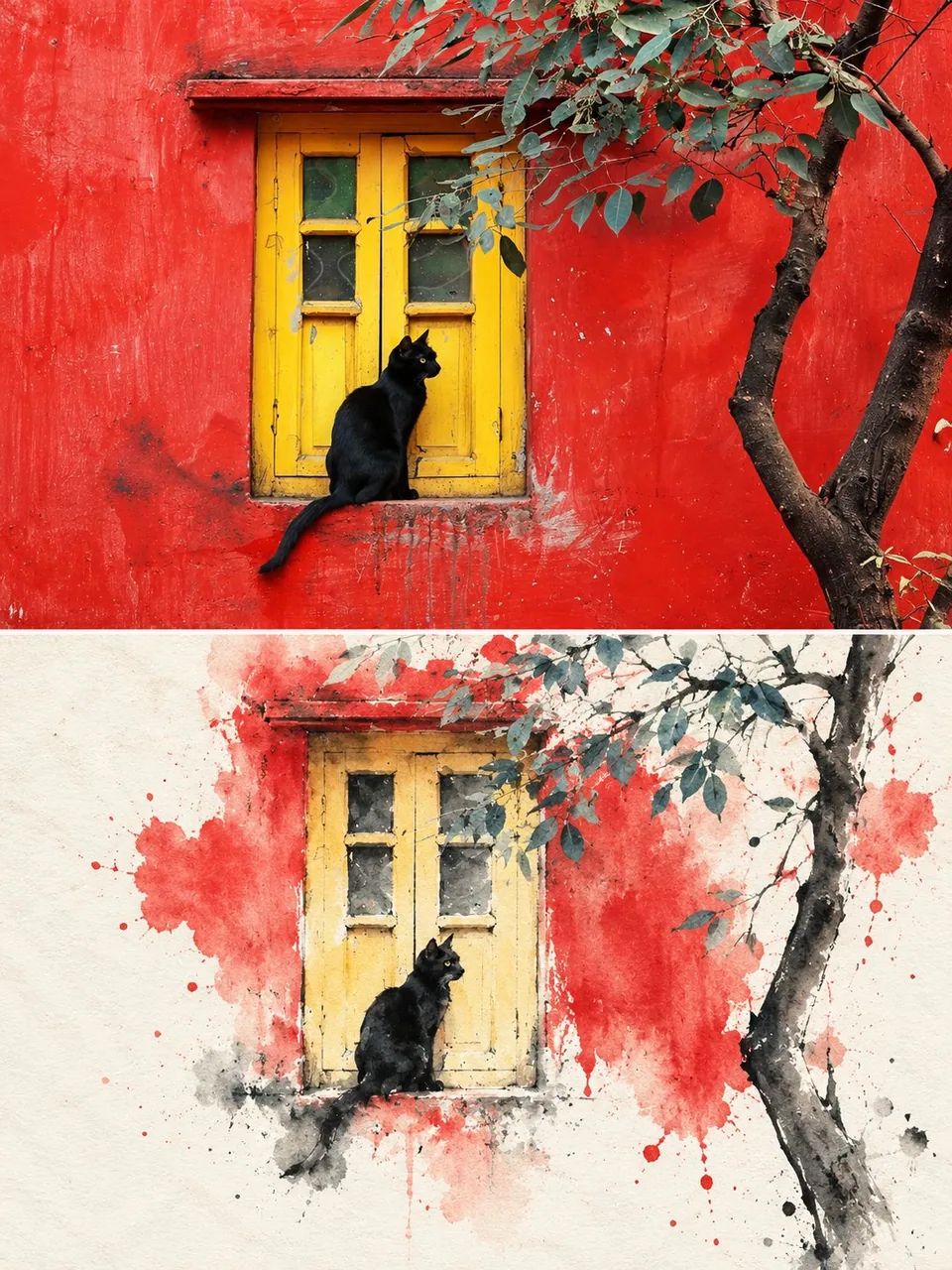
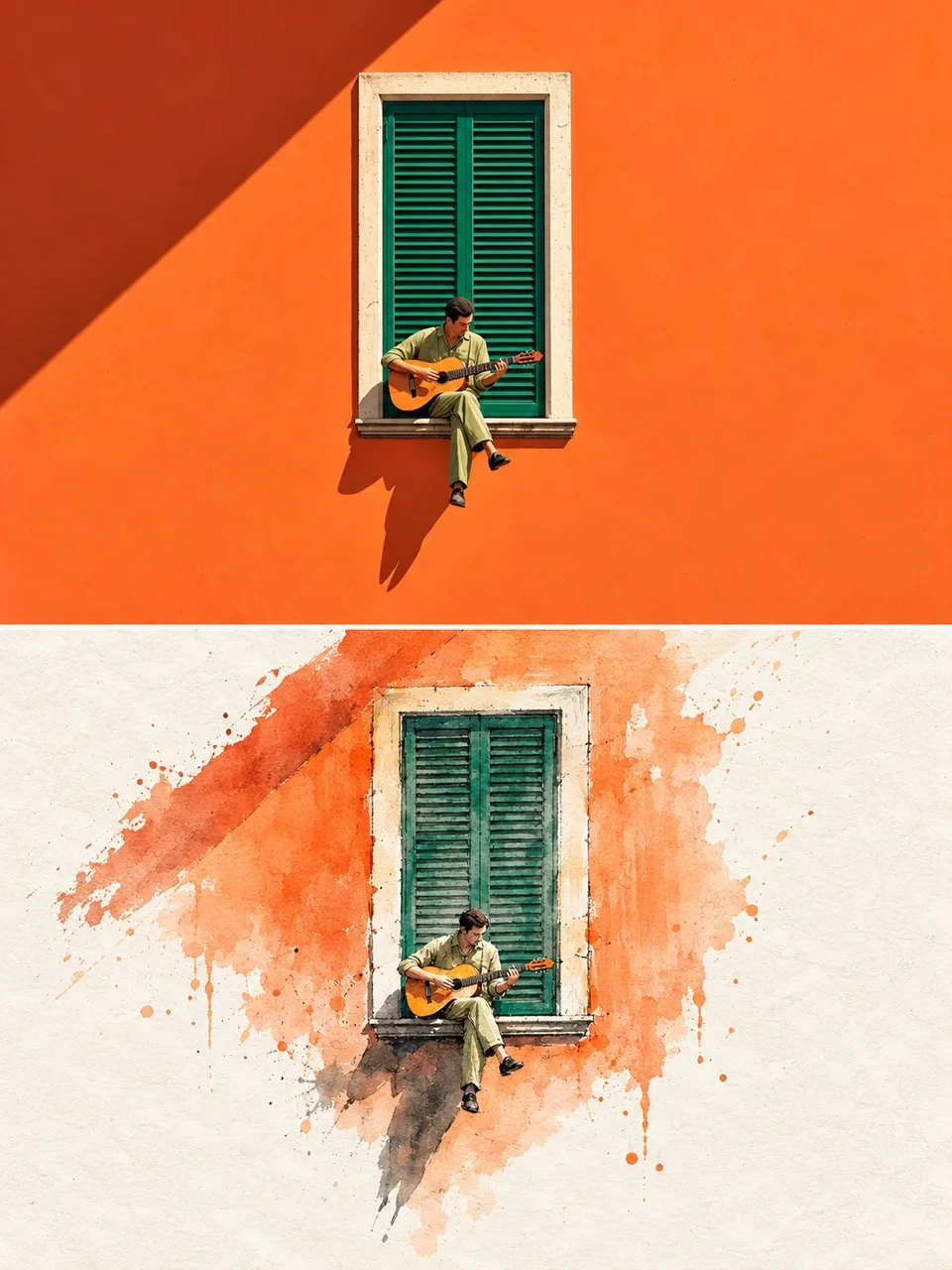
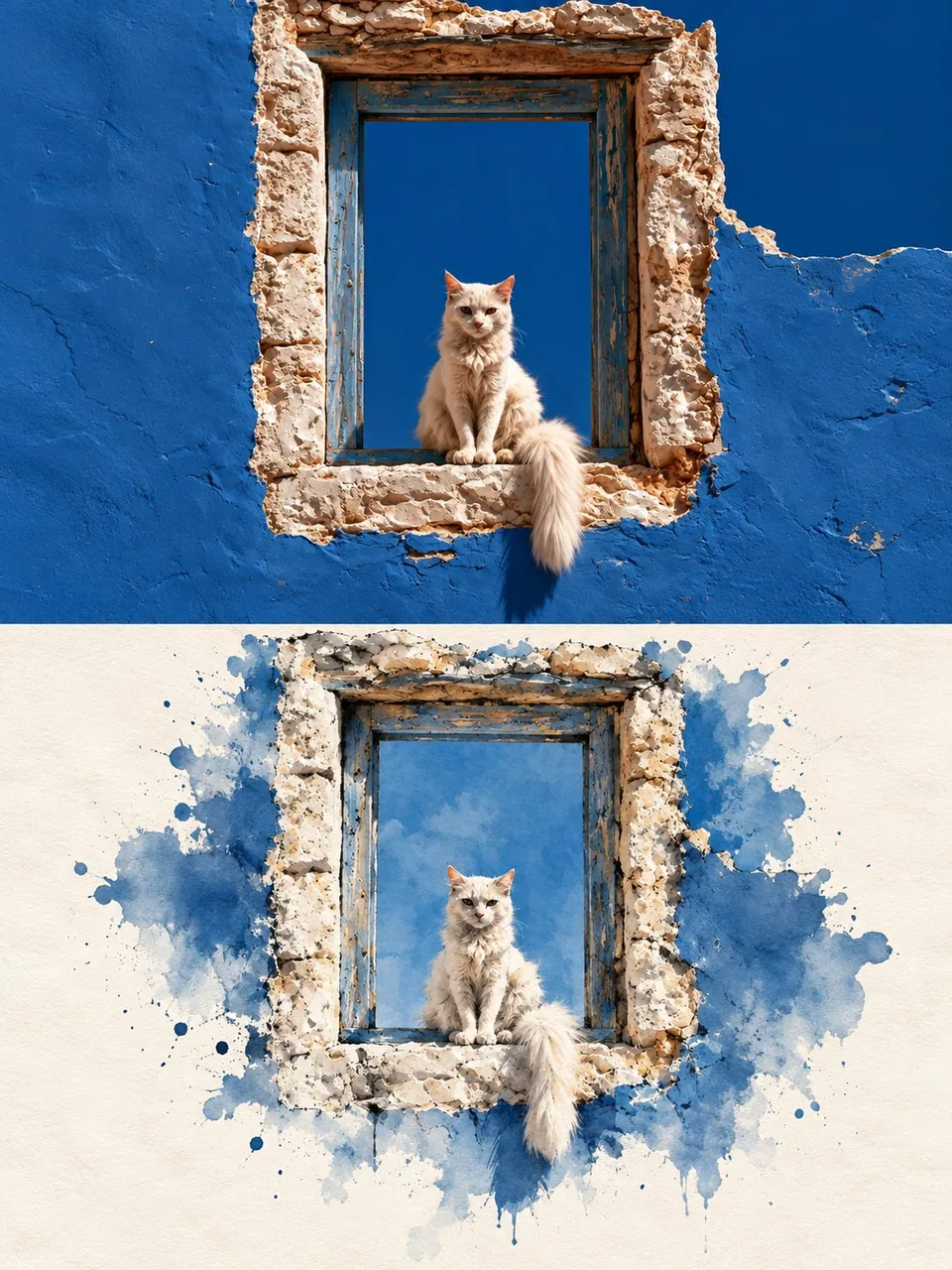
3:4 で厳密に半々:上半分は写真のアイデンティティとマテリアルを保ち、下半分はミニマルな水墨で同じ場景を再構築——輪郭と気韻だけを残し、広い余白が展覧会ページの印章のよう。東洋美学の対照ポスター。長い prompt をそのまま使える。
プロンプト
Split-Frame Ink Wash Reconstruction
3:4 vertical composition · photo / ink wash split · contemporary Eastern aesthetic
The image is in a 3:4 vertical composition, divided into two regions, with a strict 1:1 ratio, each taking up 50% of the image.
Upper Region — Original Photo Shoot Area
Preserves the subject's identity, structure, perspective, and true material, natural light, and original color atmosphere, with only slight high-end color grading and image purification, presenting it with the texture of art magazines or exhibition photography. It allows for a moderate expansion of the background to fit the screen size, but does not stretch, distort, or reshape the subject, without changing the subject's structure, posture, and core composition.
Lower Region — Minimalist Ink Wash Reconstruction Area
First, refine the subject with the most memorable details, such as the outline, structure, trend, perspective, rhythm, and atmosphere, and then reconstruct the same scene into a minimalist ink wash material landscape. Do not copy the photo details, do not make a realistic copy, only preserve the most recognizable structure and charm, allowing people to recognize the corresponding relationship between the upper region and the original photo at first glance.
The overall base of the lower half is milky white, warm white or paper white, with delicate paper fiber and natural texture. The main body is reconstructed in ink wash blending, dry-wet interplay, flying white, seepage, ink accumulation, and white space, forming a quiet, restrained, and poetic Eastern visual. Removing secondary details, only retaining the most distinctive contours, structural turns, spatial layers, and breath, not pursuing realistic completeness, but rather summarizing, refining, and leaving a lingering impression. The use of ink in black, gray, and light ink tones, layered and progressing, with varying intensities and rhythms.
The most vibrant colors can be extracted from the original image to create a few spots of dyeing or coloring, without mechanically replicating the color values. The colors can be transformed locally into clear blue-gray, distant blue, soft gold, warm yellow, vermilion red, light cyan, etc., to emphasize the main focus and emotional rhythm, but the overall composition is still dominated by ink tones and negative space. Avoiding dull, heavy, old brown, excessive decoration, and vulgar color combinations.
The main core areas should be more refined and concentrated, with edges gradually loosening, breaking away, disappearing, and scattering, forming a sense of breathing with the large negative space. The lower half of the composition should account for about 30%–45%, with the rest reserved for large negative spaces. The composition can be biased, framed, suspended, or slightly cut, but must maintain an asymmetrical balance and a high-end editorial feel. Negative space is not blank, but an important component of the visual structure. It is better to reduce information than to fill the entire image, so that the main focus looks like an ink seal or an oriental material work displayed on a page.
Text Treatment
Text is only allowed a very small amount of editing intervention, without preset titles and numbers. A small number of words or short sentences can be extracted from the subject, location, time, action, emotion, or metaphor, and quietly placed in the blank area or the edge of the subject. The text should be restrained, sparse, and have a sense of breathing, not noisy or dominant.
Overall Presentation
Contemporary Eastern aesthetics, minimalist ink wash reconstruction, large-scale art blank, small-scale seal impression, quiet editing layout and exhibition poster style. Avoid complex backgrounds, piled-up real details, overly decorative, excessive text, template layout and filled composition.

生成:GPT Image 2.5 / ChatGPT Images 2.5
日本語訳
Split-Frame Ink Wash Reconstruction
3:4 vertical composition · photo / ink wash split · contemporary Eastern aesthetic
画像は 3:4 の縦構図で、二つの領域に分割され、厳密に 1:1 の比率で、それぞれが画像の 50% を占める。
上部領域 — 元の写真撮影エリア
被写体のアイデンティティ、構造、遠近感、真実のマテリアル、自然光、元の色の雰囲気を保ち、わずかなハイエンドなカラーグレーディングと画像の純化のみを行い、アートマガジンや展覧会写真の質感で提示する。画面サイズに合わせて背景を適度に拡張することは許容するが、被写体を引き伸ばしたり、歪めたり、形を変えたりしてはならず、被写体の構造、姿勢、核となる構図を変えない。
下部領域 — ミニマル水墨再構築エリア
まず、輪郭、構造、趨勢、遠近感、リズム、雰囲気など、最も記憶に残る細部で被写体を抽出し、同じ場景をミニマルな水墨マテリアルの景観へと再構築する。写真の細部をコピーせず、写実的な複製をせず、最も認識しやすい構造と魅力のみを保ち、人が一目で上部領域と元の写真との対応関係を認識できるようにする。
下半分の全体的なベースは乳白色、暖白色または紙白色で、繊細な紙の繊維と自然なテクスチャがある。主体は水墨の滲み、乾湿の交錯、飛白、滲出、墨の堆積、余白によって再構築し、静かで抑制の効いた、詩的な東洋のビジュアルを形成する。二次的な細部を取り除き、最も特徴的な輪郭、構造の転換、空間の層、息吹のみを残し、写実的な完全性を追求せず、むしろ要約し、精錬し、余韻を残す。墨は黒、グレー、淡墨の色調で用い、層をなし、強弱とリズムを伴って進む。
最も活気のある色彩は元の画像から抽出し、少数の染めや着色の斑点を作ることができ、色値を機械的に複製しない。色彩は局所的に明確な青灰色、遠い青、柔らかな金、暖かい黄、朱色、淡いシアンなどへと変換し、主要な焦点と感情的リズムを強調してよいが、全体の構図は依然として墨の色調と余白が支配する。くすんだ、重い、古びた茶色、過度な装飾、俗悪な配色を避ける。
主要な核心領域はより精緻で集中させ、縁は次第に緩み、壊れ、消え、散り、大きな余白とともに呼吸する感覚を形成する。構図の下半分は約 30%〜45% を占め、残りは大きな余白のために取っておく。構図は偏らせ、額装し、浮かせ、あるいはわずかに裁ち落としてよいが、非対称のバランスとハイエンドな編集感を保たなければならない。余白は空白ではなく、視覚構造の重要な構成要素である。画像全体を埋めるよりも情報を減らす方がよい。そうすることで主要な焦点が、ページ上に展示された水墨の印や東洋のマテリアル作品のように見える。
文字の扱い
文字にはごく少量の編集介入のみを許し、あらかじめ設定されたタイトルや数字は入れない。被写体、場所、時間、動作、感情、あるいは隠喩から少数の語や短い文を抽出し、空白領域や被写体の縁に静かに置く。文字は抑制され、疎らで、呼吸する感覚を持ち、騒がしくなく、支配的でないこと。
全体的な提示
現代東洋の美学、ミニマルな水墨の再構築、大規模なアートの余白、小規模な印章の印象、静かな編集レイアウトと展覧会ポスターのスタイル。複雑な背景、積み上げられたリアルな細部、過度な装飾、過多な文字、テンプレートレイアウト、埋め尽くされた構図を避ける。

生成:GPT Image 2.5 / ChatGPT Images 2.5
出典
- 原作者
- harboriis
- 公開日
- 2026-09-29
- 原典
- 元の投稿を見る ↗
- 収録元
- xianyu110/awesome-gpt-image2.5 · 2104799948072161492 · MIT