아바타→마스코트 슈트: 정체성 고정 의상 교체 프롬프트
avi를 유일한 정체성 권위로 고정한 뒤, 캐릭터 디자인에서 영감을 받은 마스코트 슈트를 입힌다; 얼굴형/눈 색/비례를 하드코딩한다. 팬 창작 / OC 굿즈 이미지 생성 템플릿.
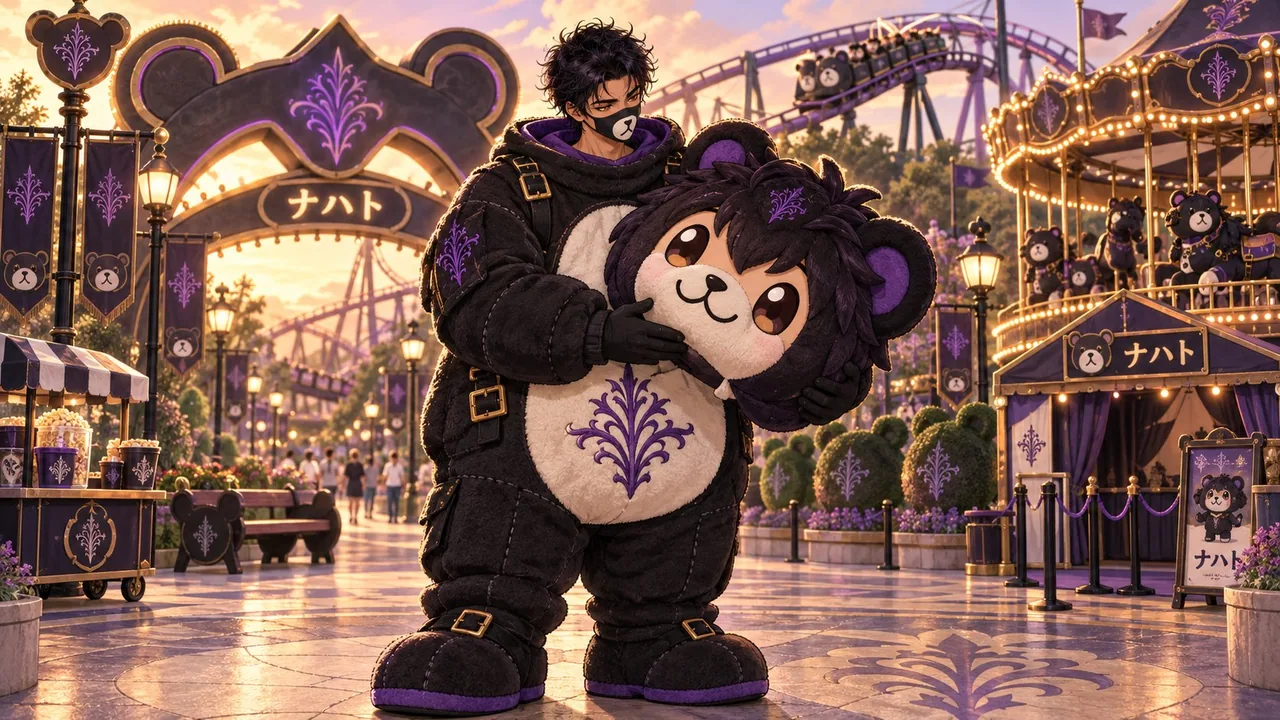
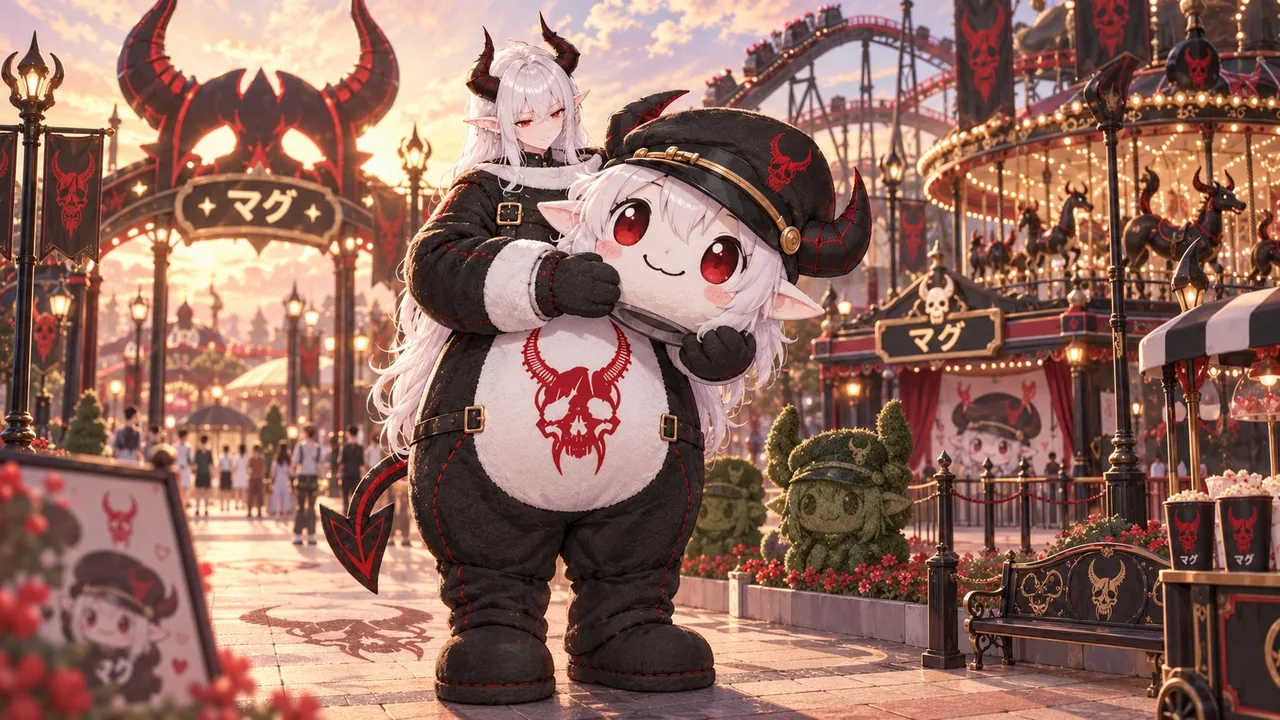
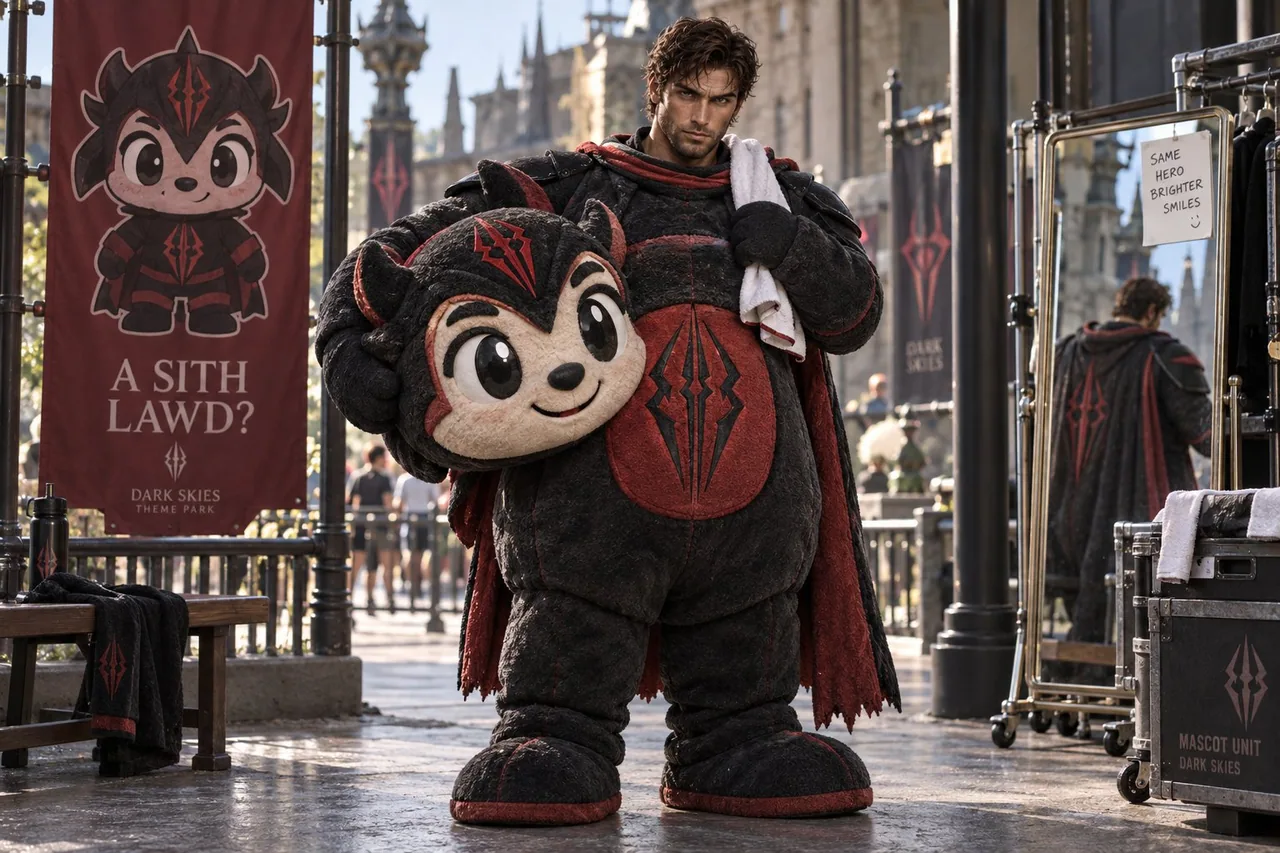
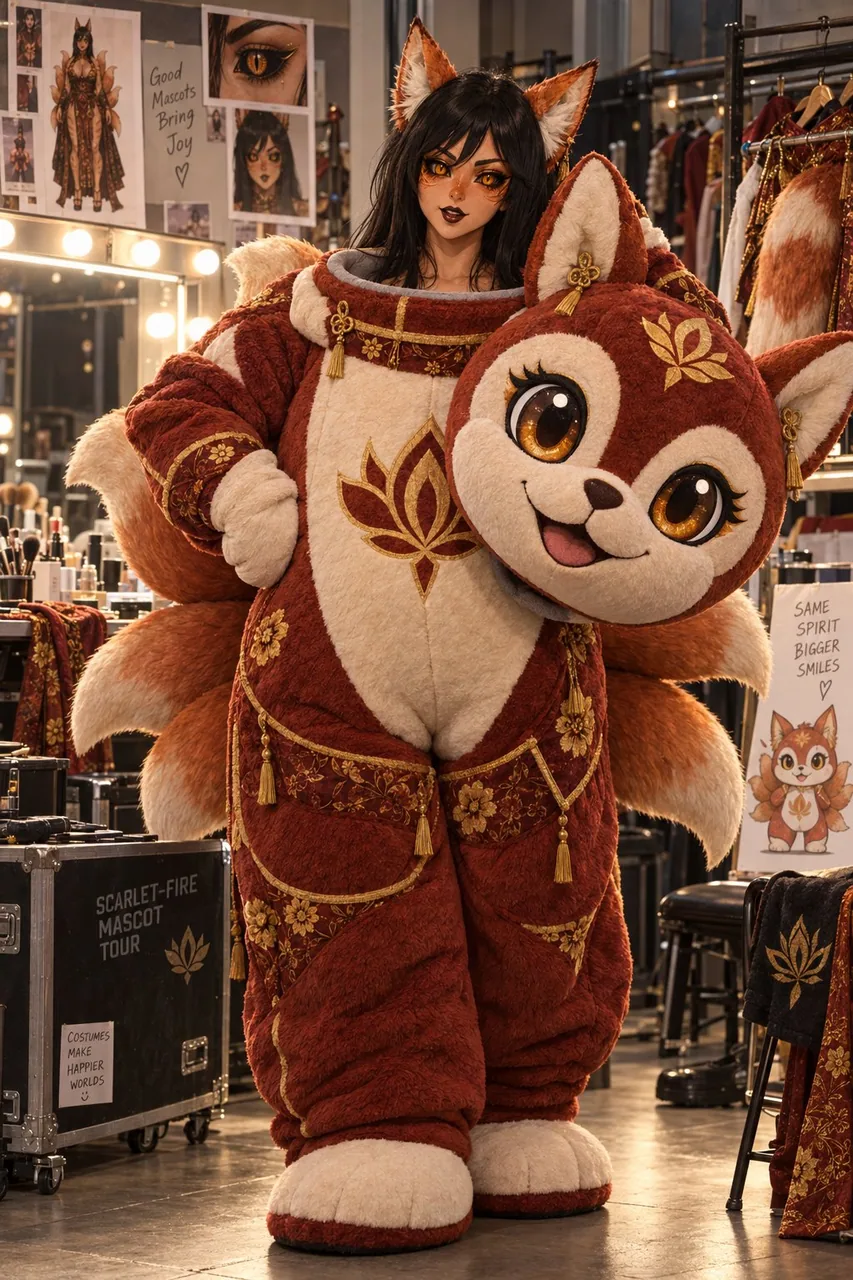
프롬프트
⚠️New Prompt⚠️
Your avi wearing a mascot suit inspired by their design

Examples are Me, @MagsNoctis @ASithLawd and @RaelinAI

⚠️Prompt👇

@Image1 = Character Identity Authority. It is the complete and only source of truth for the character's face shape, eye shape, eye color, hairstyle, hair color, species traits, body type and build, signature outfit, accessories, color palette, key motifs, silhouette and overall vibe. Every single element of this image is derived from @Image1 and from nothing else. @Image1 contains exactly ONE character, and that character is the only main character in the output image.

STEP 1 — DESIGN READ (perform this analysis first, before composing anything).
Read @Image1 and extract, in this order:

1. The exact palette — the two dominant colors and up to three accent colors, recorded by name.
2. The signature motif or emblem — the shape, symbol or hardware that repeats across the design and reads as this character's personal logo.
3. The silhouette — hair volume and shape, shoulder line, leg line, and the forms of any tail, wings, horns, fins or extra limbs.
4. The species traits and exactly how they sit on the body (animal ears, horns, antennae, tail, markings, plating, scales, feathers).
5. The material language of their outfit — fabric weights, textures, trims, hardware, stitching, sheen, wear and tear.
6. Their vibe — the emotional register the entire design projects.
Everything built later in this prompt must be traceable back to this read. If an element cannot be traced to @Image1, delete it.

STEP 2 — THE MASCOT CHARACTER (the park's mascot, which the suit represents).
Design a mascot character that is a chibi caricature of the person in @Image1 — the same individual, translated into a Japanese yuru-chara mascot. It must be instantly recognizable as this character and simultaneously a soft, friendly, plush toy. Requirements:

- Chibi proportions: roughly 2.5 heads tall, no neck, head mass equal to about half the total body, dome-shaped skull wider than the shoulders, cylindrical padded torso, short stubby arms that cannot reach past its own chest, short rounded legs, wide flat oval feet.
- The face is a stylized plush mask face, never a realistic fur-covered replica of a real face: two large glossy oval eyes with a single hard specular highlight each, a soft sculpted foam brow, a small rounded stitched nose, and a wide friendly embroidered smile line.
- The mascot wears the character's signature motif as a large appliqué patch on its belly bib, and repeats it smaller on the skull.
- Skin, fur, hair and fabric colors are taken directly from the character's palette read in Step 1 — a two-tone color break is expected where the character's hair color meets their outfit colors.
- Species traits (ears, horns, antennae, tail, fins, wings) are rebuilt as oversized rounded foam-and-plush forms at two to three times their natural scale, clearly soft and toy-like, never anatomically real.
- Any signature accessory from @Image1 is rebuilt as a chunky plush version of itself, scaled up, with stitched and appliquéd hardware instead of metal.
- The mascot's expression is permanently cheerful, wide and inviting — the fixed, endearing smile of a park mascot.

STEP 3 — THE SUIT ITSELF (Japanese kigurumi construction).
The costume is a real, physically constructed mascot suit, and it must read as a suit, not as a living creature and not as a flat onesie pyjama. Model the construction honestly:

- Padded plush shell over an interior foam armature, visibly thick and slightly quilted at the seams.
- Short-pile boa / shag plush pile surface with a soft, fuzzy, light-catching nap; rooted or needle-punched blocks of color; visible raised seam ridges running over the shoulders, chest and legs.
- Panel seams and sewn panel breaks where the color blocks change; darts and topstitching in a slightly darker thread.
- The head piece is a separate sculpted foam-and-fabric unit with a wide collar skirt at its base, sized so the wearer's shoulders fit inside it.
- Mitten hands with stitched finger lines and no visible claws; flat wide oval feet with a thick sole rim.
- A hidden zipper at the back of the neck, a walking slit at the back of the legs, a small fabric brand tag sewn into a hem, and the inside of the neck opening showing a ring of grey foam and a hint of dark interior mesh.
- The whole suit is generously stuffed and slightly too round for the person wearing it, so it holds the plush toy silhouette even when occupied.

STEP 4 — THE WEARER (the character, mid-costume-change).
The character from @Image1 is wearing the suit — the body of the costume is fully on, fastened up to the shoulder cowl — but the suit's HEAD PIECE is OFF. The character's own head, face, hairstyle, hair color, eyes and species traits are fully visible and unchanged above the rolled-down collar of the suit, exactly as in @Image1. Their own identity is the point: the face in this image is the reference's face, unmistakable and untouched.
The huge plush head piece is cradled in the character's arms at hip and waist height, held under one arm and across the body, its chin tilted upward and its plush face turned outward toward the viewer's side of the frame. One hand supports it from beneath, the other rests flat on its side. Because the head piece is oversized and soft, it sags and tips slightly in their grip.
The padding of the suit makes the performer's real head look small and delicate on top of those enormous plush shoulders — that contrast is the charm of the shot. The suit's cowl sits low and loose around the character's collar and does not cover their chin, jaw, ears, hair or any part of their face or head.
There is exactly one mascot head in the image, and exactly one character: the head piece exists only as the object in their arms. Nobody is wearing it.

STEP 5 — THE THEME PARK (entirely derived from @Image1).
Build a full theme park whose every structure, sign, ride, prop and color is derived from this specific character's design language. Nothing here may be generic.

- The entrance arch is constructed from the character's signature motif, scaled up as an architectural form.
- The main avenue is lined with lamp posts whose finials repeat the character's emblem, and with banners printed with the character's motif as a repeating pattern in their palette.
- At least one ride is a direct translation of the character: a carousel whose figures are the character's motif repeated, or a teacup ride whose cars are shaped as their signature accessory, or a coaster whose track and trains carry their two dominant colors and their emblem on the lead car.
- Topiary hedges are clipped into the mascot's own rounded silhouette, standing in a row.
- A parade float sits parked at the kerb, built as a larger version of the same mascot, its plush surfaces matched to the suit's fabric.
- A meet-and-greet pavilion with a queued rope line, a small stage and a painted backdrop of the character's motif.
- Snack carts, popcorn boxes and drink cups carry the character's palette and emblem.
- Water fountains, planters, paving inlay, benches and bins all repeat the palette and motif.
The park's color scheme IS the character's color scheme. Nothing in the park uses a color that does not appear in @Image1, apart from neutral concrete, asphalt and living greenery. Do not import generic theme-park iconography: no fairytale castle, no mouse-eared silhouette, no generic rockets or planets, no universally recognizable ride shapes — every silhouette must be traceable to this character.
Signage lettering is kept short: one to three characters' worth of a kana-style display logotype per sign, ideally just the mascot's short name on the pavilion signboard, with a simple emblem. No paragraphs of text, no signage covered in words.

Background visitors are permitted as soft, heavily out-of-focus secondary figures in everyday summer park clothes, at a distance, occupying less than a fifth of the frame. They are anonymous, generic and never resemble the main character, never wear this mascot suit, and never wear the character's outfit or colors.

STEP 6 — POSE, CAMERA AND COMPOSITION.
16:9 widescreen. The character stands full-body in the foreground, slightly right or left of centre, occupying most of the frame height, weighted onto one hip, relaxed, mid-moment, as though they have just stepped out of the meet-and-greet tunnel and paused.
Their gaze is directed DOWN at the plush face in their arms, warm and amused. The character does not look at the camera; the camera does not exist to them.
Camera: eye level to slightly low, medium-wide lens, close enough that the plush pile of the suit and every stitch line is legible, far enough to include the avenue and pavilion behind. Depth layering is explicit: the character and the held head piece in sharp focus in the foreground, the avenue and rides in the midground, the park's far structures and sky softening into the background. Shallow depth of field, but the character's face is the sharpest point in the frame. The character's real face sits in the upper third and stays the clear focal point, brighter and more contrasty than the park behind.

STEP 7 — LIGHTING AND MOOD.
Late golden-hour afternoon, low warm sun raking across the frame from behind the pavilion, catching the plush pile and outlining the character's shoulders and hair in a soft warm rim. Neon and bulb string lights on the avenue and pavilion are already warming up and spill a soft candy-colored bounce light in the character's own accent colors onto the underside of the plush head and across the character's face. Park signage emits a gentle glow. Airy, joyful, candid, bright — a sunny behind-the-scenes moment with a slight nostalgic filmic warmth, no heavy shadows, no gloom.

STEP 8 — QUALITY AND RENDERING BAR.
Highly detailed 2.5D anime realism, keeping the exact stylization of @Image1 — never photorealism, never 3D-CGI renders, never a photograph. Polished, premium-quality stylized illustration with clean linework, crisp readable forms, rich tactile material rendering (plush pile, foam, stitched seams, appliqué, painted signage) and confident, appealing character acting. Anatomy Quality: correct proportions, five fingers on each hand, natural wrists and elbows, hands that grip the head piece convincingly without sinking into or merging with its surface, no extra or missing limbs, no warped joints, no distorted or melting fingers, no feet vanishing into the ground.

GPT Image Guidelines: this is a family-friendly, fully-clothed, tasteful theme-park illustration. All depictions are clearly fictional, stylized and illustrated. The character is fully covered by the costume. Nothing is revealing, nothing is explicit, nothing is fetishized, and no suggestive framing is used.

NEGATIVE PROMPT: extra characters, second mascot suit, someone wearing the mascot head, mascot head worn on the character's head, two mascot heads, duplicate character, clone, mirrored figure, background figure that resembles the main character, extra limbs, extra fingers, missing fingers, fused fingers, malformed hands, deformed feet, distorted face, melting anatomy, asymmetrical eyes on the character's real face, changed identity, different person, off-model character, photorealism, real photograph, live-action costume, furry fursuit realism, anatomically real animal features, horror animatronic, creepy empty eyes, dead stare, scary mascot, western sports muscle mascot suit, inflatable costume, flat fabric onesie pyjama, plain kigurumi blanket, cheap cosplay, generic theme park, fairytale castle, mouse-ear silhouette, crowded frame, subject too small, subject blurry, busy background, garbled text, misspelled signage, paragraphs of text on signs, watermark, signature, logo, cropped head, cut-off feet, flat lighting, murky colors.

FINAL GOAL: one clearly illustrated scene — the character of @Image1 standing in a theme park built entirely out of their own design language, wearing a hand-built Japanese-style chibi mascot suit of themselves from the neck down, their real face and hair bright and unchanged above the collar, the oversized plush chibi head piece cradled in their arms and turned outward, everything in the frame traceable to their own colors, motifs and silhouette.

DO NOT: redesign, restyle or reimagine the character's identity, face, hairstyle, hair color, eye color or species traits. Do not put the mascot head on the character's head. Do not add a second character, a second suit, or any figure that mirrors, duplicates or resembles the reference character. Do not turn the suit into a living creature, a real animal, a photoreal fursuit or a CGI mascot. Do not use a generic theme park or generic theme-park iconography. Do not make the background busier or brighter than the main subject. Do not render the character tiny, distant, blurry, cropped or unreadable. Do not produce malformed anatomy, extra limbs, distorted hands, warped faces or muddy textures. Do not use photorealism or photographic rendering. Do not cover, hide, soften or obscure the character's face and hairstyle. Do not add text longer than a short sign name. Do not let the park's palette introduce colors that are absent from @Image1.
한국어 번역
⚠️새 프롬프트⚠️
당신의 avi가 자신의 디자인에서 영감을 받은 마스코트 슈트를 입은 모습

예시는 저, @MagsNoctis @ASithLawd 그리고 @RaelinAI 입니다

⚠️프롬프트👇

@Image1 = 캐릭터 정체성 권위(Character Identity Authority). 이것은 캐릭터의 얼굴형, 눈매, 눈 색, 헤어스타일, 머리색, 종족적 특징, 체형과 골격, 시그니처 의상, 액세서리, 색 팔레트, 핵심 모티프, 실루엣과 전체적인 분위기에 대한 완전하고 유일한 진실의 원천이다. 이 이미지의 모든 단일 요소는 @Image1에서만 파생되며 그 밖의 다른 무엇에서도 파생되지 않는다. @Image1에는 정확히 하나(ONE)의 캐릭터만 들어 있으며, 그 캐릭터가 출력 이미지의 유일한 주인공이다.

STEP 1 — 디자인 판독(무엇이든 구성하기 전에 이 분석을 먼저 수행한다).
@Image1을 읽고 다음 순서대로 추출한다:

1. 정확한 팔레트 — 두 가지 주조색과 최대 세 가지 액센트 컬러를 이름으로 기록한다.
2. 시그니처 모티프 또는 엠블럼 — 디자인 전반에 반복되어 이 캐릭터의 개인 로고로 읽히는 형태, 상징 또는 하드웨어.
3. 실루엣 — 머리카락의 볼륨과 형태, 어깨선, 다리선, 그리고 꼬리, 날개, 뿔, 지느러미, 여분의 사지가 있다면 그 형태.
4. 종족적 특징과 그것이 몸에 정확히 어떻게 자리 잡는지(동물 귀, 뿔, 더듬이, 꼬리, 무늬, 갑판, 비늘, 깃털).
5. 의상의 소재 언어 — 원단 두께, 질감, 장식, 하드웨어, 스티칭, 광택, 마모와 손상.
6. 분위기 — 전체 디자인이 발산하는 정서적 결.
이 프롬프트에서 나중에 만들어지는 모든 것은 이 판독으로 되짚어질 수 있어야 한다. 어떤 요소가 @Image1로 추적되지 않는다면 삭제한다.

STEP 2 — 마스코트 캐릭터(슈트가 나타내는, 파크의 마스코트).
@Image1에 있는 인물을 치비 캐리커처로 옮긴 마스코트 캐릭터를 디자인한다 — 동일한 개인을 일본 유루캐 마스코트로 번역한 것이다. 이 캐릭터임을 즉시 알아볼 수 있어야 하며 동시에 부드럽고 친근한 봉제인형이어야 한다. 요구 사항:

- 치비 비례: 대략 2.5등신, 목 없음, 머리 덩어리가 전체 몸의 약 절반, 어깨보다 넓은 돔형 두개골, 원기둥형 패딩 몸통, 자기 가슴 너머로 뻗을 수 없는 짧고 뭉툭한 팔, 짧고 둥근 다리, 넓고 평평한 타원형 발.
- 얼굴은 양식화된 봉제 마스크 얼굴이며, 실제 얼굴을 털로 덮은 사실적 복제품이 절대 아니다: 각각 단단한 스페큘러 하이라이트가 하나씩 있는 크고 광택 나는 타원형 눈 두 개, 부드럽게 조형된 폼 눈썹, 바느질된 작고 둥근 코, 넓고 친근한 자수 미소 선.
- 마스코트는 배 부분 턱받이에 캐릭터의 시그니처 모티프를 큰 아플리케 패치로 달고, 두개골에는 그것을 더 작게 반복한다.
- 피부, 털, 머리카락, 원단 색상은 STEP 1에서 판독한 캐릭터의 팔레트에서 직접 가져온다 — 캐릭터의 머리색과 의상 색이 만나는 지점에서 두 톤으로 갈라지는 색 분할이 나타나야 한다.
- 종족적 특징(귀, 뿔, 더듬이, 꼬리, 지느러미, 날개)은 자연 크기의 두세 배로 과장된 둥근 폼과 봉제 형태로 다시 만들며, 분명히 부드럽고 장난감 같아야 하고 해부학적으로 사실적이어서는 안 된다.
- @Image1의 시그니처 액세서리는 금속 대신 바느질과 아플리케로 처리한 하드웨어를 써서, 크게 확대한 투박한 봉제 버전으로 다시 만든다.
- 마스코트의 표정은 항상 밝고 넓고 호감 가는 — 파크 마스코트의 고정되고 사랑스러운 미소다.

STEP 3 — 슈트 자체(일본 기구루미 구조).
이 의상은 실제로 물리적으로 제작된 마스코트 슈트이며, 살아 있는 생명체가 아니라 평평한 우주복형 파자마도 아닌 슈트로 읽혀야 한다. 구조를 정직하게 모델링한다:

- 내부 폼 골격 위에 패딩된 봉제 외피, 눈에 띄게 두껍고 솔기 부분이 약간 누빔 처리됨.
- 부드럽고 보송보송하며 빛을 받는 파일이 있는 숏파일 보아/섀그 봉제 파일 표면; 심거나 니들 펀칭한 색상 블록; 어깨, 가슴, 다리 위로 지나가는 눈에 띄는 융기된 솔기 능선.
- 색상 블록이 바뀌는 곳의 패널 솔기와 박음질된 패널 분할; 약간 더 어두운 실로 된 다트와 겉박음질.
- 헤드 피스는 별도로 조형된 폼과 원단 유닛이며 아래쪽에 넓은 칼라 스커트가 있고, 착용자의 어깨가 그 안에 들어갈 수 있는 크기다.
- 바느질된 손가락 선이 있고 눈에 띄는 발톱이 없는 벙어리장갑 손; 두꺼운 밑창 테두리가 있는 평평하고 넓은 타원형 발.
- 목 뒤의 숨겨진 지퍼, 다리 뒤의 보행용 트임, 밑단에 박음질된 작은 원단 브랜드 태그, 그리고 목 개구부 안쪽으로 보이는 회색 폼 링과 어두운 내부 메시의 흔적.
- 슈트 전체는 넉넉하게 충전되어 있고 입는 사람에 비해 약간 지나치게 둥글어서, 사람이 들어가 있어도 봉제인형 실루엣을 유지한다.

STEP 4 — 착용자(의상으로 갈아입는 중인 캐릭터).
@Image1의 캐릭터가 이 슈트를 입고 있다 — 의상의 몸통은 완전히 착용되어 어깨 카울까지 여며져 있다 — 그러나 슈트의 헤드 피스는 벗겨져 있다. 캐릭터 자신의 머리, 얼굴, 헤어스타일, 머리색, 눈, 종족적 특징은 슈트의 접힌 칼라 위로 완전히 보이며 @Image1과 똑같이 변하지 않았다. 자기 정체성이 핵심이다: 이 이미지의 얼굴은 레퍼런스의 얼굴이며, 틀림없고 손대지 않은 상태다.
거대한 봉제 헤드 피스는 캐릭터의 팔에 엉덩이와 허리 높이로 안겨 있고, 한쪽 팔 아래로 몸을 가로질러 들려 있으며, 턱은 위로 기울고 봉제 얼굴은 프레임의 관찰자 쪽을 향해 바깥으로 돌아가 있다. 한 손은 아래에서 받치고 다른 손은 옆면에 평평하게 얹혀 있다. 헤드 피스가 과대하고 부드럽기 때문에 팔에 안긴 채 살짝 처지고 기울어진다.
슈트의 패딩 때문에 연기자의 진짜 머리가 거대한 봉제 어깨 위에서 작고 섬세해 보인다 — 그 대비가 이 컷의 매력이다. 슈트의 카울은 캐릭터의 목둘레에 낮고 느슨하게 자리하며 턱, 턱선, 귀, 머리카락 또는 얼굴과 머리의 어느 부분도 가리지 않는다.
이미지에는 마스코트 머리가 정확히 하나, 캐릭터도 정확히 하나만 있다: 헤드 피스는 오직 팔에 안긴 물체로만 존재한다. 아무도 그것을 쓰고 있지 않다.

STEP 5 — 테마파크(전적으로 @Image1에서 파생).
모든 구조물, 간판, 놀이기구, 소품, 색상이 이 특정 캐릭터의 디자인 언어에서 파생된 완전한 테마파크를 만든다. 여기서 어떤 것도 일반적이어서는 안 된다.

- 입구 아치는 캐릭터의 시그니처 모티프를 건축적 형태로 확대해 구성한다.
- 메인 애비뉴에는 상단 장식이 캐릭터의 엠블럼을 반복하는 가로등이 늘어서 있고, 캐릭터의 팔레트로 모티프를 반복 패턴으로 인쇄한 배너가 걸려 있다.
- 최소 하나의 놀이기구는 캐릭터를 직접 옮긴 것이다: 인형들이 캐릭터의 모티프를 반복하는 회전목마, 또는 컵이 시그니처 액세서리 모양인 티컵 라이드, 또는 선로와 열차가 두 주조색을 띠고 선두 차량에 엠블럼을 단 코스터.
- 토피어리 수목은 마스코트 자체의 둥근 실루엣으로 다듬어져 한 줄로 서 있다.
- 퍼레이드 플로트가 도로변에 세워져 있으며, 같은 마스코트의 더 큰 버전으로 만들어졌고 봉제 표면은 슈트의 원단과 맞춰져 있다.
- 줄을 서는 로프 라인, 작은 무대, 캐릭터 모티프가 그려진 배경막이 있는 만남의 파빌리온.
- 스낵 카트, 팝콘 상자, 음료 컵에 캐릭터의 팔레트와 엠블럼을 담는다.
- 분수, 화단, 포장 인레이, 벤치, 쓰레기통 모두 팔레트와 모티프를 반복한다.
파크의 색 구성은 곧 캐릭터의 색 구성이다. 중립적인 콘크리트, 아스팔트, 살아 있는 녹지를 제외하면 파크의 어떤 것도 @Image1에 없는 색을 사용하지 않는다. 일반적인 테마파크 도상학을 끌어오지 마라: 동화 속 성도, 쥐 귀 실루엣도, 일반적인 로켓이나 행성도, 누구나 알아볼 수 있는 놀이기구 형태도 안 된다 — 모든 실루엣은 이 캐릭터로 추적 가능해야 한다.
간판 글자는 짧게 유지한다: 간판당 가나 스타일 디스플레이 로고타입으로 한 글자에서 세 글자 분량, 이상적으로는 파빌리온 간판에 마스코트의 짧은 이름만과 단순한 엠블럼. 텍스트 문단도, 단어로 뒤덮인 간판도 안 된다.

배경 방문객은 일상적인 여름 공원 복장을 한, 부드럽고 심하게 초점이 나간 보조 인물로서 먼 거리에 허용되며, 프레임의 5분의 1 미만을 차지한다. 그들은 익명이고 일반적이며 주인공과 닮지 않고, 이 마스코트 슈트를 입지 않으며, 캐릭터의 의상이나 색상도 입지 않는다.

STEP 6 — 포즈, 카메라와 구도.
16:9 와이드스크린. 캐릭터는 전경에 전신으로 서 있고, 중앙에서 약간 오른쪽이나 왼쪽에 치우쳐 프레임 높이의 대부분을 차지하며, 한쪽 엉덩이에 체중을 실은 채 편안하게, 만남의 터널에서 막 나와 잠시 멈춘 듯한 순간의 모습이다.
시선은 팔에 안긴 봉제 얼굴을 향해 아래로 향하며, 따뜻하고 즐거운 눈빛이다. 캐릭터는 카메라를 보지 않는다; 카메라는 그들에게 존재하지 않는다.
카메라: 눈높이에서 약간 낮게, 중간 광각 렌즈, 슈트의 봉제 파일과 모든 스티치 선이 읽힐 만큼 가까이, 뒤의 애비뉴와 파빌리온이 담길 만큼 멀리. 심도 층위는 명확하다: 전경의 캐릭터와 안긴 헤드 피스는 선명한 초점, 중경의 애비뉴와 놀이기구, 배경으로 부드럽게 흐려지는 파크의 먼 구조물과 하늘. 얕은 심도지만 캐릭터의 얼굴이 프레임에서 가장 선명한 지점이다. 캐릭터의 진짜 얼굴은 상단 3분의 1에 위치하며 명확한 초점으로 유지되고, 뒤의 파크보다 더 밝고 대비가 강하다.

STEP 7 — 조명과 분위기.
늦은 골든아워 오후, 파빌리온 뒤에서 프레임을 가로질러 비스듬히 드는 낮고 따뜻한 태양이 봉제 파일을 스치며 캐릭터의 어깨와 머리카락을 부드럽고 따뜻한 림으로 감싼다. 애비뉴와 파빌리온의 네온과 전구 스트링 조명은 이미 켜지기 시작해 캐릭터 자신의 액센트 컬러로 부드러운 캔디색 바운스 광을 봉제 머리 아래쪽과 캐릭터 얼굴 위로 흘린다. 파크 간판은 은은한 빛을 발한다. 공기처럼 가볍고, 즐겁고, 자연스럽고, 밝다 — 약간의 노스탤지어 필름적 따뜻함이 있는 화창한 비하인드 신이며, 무거운 그림자도, 우울함도 없다.

STEP 8 — 품질과 렌더링 기준.
고도로 디테일한 2.5D 애니메 리얼리즘으로, @Image1의 정확한 양식화를 유지한다 — 실사주의도, 3D-CGI 렌더도, 사진도 절대 아니다. 깔끔한 선화, 또렷하고 읽히는 형태, 풍부한 촉감의 소재 렌더링(봉제 파일, 폼, 박음질 솔기, 아플리케, 페인팅된 간판), 자신감 있고 매력적인 캐릭터 연기가 돋보이는 세련된 프리미엄 양식화 일러스트. 해부학 품질: 올바른 비례, 양손에 다섯 손가락, 자연스러운 손목과 팔꿈치, 헤드 피스 표면에 파묻히거나 합쳐지지 않고 설득력 있게 그것을 잡는 손, 여분이나 누락된 사지 없음, 뒤틀린 관절 없음, 왜곡되거나 녹아내린 손가락 없음, 땅속으로 사라지는 발 없음.

GPT Image 가이드라인: 이것은 가족 친화적이고 완전히 옷을 갖춰 입은, 품위 있는 테마파크 일러스트다. 모든 묘사는 분명히 허구적이고 양식화된 일러스트다. 캐릭터는 의상으로 완전히 가려져 있다. 노출되는 것도, 선정적인 것도, 페티시화된 것도 없으며, 암시적인 구도도 사용하지 않는다.

네거티브 프롬프트: 여분의 캐릭터, 두 번째 마스코트 슈트, 마스코트 머리를 쓰고 있는 사람, 캐릭터의 머리에 쓴 마스코트 머리, 마스코트 머리 두 개, 중복 캐릭터, 클론, 거울처럼 복제된 인물, 주인공과 닮은 배경 인물, 여분의 사지, 여분의 손가락, 누락된 손가락, 붙은 손가락, 기형 손, 변형된 발, 왜곡된 얼굴, 녹아내리는 해부학, 캐릭터 진짜 얼굴의 비대칭 눈, 바뀐 정체성, 다른 사람, 모델에서 벗어난 캐릭터, 실사주의, 실제 사진, 실사 의상, 퍼리 퍼슈트 실사, 해부학적으로 실제인 동물 특징, 공포 애니매트로닉, 섬뜩하게 텅 빈 눈, 죽은 눈빛, 무서운 마스코트, 서양 스포츠 근육 마스코트 슈트, 에어 의상, 평평한 원단 우주복 파자마, 밋밋한 기구루미 담요, 싸구려 코스프레, 일반적인 테마파크, 동화 속 성, 쥐 귀 실루엣, 붐비는 프레임, 너무 작은 피사체, 흐릿한 피사체, 어수선한 배경, 깨진 텍스트, 철자가 틀린 간판, 간판 위의 텍스트 문단, 워터마크, 서명, 로고, 잘린 머리, 잘린 발, 평평한 조명, 탁한 색.

최종 목표: 하나의 명확하게 그려진 장면 — @Image1의 캐릭터가 자신의 디자인 언어만으로 지어진 테마파크에 서 있고, 목 아래로는 손으로 만든 일본식 치비 마스코트 슈트를 입고 있으며, 칼라 위로 진짜 얼굴과 머리카락이 밝고 변함없이 드러나 있고, 과대한 봉제 치비 헤드 피스는 팔에 안겨 바깥을 향하고 있으며, 프레임의 모든 것이 자신의 색, 모티프, 실루엣으로 추적 가능하다.

하지 말 것: 캐릭터의 정체성, 얼굴, 헤어스타일, 머리색, 눈 색 또는 종족적 특징을 재디자인하거나 리스타일하거나 재해석하지 마라. 마스코트 머리를 캐릭터의 머리에 씌우지 마라. 두 번째 캐릭터, 두 번째 슈트, 또는 레퍼런스 캐릭터를 비추거나 복제하거나 닮은 어떤 인물도 추가하지 마라. 슈트를 살아 있는 생명체, 실제 동물, 실사 퍼슈트, CGI 마스코트로 만들지 마라. 일반적인 테마파크나 일반적인 테마파크 도상학을 사용하지 마라. 배경을 주 피사체보다 더 붐비거나 밝게 만들지 마라. 캐릭터를 작게, 멀리, 흐릿하게, 잘리게 또는 읽을 수 없게 렌더링하지 마라. 기형적인 해부학, 여분의 사지, 왜곡된 손, 뒤틀린 얼굴, 탁한 질감을 만들지 마라. 실사주의나 사진적 렌더링을 사용하지 마라. 캐릭터의 얼굴과 헤어스타일을 가리거나, 숨기거나, 흐리거나, 모호하게 하지 마라. 짧은 간판 이름보다 긴 텍스트를 추가하지 마라. 파크의 팔레트가 @Image1에 없는 색을 도입하게 하지 마라.
출처
- 원작자
- NachtNovaAI
- 게시일
- 2026-09-18
- 원문 출처
- 원문 보기 ↗
- 수록 출처
- xianyu110/awesome-gpt-image2.5 · 2100781932413952315 · MIT