頭像→吉祥物連體衣:身份鎖換裝 prompt
把 avi 鎖成唯一身份權威,再套進受角色設計啓發的 mascot suit;臉型/眼色/比例寫死。粉絲二創 / OC 周邊出圖模板。
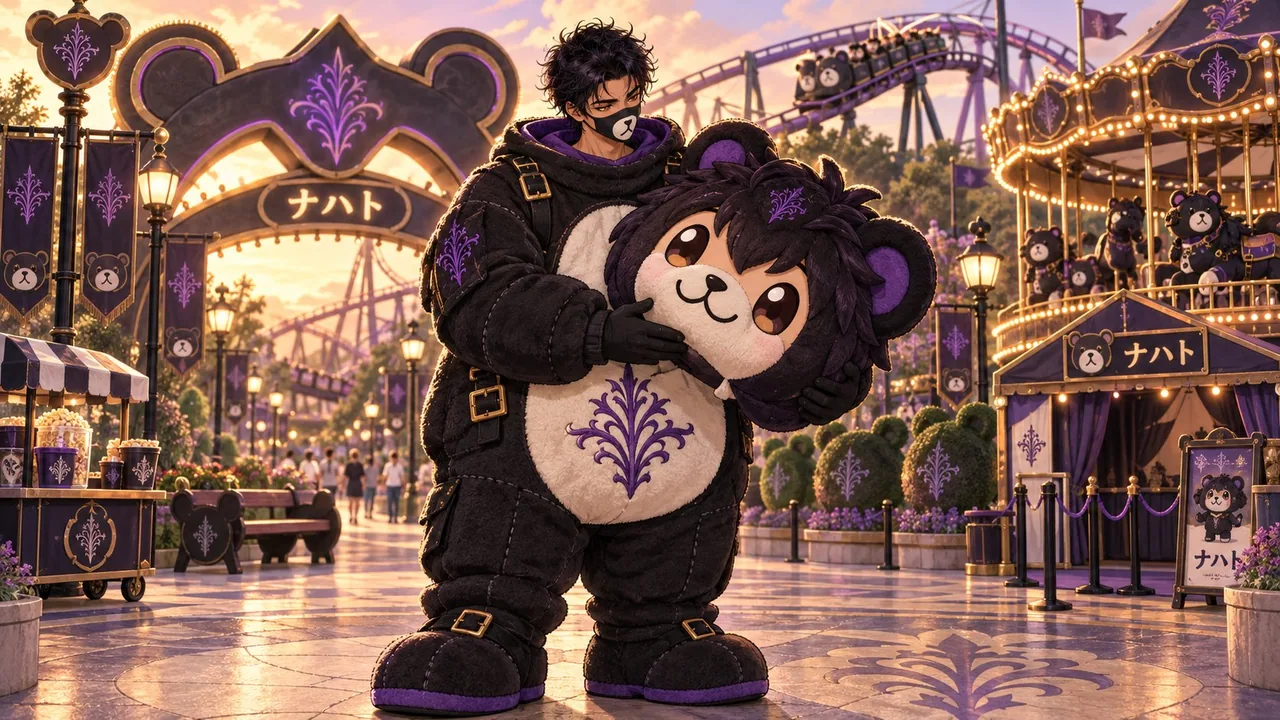
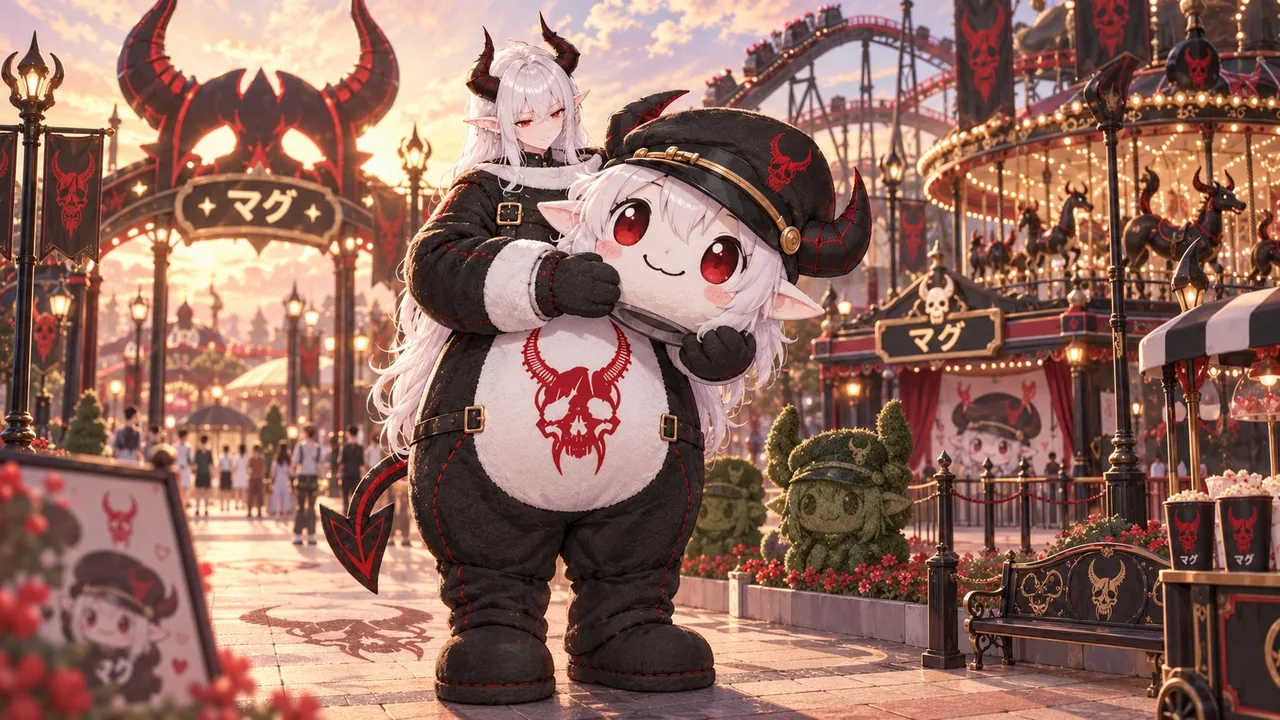
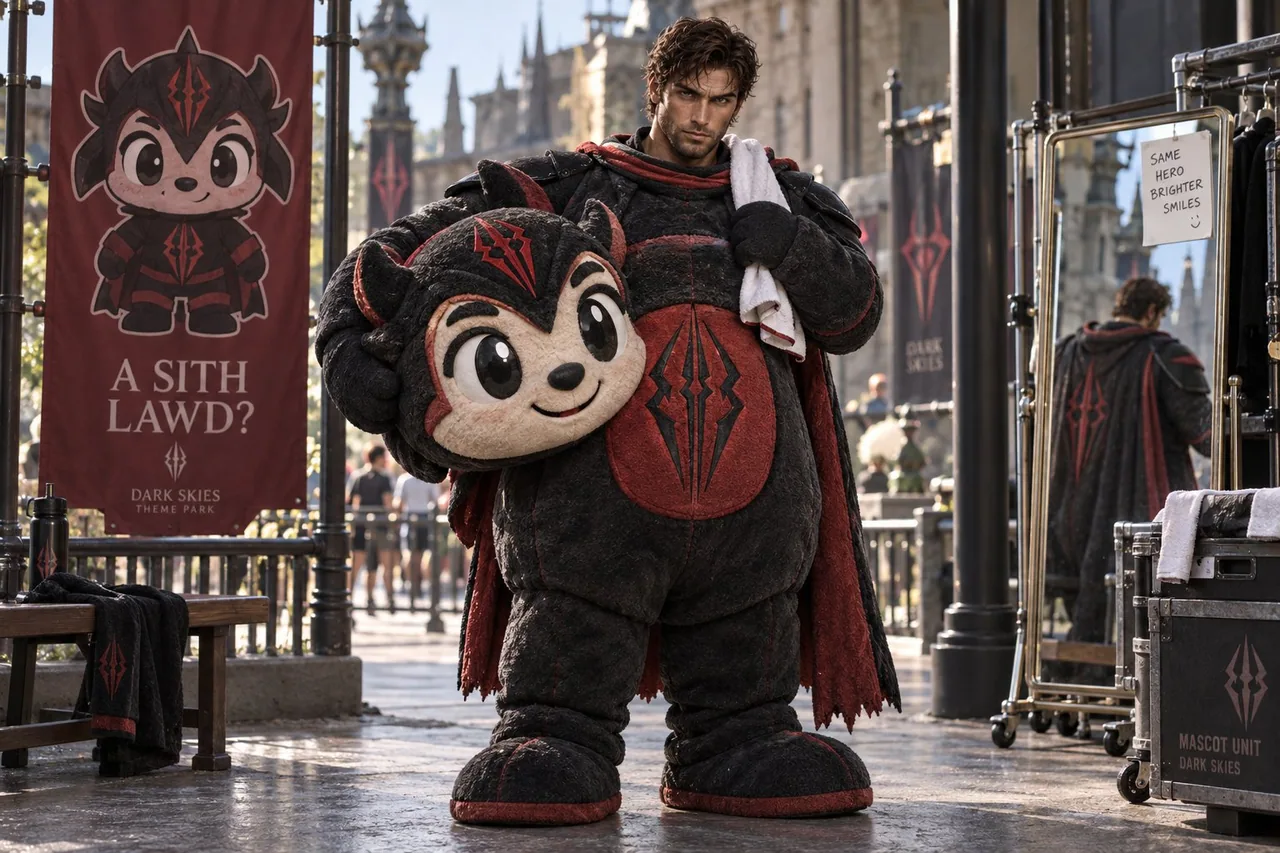
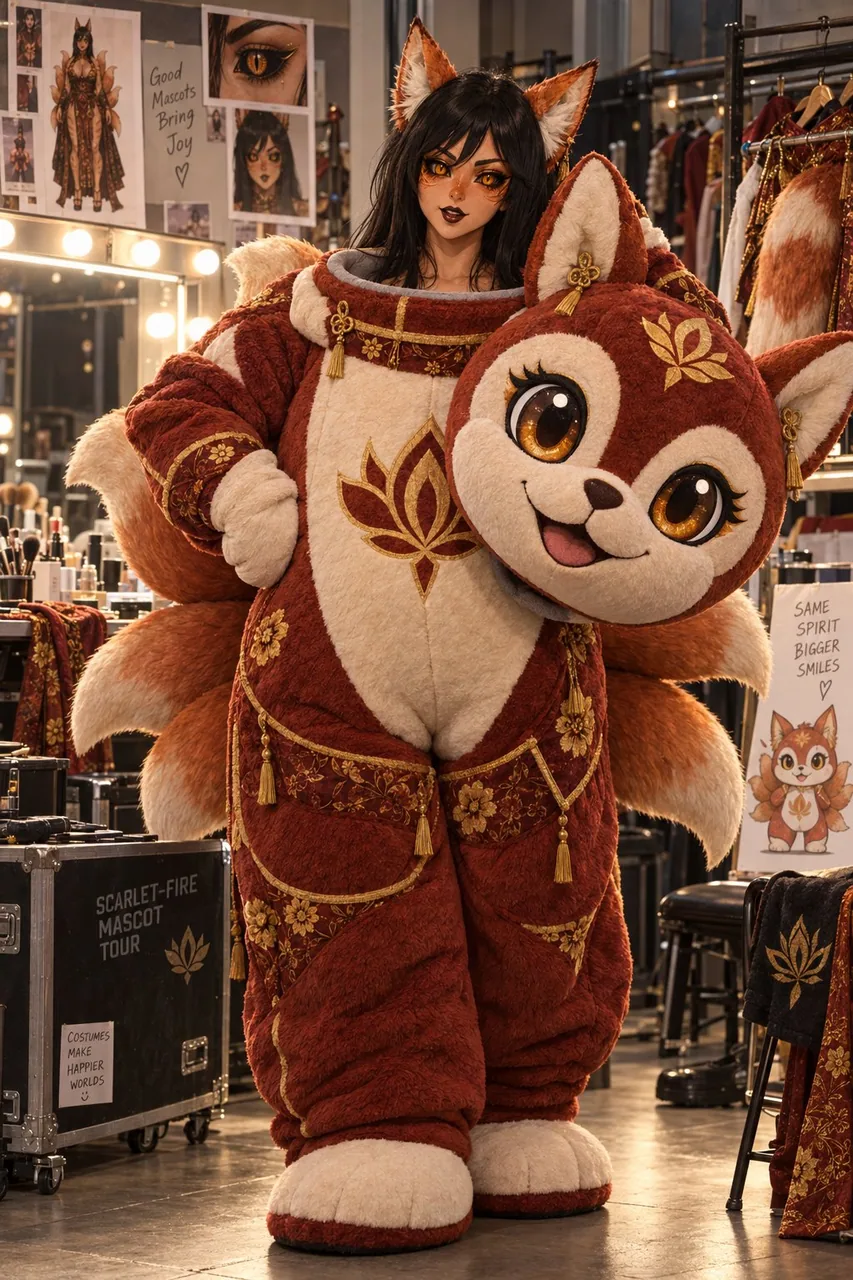
提示詞
⚠️New Prompt⚠️
Your avi wearing a mascot suit inspired by their design

Examples are Me, @MagsNoctis @ASithLawd and @RaelinAI

⚠️Prompt👇

@Image1 = Character Identity Authority. It is the complete and only source of truth for the character's face shape, eye shape, eye color, hairstyle, hair color, species traits, body type and build, signature outfit, accessories, color palette, key motifs, silhouette and overall vibe. Every single element of this image is derived from @Image1 and from nothing else. @Image1 contains exactly ONE character, and that character is the only main character in the output image.

STEP 1 — DESIGN READ (perform this analysis first, before composing anything).
Read @Image1 and extract, in this order:

1. The exact palette — the two dominant colors and up to three accent colors, recorded by name.
2. The signature motif or emblem — the shape, symbol or hardware that repeats across the design and reads as this character's personal logo.
3. The silhouette — hair volume and shape, shoulder line, leg line, and the forms of any tail, wings, horns, fins or extra limbs.
4. The species traits and exactly how they sit on the body (animal ears, horns, antennae, tail, markings, plating, scales, feathers).
5. The material language of their outfit — fabric weights, textures, trims, hardware, stitching, sheen, wear and tear.
6. Their vibe — the emotional register the entire design projects.
Everything built later in this prompt must be traceable back to this read. If an element cannot be traced to @Image1, delete it.

STEP 2 — THE MASCOT CHARACTER (the park's mascot, which the suit represents).
Design a mascot character that is a chibi caricature of the person in @Image1 — the same individual, translated into a Japanese yuru-chara mascot. It must be instantly recognizable as this character and simultaneously a soft, friendly, plush toy. Requirements:

- Chibi proportions: roughly 2.5 heads tall, no neck, head mass equal to about half the total body, dome-shaped skull wider than the shoulders, cylindrical padded torso, short stubby arms that cannot reach past its own chest, short rounded legs, wide flat oval feet.
- The face is a stylized plush mask face, never a realistic fur-covered replica of a real face: two large glossy oval eyes with a single hard specular highlight each, a soft sculpted foam brow, a small rounded stitched nose, and a wide friendly embroidered smile line.
- The mascot wears the character's signature motif as a large appliqué patch on its belly bib, and repeats it smaller on the skull.
- Skin, fur, hair and fabric colors are taken directly from the character's palette read in Step 1 — a two-tone color break is expected where the character's hair color meets their outfit colors.
- Species traits (ears, horns, antennae, tail, fins, wings) are rebuilt as oversized rounded foam-and-plush forms at two to three times their natural scale, clearly soft and toy-like, never anatomically real.
- Any signature accessory from @Image1 is rebuilt as a chunky plush version of itself, scaled up, with stitched and appliquéd hardware instead of metal.
- The mascot's expression is permanently cheerful, wide and inviting — the fixed, endearing smile of a park mascot.

STEP 3 — THE SUIT ITSELF (Japanese kigurumi construction).
The costume is a real, physically constructed mascot suit, and it must read as a suit, not as a living creature and not as a flat onesie pyjama. Model the construction honestly:

- Padded plush shell over an interior foam armature, visibly thick and slightly quilted at the seams.
- Short-pile boa / shag plush pile surface with a soft, fuzzy, light-catching nap; rooted or needle-punched blocks of color; visible raised seam ridges running over the shoulders, chest and legs.
- Panel seams and sewn panel breaks where the color blocks change; darts and topstitching in a slightly darker thread.
- The head piece is a separate sculpted foam-and-fabric unit with a wide collar skirt at its base, sized so the wearer's shoulders fit inside it.
- Mitten hands with stitched finger lines and no visible claws; flat wide oval feet with a thick sole rim.
- A hidden zipper at the back of the neck, a walking slit at the back of the legs, a small fabric brand tag sewn into a hem, and the inside of the neck opening showing a ring of grey foam and a hint of dark interior mesh.
- The whole suit is generously stuffed and slightly too round for the person wearing it, so it holds the plush toy silhouette even when occupied.

STEP 4 — THE WEARER (the character, mid-costume-change).
The character from @Image1 is wearing the suit — the body of the costume is fully on, fastened up to the shoulder cowl — but the suit's HEAD PIECE is OFF. The character's own head, face, hairstyle, hair color, eyes and species traits are fully visible and unchanged above the rolled-down collar of the suit, exactly as in @Image1. Their own identity is the point: the face in this image is the reference's face, unmistakable and untouched.
The huge plush head piece is cradled in the character's arms at hip and waist height, held under one arm and across the body, its chin tilted upward and its plush face turned outward toward the viewer's side of the frame. One hand supports it from beneath, the other rests flat on its side. Because the head piece is oversized and soft, it sags and tips slightly in their grip.
The padding of the suit makes the performer's real head look small and delicate on top of those enormous plush shoulders — that contrast is the charm of the shot. The suit's cowl sits low and loose around the character's collar and does not cover their chin, jaw, ears, hair or any part of their face or head.
There is exactly one mascot head in the image, and exactly one character: the head piece exists only as the object in their arms. Nobody is wearing it.

STEP 5 — THE THEME PARK (entirely derived from @Image1).
Build a full theme park whose every structure, sign, ride, prop and color is derived from this specific character's design language. Nothing here may be generic.

- The entrance arch is constructed from the character's signature motif, scaled up as an architectural form.
- The main avenue is lined with lamp posts whose finials repeat the character's emblem, and with banners printed with the character's motif as a repeating pattern in their palette.
- At least one ride is a direct translation of the character: a carousel whose figures are the character's motif repeated, or a teacup ride whose cars are shaped as their signature accessory, or a coaster whose track and trains carry their two dominant colors and their emblem on the lead car.
- Topiary hedges are clipped into the mascot's own rounded silhouette, standing in a row.
- A parade float sits parked at the kerb, built as a larger version of the same mascot, its plush surfaces matched to the suit's fabric.
- A meet-and-greet pavilion with a queued rope line, a small stage and a painted backdrop of the character's motif.
- Snack carts, popcorn boxes and drink cups carry the character's palette and emblem.
- Water fountains, planters, paving inlay, benches and bins all repeat the palette and motif.
The park's color scheme IS the character's color scheme. Nothing in the park uses a color that does not appear in @Image1, apart from neutral concrete, asphalt and living greenery. Do not import generic theme-park iconography: no fairytale castle, no mouse-eared silhouette, no generic rockets or planets, no universally recognizable ride shapes — every silhouette must be traceable to this character.
Signage lettering is kept short: one to three characters' worth of a kana-style display logotype per sign, ideally just the mascot's short name on the pavilion signboard, with a simple emblem. No paragraphs of text, no signage covered in words.

Background visitors are permitted as soft, heavily out-of-focus secondary figures in everyday summer park clothes, at a distance, occupying less than a fifth of the frame. They are anonymous, generic and never resemble the main character, never wear this mascot suit, and never wear the character's outfit or colors.

STEP 6 — POSE, CAMERA AND COMPOSITION.
16:9 widescreen. The character stands full-body in the foreground, slightly right or left of centre, occupying most of the frame height, weighted onto one hip, relaxed, mid-moment, as though they have just stepped out of the meet-and-greet tunnel and paused.
Their gaze is directed DOWN at the plush face in their arms, warm and amused. The character does not look at the camera; the camera does not exist to them.
Camera: eye level to slightly low, medium-wide lens, close enough that the plush pile of the suit and every stitch line is legible, far enough to include the avenue and pavilion behind. Depth layering is explicit: the character and the held head piece in sharp focus in the foreground, the avenue and rides in the midground, the park's far structures and sky softening into the background. Shallow depth of field, but the character's face is the sharpest point in the frame. The character's real face sits in the upper third and stays the clear focal point, brighter and more contrasty than the park behind.

STEP 7 — LIGHTING AND MOOD.
Late golden-hour afternoon, low warm sun raking across the frame from behind the pavilion, catching the plush pile and outlining the character's shoulders and hair in a soft warm rim. Neon and bulb string lights on the avenue and pavilion are already warming up and spill a soft candy-colored bounce light in the character's own accent colors onto the underside of the plush head and across the character's face. Park signage emits a gentle glow. Airy, joyful, candid, bright — a sunny behind-the-scenes moment with a slight nostalgic filmic warmth, no heavy shadows, no gloom.

STEP 8 — QUALITY AND RENDERING BAR.
Highly detailed 2.5D anime realism, keeping the exact stylization of @Image1 — never photorealism, never 3D-CGI renders, never a photograph. Polished, premium-quality stylized illustration with clean linework, crisp readable forms, rich tactile material rendering (plush pile, foam, stitched seams, appliqué, painted signage) and confident, appealing character acting. Anatomy Quality: correct proportions, five fingers on each hand, natural wrists and elbows, hands that grip the head piece convincingly without sinking into or merging with its surface, no extra or missing limbs, no warped joints, no distorted or melting fingers, no feet vanishing into the ground.

GPT Image Guidelines: this is a family-friendly, fully-clothed, tasteful theme-park illustration. All depictions are clearly fictional, stylized and illustrated. The character is fully covered by the costume. Nothing is revealing, nothing is explicit, nothing is fetishized, and no suggestive framing is used.

NEGATIVE PROMPT: extra characters, second mascot suit, someone wearing the mascot head, mascot head worn on the character's head, two mascot heads, duplicate character, clone, mirrored figure, background figure that resembles the main character, extra limbs, extra fingers, missing fingers, fused fingers, malformed hands, deformed feet, distorted face, melting anatomy, asymmetrical eyes on the character's real face, changed identity, different person, off-model character, photorealism, real photograph, live-action costume, furry fursuit realism, anatomically real animal features, horror animatronic, creepy empty eyes, dead stare, scary mascot, western sports muscle mascot suit, inflatable costume, flat fabric onesie pyjama, plain kigurumi blanket, cheap cosplay, generic theme park, fairytale castle, mouse-ear silhouette, crowded frame, subject too small, subject blurry, busy background, garbled text, misspelled signage, paragraphs of text on signs, watermark, signature, logo, cropped head, cut-off feet, flat lighting, murky colors.

FINAL GOAL: one clearly illustrated scene — the character of @Image1 standing in a theme park built entirely out of their own design language, wearing a hand-built Japanese-style chibi mascot suit of themselves from the neck down, their real face and hair bright and unchanged above the collar, the oversized plush chibi head piece cradled in their arms and turned outward, everything in the frame traceable to their own colors, motifs and silhouette.

DO NOT: redesign, restyle or reimagine the character's identity, face, hairstyle, hair color, eye color or species traits. Do not put the mascot head on the character's head. Do not add a second character, a second suit, or any figure that mirrors, duplicates or resembles the reference character. Do not turn the suit into a living creature, a real animal, a photoreal fursuit or a CGI mascot. Do not use a generic theme park or generic theme-park iconography. Do not make the background busier or brighter than the main subject. Do not render the character tiny, distant, blurry, cropped or unreadable. Do not produce malformed anatomy, extra limbs, distorted hands, warped faces or muddy textures. Do not use photorealism or photographic rendering. Do not cover, hide, soften or obscure the character's face and hairstyle. Do not add text longer than a short sign name. Do not let the park's palette introduce colors that are absent from @Image1.
中文翻譯
⚠️新 Prompt⚠️
你的頭像角色穿着一套以其自身設計爲靈感的吉祥物玩偶服

示例包括我本人、@MagsNoctis @ASithLawd 和 @RaelinAI

⚠️Prompt👇

@Image1 = 角色身份的權威依據。它是角色臉型、眼型、眼睛顏色、髮型、髮色、物種特徵、體型與體格、標誌性服裝、配飾、色彩方案、關鍵母題、剪影輪廓和整體氣質的完整且唯一的真相來源。這張圖像的每一個元素都源自 @Image1,而非其他任何東西。@Image1 中恰好只有一位角色,且該角色是輸出圖像中唯一的主角。

步驟 1 — 設計解讀(先執行這項分析,再開始構圖)。
讀取 @Image1,並按以下順序提取:

1. 精確的調色板 —— 兩個主色和最多三個點綴色,並記錄其名稱。
2. 標誌性母題或徽記 —— 在整個設計中反覆出現、可被視爲該角色個人 logo 的形狀、符號或五金件。
3. 剪影輪廓 —— 頭發的體量與形狀、肩線、腿部線條,以及任何尾巴、翅膀、犄角、鰭或額外肢體的形態。
4. 物種特徵及其在身體上的確切位置(獸耳、犄角、觸角、尾巴、斑紋、甲片、鱗片、羽毛)。
5. 其服裝的材質語言 —— 面料厚度、紋理、飾邊、五金、縫線、光澤、磨損與做舊。
6. 他們的氣質 —— 整個設計所傳達的情緒基調。
本 prompt 後續構建的一切都必須能回溯到這次解讀。如果某個元素無法回溯到 @Image1,就刪除它。

步驟 2 — 吉祥物角色(樂園的吉祥物,即這套玩偶服所代表的形象)。
設計一個吉祥物角色,它是 @Image1 中人物的 chibi(Q 版)漫畫化形象 —— 同一個人,被轉譯成日式 yuru-chara 吉祥物。它必須一眼就能被認出是這位角色,同時又是一隻柔軟、友善的毛絨玩具。要求:

- chibi 比例:大約 2.5 頭身,沒有脖子,頭部體量約佔全身的一半,穹頂形頭骨比肩更寬,圓柱形填充軀幹,短粗的手臂無法伸過自己的胸口,短而圓潤的腿,寬大扁平的橢圓腳。
- 面部是風格化的毛絨面具臉,絕不是真實面孔的寫實毛皮複製品:兩隻大而光澤的橢圓眼睛,每隻各有一個硬質清晰的高光點,一個柔軟塑形的泡沫眉弓,一個小而圓潤的縫製鼻子,以及一條寬大友善的刺繡微笑線。
- 吉祥物把角色的標誌性母題作爲一塊大號貼布繡在其腹部圍兜上,並在頭骨上以更小的尺寸重複這一母題。
- 皮膚、毛髮、頭髮和麪料的顏色直接取自步驟 1 中解讀出的角色調色板 —— 在角色髮色與其服裝配色相接處,預期會出現雙色分界。
- 物種特徵(耳朵、犄角、觸角、尾巴、鰭、翅膀)被重建爲超大、圓潤的泡沫加毛絨形態,爲其自然尺寸的兩到三倍,明顯柔軟、玩具化,絕不寫實解剖。
- @Image1 中任何標誌性配飾都被重建爲其自身的厚實毛絨版本,尺寸放大,五金以縫製和貼布繡的形式表現,而非金屬。
- 吉祥物的表情始終歡快、開闊而親切 —— 那是樂園吉祥物固定不變、惹人喜愛的微笑。

步驟 3 — 玩偶服本體(日式 kigurumi 結構)。
這套服裝是真實、實體搭建的吉祥物玩偶服,它必須看起來像一套服裝,而不是一個活物,也不是一件扁平的連體睡衣。要如實建模其構造:

- 填充毛絨外殼包裹內部泡沫骨架,肉眼可見地厚實,接縫處略帶絎縫感。
- 短絨 boa/長絨毛絨表面,具有柔軟、蓬鬆、能捕捉光線的絨毛質感;植絨或針刺工藝的色塊;肩部、胸部和腿部上可見的凸起接縫棱線。
- 色塊變化處有裁片接縫和縫製分割線;省道和明線使用略深的線。
- 頭部是一個獨立的塑形泡沫加織物部件,底部帶有寬大的領裙,其尺寸可容納穿戴者的肩膀。
- 連指手套式的手,帶有縫製的分指線,沒有可見的爪子;扁平寬大的橢圓腳,帶厚實的鞋底邊沿。
- 頸後有一條隱藏拉鏈,腿後有一條行走開衩,下襬內縫有一小塊布質品牌標籤,領口內部露出一圈灰色泡沫和一點深色內襯網布。
- 整套服裝填充得非常飽滿,對穿戴者來說略微過圓,因此即使有人穿着也仍保持毛絨玩具的剪影。

步驟 4 — 穿戴者(正在換裝過程中的角色)。
@Image1 中的角色正穿着這套玩偶服 —— 服裝主體已完全穿好,一直扣到肩部風帽處 —— 但玩偶服的頭部是摘下的。角色自己的頭、臉、髮型、髮色、眼睛和物種特徵在卷下的衣領之上完全可見且保持不變,與 @Image1 中完全一致。其自身身份纔是重點:這張圖裏的臉就是參考圖中的臉,明確無誤、未經改動。
巨大的毛絨頭部被抱在角色的雙臂中,位於胯部與腰部高度,夾在一側手臂下並橫過身體,它的下巴向上仰起,毛絨面孔朝向畫面中觀者所在一側。一隻手從下方托住它,另一隻手平放在其側面。由於頭部超大且柔軟,它在懷抱中微微下墜和傾斜。
玩偶服的填充讓穿戴者真實的頭在那對巨大毛絨肩膀之上顯得小巧精緻 —— 這種反差正是這張照片的魅力所在。玩偶服的領罩低低地、鬆鬆地環在角色頸部,不遮擋其下巴、下頜、耳朵、頭髮或臉與頭的任何部位。
圖像中恰好只有一個吉祥物頭部,且恰好只有一位角色:頭部只作爲其懷中的物件存在。沒有人戴着它。

步驟 5 — 主題樂園(完全源自 @Image1)。
構建一座完整的主題樂園,其每一處建築、標牌、遊樂設施、道具和顏色都源自這位特定角色的設計語言。此處的任何東西都不得是通用套路。

- 入口拱門由角色的標誌性母題構成,被放大爲建築形態。
- 主大道兩側排列着燈柱,其頂部裝飾重複角色的徽記;還有印有角色母題的旗幟,以重複圖案的形式呈現,並使用其調色板。
- 至少有一個遊樂設施是角色的直接轉譯:旋轉木馬上的形象是角色母題的重複,或茶杯轉盤的車廂形狀爲他們的標誌性配飾,或過山車的軌道和車廂採用其兩個主色,並在頭車上帶有其徽記。
- 綠植樹籬被修剪成吉祥物自身圓潤的剪影,排成一列。
- 一輛巡遊花車停在路邊,被建成同一吉祥物的放大版,其毛絨表面與玩偶服的面料相匹配。
- 一座互動合影亭,設有排隊用的隔離繩、一個小舞臺,以及繪有角色母題的背景板。
- 小喫車、爆米花盒和飲料杯都帶有角色的調色板和徽記。
- 噴泉、花箱、鋪裝鑲嵌、長椅和垃圾桶都重複這套調色板和母題。
樂園的配色方案就是角色的配色方案。除了中性的混凝土、瀝青和活體綠植之外,樂園中沒有任何東西使用未出現在 @Image1 中的顏色。不要引入通用的主題樂園符號:沒有童話城堡,沒有鼠耳剪影,沒有通用的火箭或星球,沒有一眼就能認出屬於任何樂園的設施形狀 —— 每一個剪影都必須能回溯到這位角色。
標牌文字保持簡短:每塊標牌一到三個字符長度的假名風格展示字體,最好只在亭子的招牌上寫吉祥物的短名字,並配一個簡單的徽記。不要成段的文字,不要滿是字詞的標牌。

允許出現背景遊客,作爲柔和、嚴重失焦的次要人物,穿着日常的夏季遊園服裝,位於遠處,佔畫面不到五分之一。他們是匿名的、通用的,絕不與主角相似,絕不穿這套吉祥物玩偶服,也絕不穿角色的服裝或配色。

步驟 6 — 姿勢、鏡頭與構圖。
16:9 寬銀幕。角色以全身姿態站在前景,略微偏左或偏右於中心,佔據畫面高度的大部分,重心壓在一側胯上,放鬆,處於一個瞬間之中,彷彿他們剛從互動合影通道走出來並停下腳步。
他們的目光向下投向他們懷中的毛絨面孔,溫暖而覺得有趣。角色不看鏡頭;對他們來說相機並不存在。
鏡頭:視平線到略低角度,中廣角鏡頭,近到能看清玩偶服的毛絨絨面與每一條縫線,遠到能把身後的大道和亭子納入畫面。景深層級明確:角色與被抱着的頭部位於前景,清晰銳利;大道和遊樂設施位於中景;樂園遠處的建築與天空在背景中柔化。淺景深,但角色的臉是畫面中最銳利的點。角色真實的臉位於畫面上三分之一,始終是明確的視覺焦點,比身後的樂園更明亮、對比更強。

步驟 7 — 光線與氛圍。
黃昏黃金時刻的午後,低角度的暖陽從亭子後方斜射穿過畫面,照亮毛絨絨面,並以柔和的暖色輪廓光勾勒出角色的肩部與頭髮。大道和亭子上的霓虹燈與燈泡串已經開始亮起,以角色自身的點綴色灑下柔和的糖果色反彈光,落在毛絨頭部的下側和角色的臉上。樂園標牌發出溫和的輝光。輕盈、歡快、自然、明亮 —— 一個陽光明媚的幕後瞬間,帶有淡淡的懷舊膠片暖意,沒有濃重陰影,沒有陰沉感。

步驟 8 — 質量與渲染標準。
高度細節化的 2.5D 動漫寫實風格,保持 @Image1 完全一致的類型化風格 —— 絕不照片寫實,絕不是 3D-CGI 渲染,絕不是照片。精緻、高品質的風格化插畫,線條乾淨,形體清晰易讀,材質表現豐富且有觸感(毛絨絨面、泡沫、縫線接縫、貼布繡、彩繪標牌),角色表演自信而富吸引力。解剖質量:比例正確,每隻手五根手指,手腕和手肘自然,雙手能可信地抱住頭部而不會陷入或與其表面融合,沒有多餘或缺失的肢體,沒有扭曲的關節,沒有變形或融化感的手指,沒有雙腳消失進地面。

GPT Image 規範:這是一幅適閤家庭觀看、衣着完整、得體的主題樂園插畫。所有描繪都明顯是虛構的、風格化的插畫。角色被服裝完全覆蓋。沒有任何暴露,沒有任何露骨內容,沒有任何物化取向,也不使用任何暗示性的構圖。

NEGATIVE PROMPT(負面提示詞):多餘角色、第二套吉祥物玩偶服、有人戴着吉祥物頭部、吉祥物頭部被戴在角色頭上、兩個吉祥物頭部、重複角色、克隆、鏡像人物、與主角相似的背景人物、多餘肢體、多餘手指、缺失手指、粘連手指、畸形的手、變形的腳、扭曲的臉、融化的解剖結構、角色真實臉上雙眼不對稱、身份改變、不同的人、偏離設定的角色、照片寫實、真實照片、真人特效服裝、furry 獸裝寫實、解剖學意義上真實的動物特徵、恐怖機械玩偶、詭異空洞的眼睛、呆滯凝視、嚇人的吉祥物、歐美體育肌肉吉祥物玩偶服、充氣服裝、扁平布料的連體睡衣、普通的 kigurumi 毯子、廉價 cosplay、通用主題樂園、童話城堡、鼠耳剪影、畫面擁擠、主體過小、主體模糊、背景雜亂、亂碼文字、拼寫錯誤的標牌、標牌上的成段文字、水印、簽名、logo、頭部被裁切、腳被切掉、平淡的光線、渾濁的顏色。

FINAL GOAL(最終目標):一個清晰繪製的場景 —— @Image1 中的角色站在一座完全由其自身設計語言構建的主題樂園中,從脖子往下穿着一套手工製作的日式 chibi 吉祥物玩偶服(以自己爲原型),其真實的臉和頭髮在衣領之上明亮且未改變,超大的毛絨 chibi 頭部被抱在懷裏並朝外翻轉,畫面中的一切都可回溯到他們自己的顏色、母題和剪影。

DO NOT(禁止):重新設計、改變風格或重新想像角色的身份、臉、髮型、髮色、眼睛顏色或物種特徵。不要把吉祥物頭部戴在角色頭上。不要添加第二個角色、第二套玩偶服,或任何鏡像、複製或與參考角色相似的形體。不要把玩偶服變成活物、真實動物、照片寫實獸裝或 CGI 吉祥物。不要使用通用主題樂園或通用的主題樂園符號。不要讓背景比主體更雜亂或更明亮。不要把角色渲染得微小、遙遠、模糊、被裁切或難以辨認。不要產生畸形的解剖結構、多餘肢體、扭曲的手、變形的臉或渾濁的材質。不要使用照片寫實或攝影式渲染。不要遮蓋、隱藏、柔化或模糊角色的臉和髮型。不要添加比簡短標牌名稱更長的文字。不要讓樂園的調色板引入 @Image1 中不存在的顏色。
溯源
- 原作者
- NachtNovaAI
- 發佈日期
- 2026-09-18
- 原始出處
- 查看原帖 ↗
- 收錄來源
- xianyu110/awesome-gpt-image2.5 · 2100781932413952315 · MIT