2 分钟 → 30 秒 + 多轮
工作流压缩:更快出稿、多轮仍稳。
Prompt
I’ve been using GPT Image 2 for visual work for a long time, and 2.5 feels like a really big improvement. With the same prompt and image input, what used to take around two minutes now takes about 20–30 seconds.

I’ve tried splitting generated images into layers. For infographics, I separated the background, text, and other elements, erased and edited them individually, then put them back together. The regenerated content would often shift slightly. It looked fine on its own, but didn’t line up when I put the layers back together.

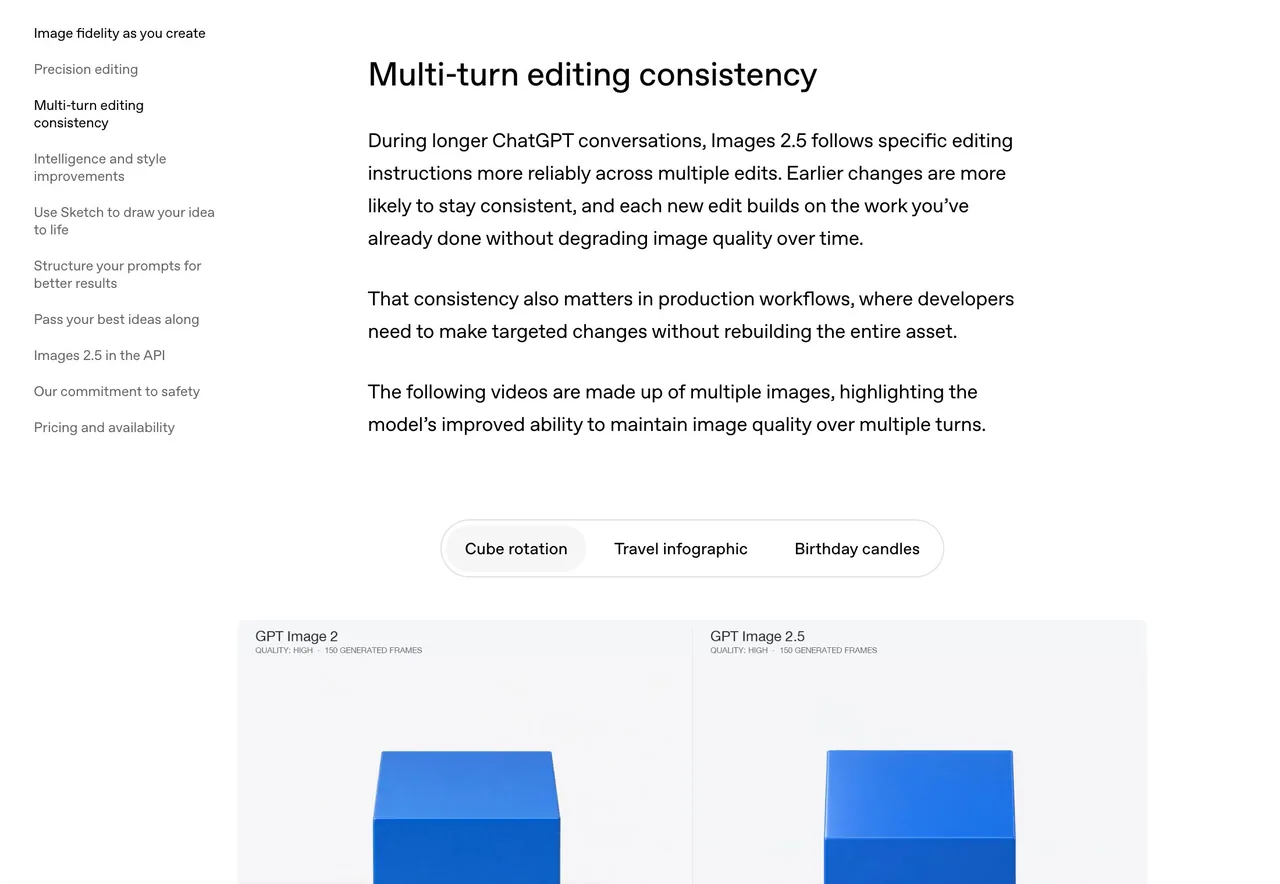
When I tried the same workflow with 2.5 this time, that drift was barely noticeable.

I later noticed OpenAI has a demo of this on its website, under “Multi-turn editing consistency.” Earlier edits stay more consistent through later rounds of editing. For my workflow, I think this makes all the difference.

Another change stood out. I like using it for images with lots of text, but the old model would often leave marks around the text that looked like water stains. I didn’t see any in the images I generated this time. Much cleaner.

I ran a few sets of infographic editing tests using the same prompt and image input, all at 2K with quality set to high. Average times:

GPT Image 2: 122.2 seconds
GPT Image 2.5 Flare: 25.28 seconds
GPT Image 2.5 Sunburst: 30.89 seconds

OpenAI says image generation latency is up to 50% lower than Images 2, but the drop in generation time was even larger in my tests.

There are two versions this time: Flare and Sunburst. Flare is aimed at fast, everyday, high-volume generation. Sunburst is for more demanding generation and precise editing, and OpenAI says it takes longer.

Generating a good-looking image is one thing. Being able to keep editing it and put the pieces back together is another. I think this makes image editing much more practical.
Attribution
- Author
- Voxyz_ai
- Published
- 2026-09-09
- Original post
- View original ↗
- Collected from
- xianyu110/awesome-gpt-image2.5 · 2097621370389581931 · MIT