レトロデジタル編集ポスター:単一の主オブジェクト+単一のアクセントカラー+書体を主役に
CCD / MiniDisc / カセットデッキ / 携帯ゲーム機——暖かい白の背景にリアルなレトロデジタル機器を一つだけ置き、超大見出しと本体を遮蔽・交差させる。ポスターはネオンサイバーを盛らない。まず「一物一色一見出し」を固め、それから技術的な微細タイポグラフィを加える。
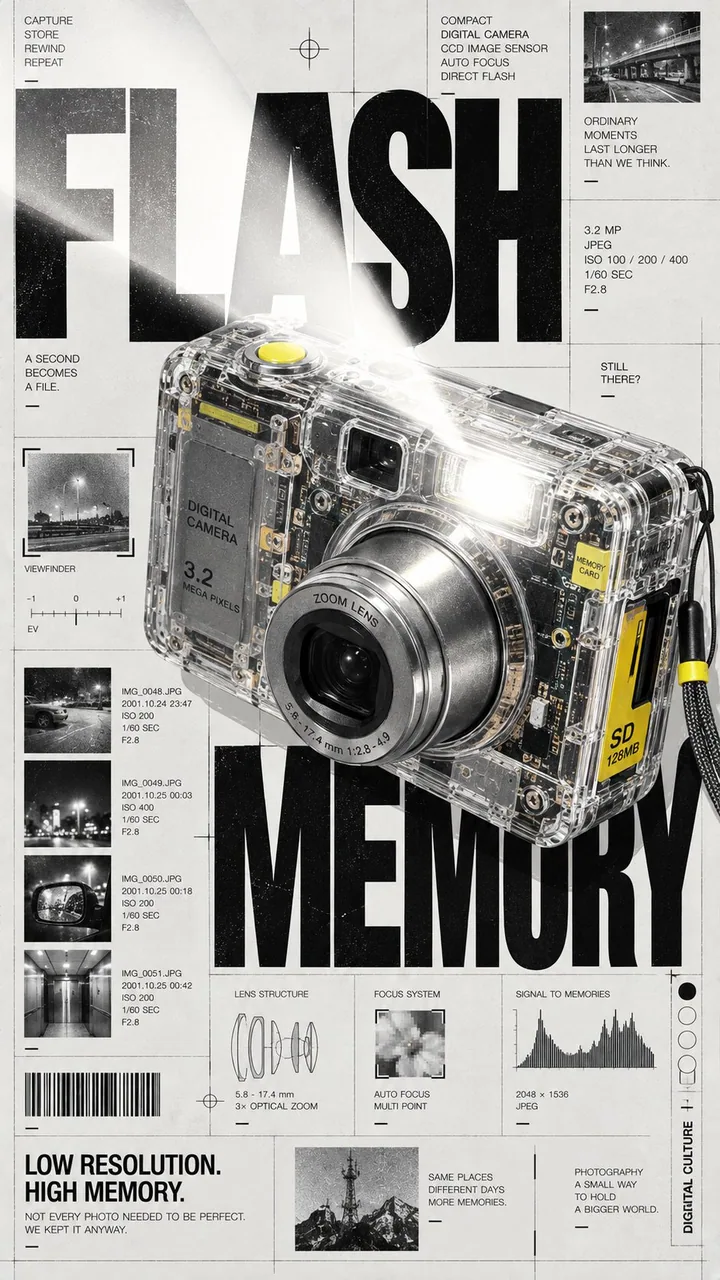
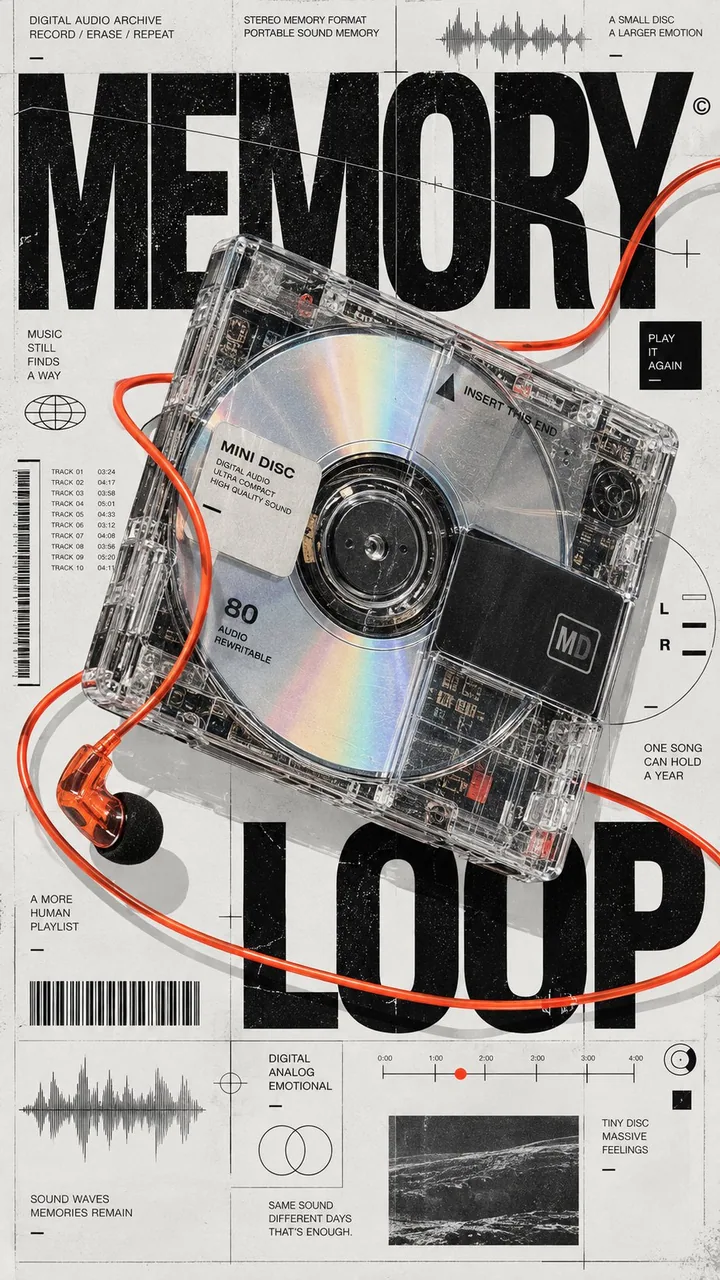
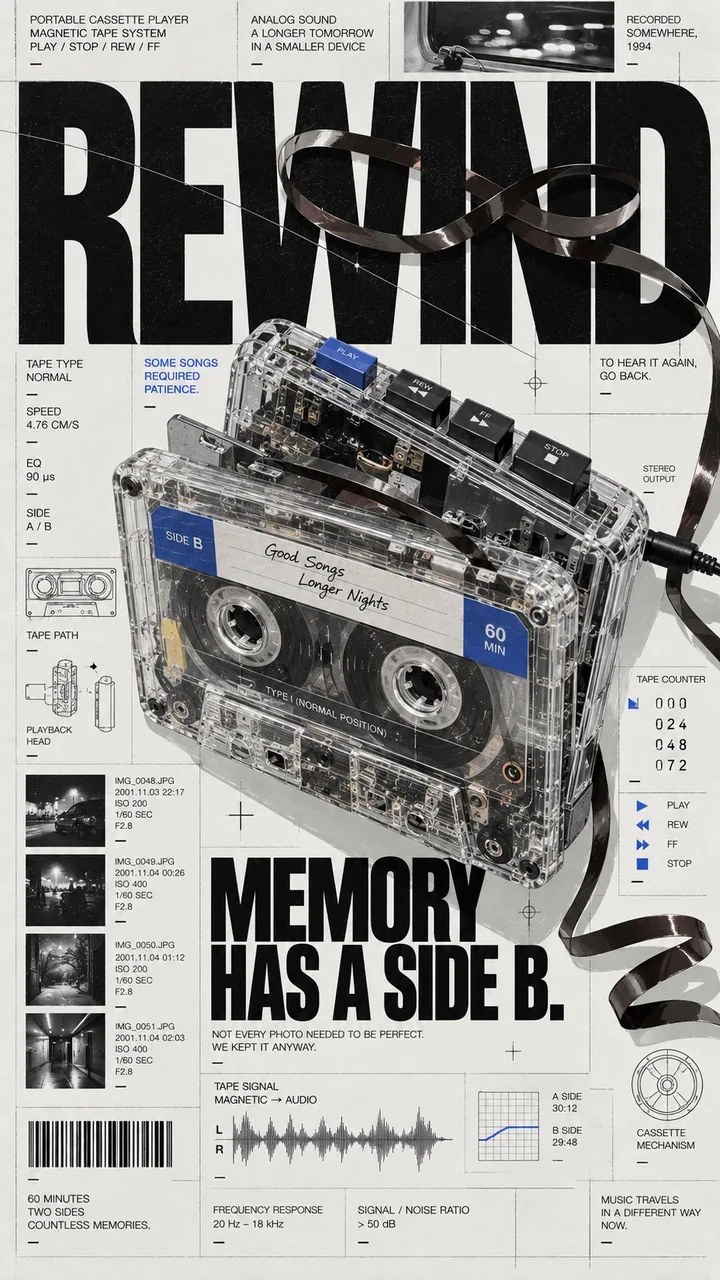
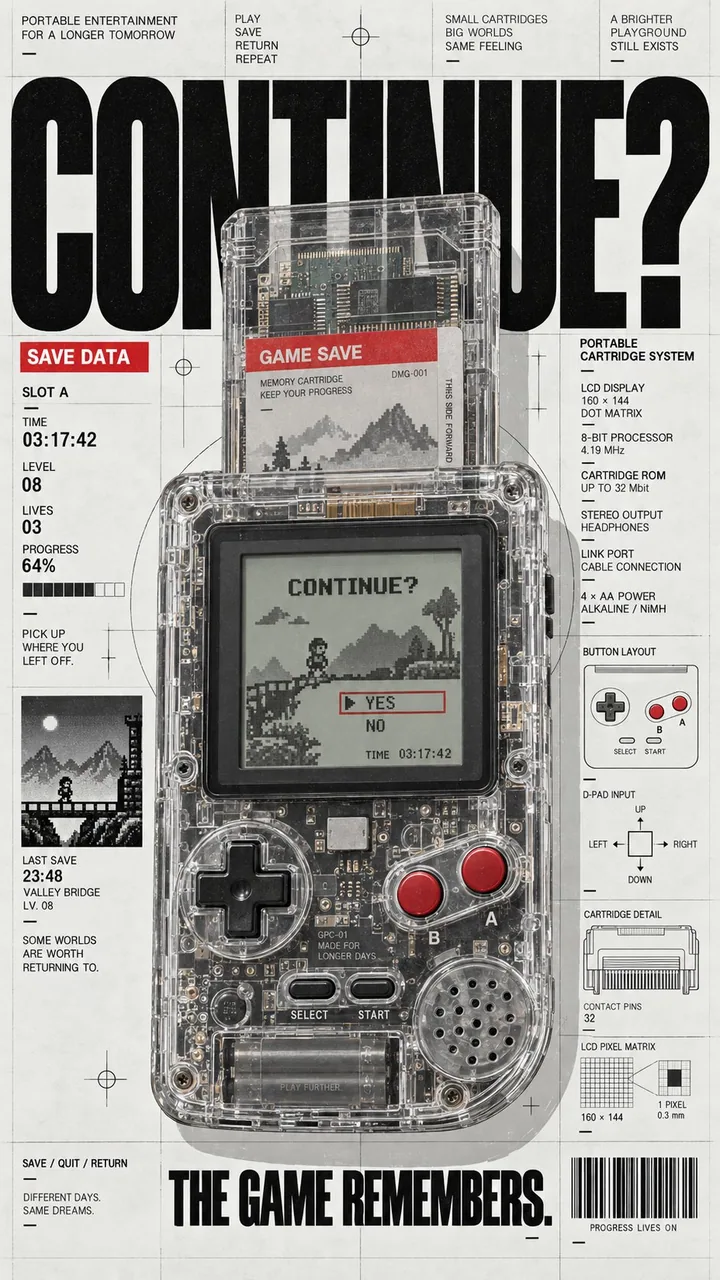
プロンプト
Create a 9:16 retro-tech editorial poster.

Subject: [DEVICE OR MEDIA]
Headline: [MAIN TITLE]
Secondary copy: [SHORT TAGLINE]
Accent color: [ONE COLOR]

Use a clean warm off-white background with one realistic retro digital object as the main visual anchor. Combine 1990s–2000s technology-magazine aesthetics, Neo-Swiss editorial grids, industrial product manuals, and early-digital culture.

Make the headline oversized and structural rather than simply placed above the product. Let the device, media, cable, tape, disc, cartridge, or flash interact physically with the typography through overlap, transparency, cropping, or foreground/background relationships.

Keep the palette restrained: warm white, black, transparent gray or metallic tones, plus one strong accent color. Add meaningful technical information related to the subject, such as storage data, playback controls, exposure settings, save progress, audio tracks, timestamps, diagrams, small labels, grids, barcodes, and micro typography.

Build clear hierarchy: hero object first, bold typography second, graphic interaction third, technical details last. Keep the layout information-rich but organized, with intentional negative space and a precise editorial grid.

Use realistic plastic, glass, metal, circuitry, screens, buttons, and mechanical details. Add only subtle print and scan texture. The technology can feel retro, but the poster itself should remain clean and contemporary.

Avoid real brand logos, random filler text, heavy grunge, distressed typography, neon cyberpunk, excessive colors, futuristic HUD graphics, sparkle symbols, and generic ecommerce composition.

四槽示例:FLASH MEMORY(CCD)/ MEMORY LOOP(MiniDisc)/ REWIND(磁带机)/ CONTINUE?(掌机)
日本語訳
9:16 のレトロテック・エディトリアルポスターを作成する。

被写体:[デバイスまたはメディア]
見出し:[メインタイトル]
副次コピー:[短いタグライン]
アクセントカラー:[1色]

清潔で暖かいオフホワイトの背景を使い、リアルなレトロデジタルオブジェクトを一つだけ主要な視覚アンカーとして置く。1990年代〜2000年代のテクノロジー誌の美学、Neo-Swiss のエディトリアルグリッド、産業製品マニュアル、初期デジタル文化を組み合わせる。

見出しは単に製品の上に置くのではなく、オーバーサイズで構造的にする。デバイス、メディア、ケーブル、テープ、ディスク、カートリッジ、またはフラッシュを、重なり、透明性、裁ち落とし、前景/背景の関係を通じてタイポグラフィと物理的に相互作用させる。

パレットは抑制する:暖かい白、黒、透明なグレーまたはメタリックトーン、加えて一つの強いアクセントカラー。被写体に関連する意味のある技術情報を加える。例えばストレージデータ、再生コントロール、露出設定、保存進行状況、オーディオトラック、タイムスタンプ、図表、小さなラベル、グリッド、バーコード、微細タイポグラフィ。

明確な階層を構築する:まずヒーローオブジェクト、次に大胆なタイポグラフィ、三番目にグラフィックの相互作用、最後に技術的細部。レイアウトは情報豊富だが整理され、意図的な余白と精密なエディトリアルグリッドを持つ。

リアルなプラスチック、ガラス、金属、回路、スクリーン、ボタン、機械的細部を使用する。繊細な印刷とスキャンのテクスチャのみを加える。テクノロジーはレトロに感じられてよいが、ポスター自体は清潔で現代的であり続けるべきである。

避ける:実際のブランドロゴ、ランダムな埋め草テキスト、重いグランジ、破損したタイポグラフィ、ネオンサイバーパンク、過度な色彩、未来的な HUD グラフィック、キラキラ記号、一般的なEC構図。

四枠の例:FLASH MEMORY(CCD)/ MEMORY LOOP(MiniDisc)/ REWIND(カセットデッキ)/ CONTINUE?(携帯ゲーム機)
出典
- 原作者
- MrLarus
- 公開日
- 2026-09-29
- 原典
- 元の投稿を見る ↗
- 収録元
- xianyu110/awesome-gpt-image2.5 · 2104913993869779322 · MIT