1枚の画像→4×4ダンス参考シート→MiniMaxで動画完成
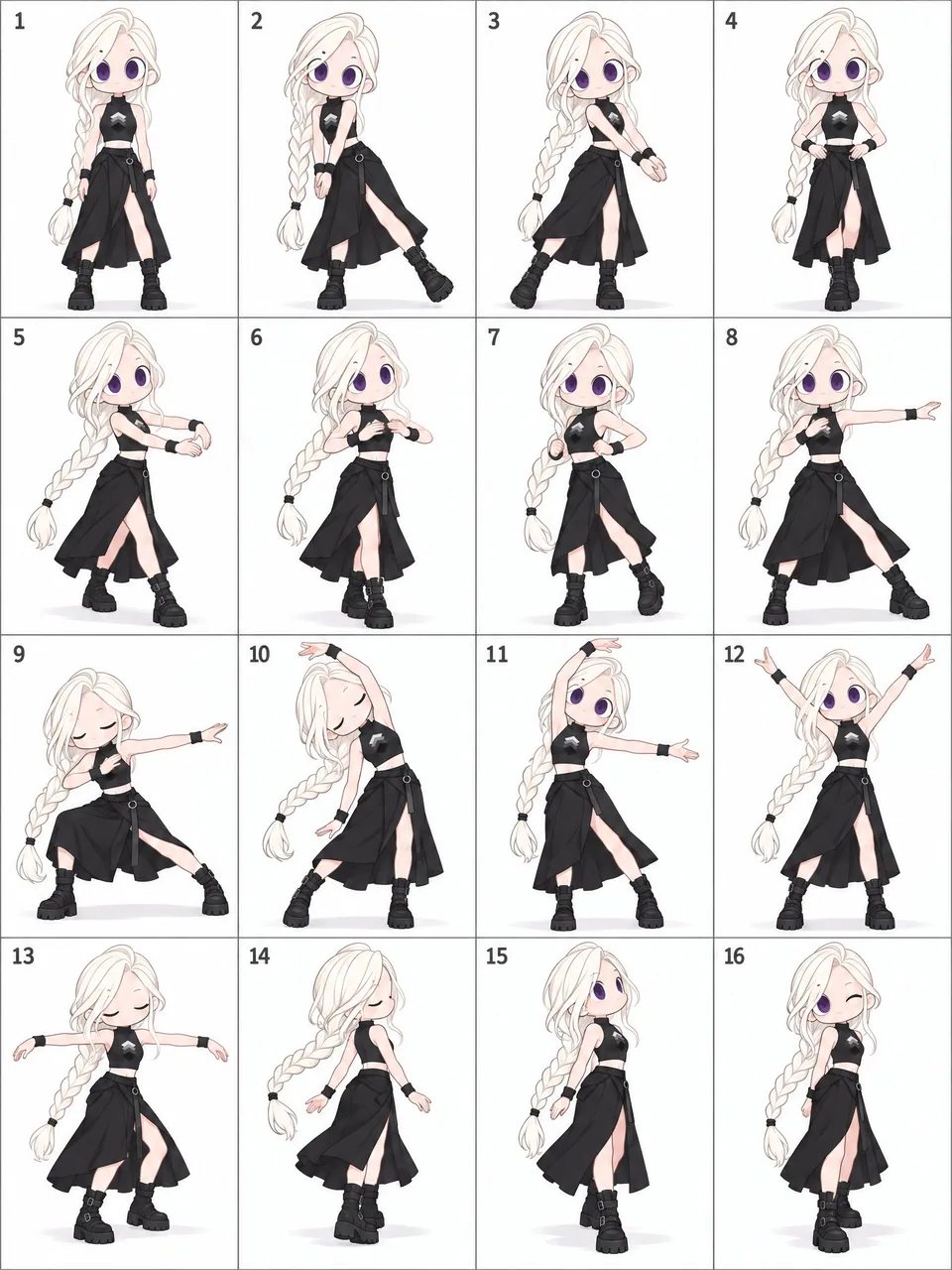
キャラクター画像を1枚アップロードすると、Image 2.5 が16コマの連続ダンスシートを生成し、それを MiniMax H3 に渡して滑らかなダンス動画につなぐ。ピクセル/二次元のショートモーション制作パイプラインとして、この画像プロンプトをそのまま流用できる。
プロンプト
Create a polished square-format dance reference sheet featuring the character from the uploaded reference image. The final image should be arranged as a clean 4×4 grid containing exactly 16 equally sized panels. Each panel represents the next key pose in a single uninterrupted dance sequence, read from left to right and then top to bottom.

Reference Fidelity

Treat the uploaded character as the definitive visual reference throughout the sheet.

Across all 16 frames, keep the character’s identity completely stable, including:

face and facial features
hairstyle and hair length
color palette
body proportions and species
clothing and garment construction
accessories
overall illustration and rendering style

Any part of the character that is not visible in the reference should be inferred conservatively and then depicted the same way throughout the entire sequence.

Choose a style of dance that feels natural for the character’s personality, anatomy, outfit, and available range of motion.

Movement Logic

The sixteen images are consecutive moments from one continuous routine, not sixteen unrelated dance poses.

Every pose should flow naturally into the next through small steps, weight transfers, pivots, or continuing arm gestures. Keep the supporting limbs and direction of rotation physically consistent from frame to frame.

Changes in orientation, body height, balance, and momentum should happen progressively rather than suddenly.

Each frame should remain visually distinct while the overall routine develops through a clear progression: a relaxed opening, gradual build-up, expressive peak, and controlled settling finish.

Choreography

Follow this exact movement sequence:

1. Begin with feet comfortably apart, knees relaxed, and arms resting low.

2. Shift weight left, tapping the right foot outward as the hands drift left.

3. Transfer weight onto the right foot, letting both hands sweep low toward the right.

4. Draw the left foot inward while the hands continue upward to waist height.

5. Step the left foot forward diagonally, turning the torso slightly left as the arms round forward.

6. Rock onto the front left foot, allowing the rounded arms to rise toward chest height.

7. Push gently back onto the right foot, drawing the elbows toward the ribs.

8. Step the left foot out to the left, opening the left arm in the same direction.

9. Settle into a shallow left lunge while the right arm sweeps across the chest toward the left.

10. Deepen the lunge slightly as the right arm continues its arc overhead into a gentle left side bend.

11. Straighten gradually, keeping the right arm overhead while the left arm opens outward.

12. Reach the routine’s peak in a tall, grounded stance, extending both arms into an open upward diagonal.

13. Soften the knees and lower both arms outward through shoulder height.

14. Shift weight onto the left foot and pivot a quarter-turn left, letting the arms continue downward.

15. Bring the right foot forward into a small staggered stance, lifting the chest as the arms settle low behind the hips.

16. Finish in that same stance, turning the head toward the viewer with a character-appropriate expression and relaxed, deliberate hands.

If the character has nonhuman anatomy, reinterpret the steps and gestures as the closest anatomically appropriate equivalents while preserving the same order, rhythm, direction, and continuity.

Secondary Motion

Hair, loose garments, and hanging accessories should react naturally to the choreography rather than remaining static.

Their movement should follow the character’s momentum:

hair and fabric lag slightly behind steps and sweeping gestures
loose elements swing naturally during turns
hair and garments fall with gravity during bends
movement gradually settles as the routine approaches the final pose
light fabrics flutter subtly
heavier fabrics move with greater weight and slower follow-through
fitted clothing develops believable folds around bending and twisting joints

Keep all secondary motion proportional to this relatively gentle routine.

Hair length, clothing construction, and accessory placement must remain consistent in every frame.

Communicate movement through the changing shapes and positions of the hair and fabric themselves. Do not use motion lines, speed lines, ghosting, or movement trails.

Sheet Presentation

Use a square canvas containing a precise 4×4 grid.

The presentation should include:

exactly 16 equally sized panels
one full-body character in every panel
small, clearly readable numbers 1–16 in the upper-left corner of their corresponding panels
a clean white background
thin grid lines
consistent character scale
a fixed camera viewpoint
consistent lighting and rendering
comfortable empty space around every limb, hairstyle, ear, wing, tail, garment, and accessory
subtle ground shadows
clear silhouettes
anatomically plausible joints
convincing weight distribution and balance

The character should never be cropped by the panel boundaries.

Constraints

Do not introduce repeated or near-identical poses, abrupt movement transitions, identity drift, costume changes, additional characters, new props, scenery, captions, or watermarks.

Avoid extra or missing limbs, malformed hands, implausible joints, inconsistent supporting feet, accidental panel overlap, cropped features, sudden changes in character scale, or unexplained changes in orientation.

The finished sheet should read immediately as sixteen carefully selected consecutive keyframes from one coherent dance performance by the same character.
日本語訳
アップロードされた参考画像のキャラクターを起用した、洗練された正方形フォーマットのダンス参考シートを作成する。最終的な画像は、まったく同じサイズの16パネルを正確に含む、整った4×4グリッドとして配置する。各パネルは、途切れない一つのダンスシーケンスにおける次のキーポーズを表し、左から右へ、次に上から下へと読む。

参考への忠実度

アップロードされたキャラクターを、シート全体を通して決定的な視覚的参照として扱う。

16フレームすべてを通して、キャラクターの同一性を完全に安定させ、以下を含めて維持する:

顔と顔の特徴
髪型と髪の長さ
カラーパレット
体型のプロポーションと種族
服装と衣服の構造
アクセサリー
イラストとレンダリングの全体的なスタイル

参考画像で見えていないキャラクターの部位は、控えめに推測し、その後シーケンス全体を通して同じように描写する。

キャラクターの性格、身体構造、衣装、可動範囲にとって自然に感じられるダンスのスタイルを選ぶ。

動きの論理

16枚の画像は、無関係な16のダンスポーズではなく、一つの連続したルーティンの連続する瞬間である。

すべてのポーズは、小さなステップ、体重移動、ピボット、あるいは継続する腕のジェスチャーを通して、次のポーズへ自然につながるべきである。支持する四肢と回転の方向を、フレームごとに物理的に一貫させる。

向き、身体の高さ、バランス、勢いの変化は、突然ではなく漸進的に起こるべきである。

各フレームは視覚的に区別できるまま、ルーティン全体は明確な進行——リラックスした導入、徐々の高まり、表現豊かなピーク、制御された収束のフィニッシュ——を通して展開する。

振付

次の正確な動きの順序に従う:

1. 足を無理なく開き、膝をリラックスさせ、腕を低く下ろした状態で始める。

2. 体重を左へ移動し、右手の甲を外側へタップしながら、両手を左へ流す。

3. 体重を右足へ移し、両手を右へ低く払う。

4. 左手を内側へ引き寄せながら、両手を腰の高さまで上げ続ける。

5. 左足を斜め前方へ踏み出し、両腕を前に丸めながら上体をわずかに左へ回す。

6. 前方の左足に乗り込み、丸めた両腕を胸の高さへ上げる。

7. 右足へそっと押し戻し、肘を肋骨へ引き寄せる。

8. 左足を左へ踏み出し、左腕を同じ方向へ開く。

9. 浅い左ランジに落ち着かせ、右腕を胸の前で左へ払う。

10. 右腕が頭上へ弧を描きながら、左側への緩やかな体側の曲げへとランジを少し深める。

11. 右腕を頭上に保ったまま、左腕を外側へ開きながら徐々に体を起こす。

12. 背が高く地面に根づいたスタンスでルーティンのピークに達し、両腕を開いた斜め上方向へ伸ばす。

13. 膝を柔らかくし、両腕を肩の高さを通して外側へ下ろす。

14. 体重を左足へ移し、左へ四分の一回転ピボットし、腕を下げ続ける。

15. 右足を前方へ寄せて小さな前後のスタンスを作り、腕を腰の後ろへ低く落ち着かせながら胸を上げる。

16. 同じスタンスで終え、キャラクターにふさわしい表情で頭を視聴者へ向け、手はリラックスして意図的に置く。

キャラクターが人外の身体構造を持つ場合は、同じ順序、リズム、方向、連続性を保ちながら、最も解剖学的に適切な相当する動きとしてステップとジェスチャーを再解釈する。

二次的な動き

髪、ゆったりした衣服、ぶら下がるアクセサリーは、静止したままではなく、振付に自然に反応するべきである。

それらの動きはキャラクターの勢いに従うべきである:

髪と布はステップや払うジェスチャーよりわずかに遅れて追従する
回転の間、ゆるい要素は自然に揺れる
曲げる動作の間、髪と衣服は重力に従って落ちる
ルーティンが最終ポーズに近づくにつれ、動きは徐々に落ち着く
軽い布はかすかに揺れる
重い布はより大きな重みと遅いフォロースルーで動く
身体に沿った衣服は、曲がりねじれる関節の周りに説得力のあるひだを作る

すべての二次的な動きは、この比較的穏やかなルーティンに比例させる。

髪の長さ、衣服の構造、アクセサリーの位置は、すべてのフレームで一貫していなければならない。

動きは、髪と布自体の変化する形と位置によって伝える。モーションライン、スピードライン、ゴースティング、動きの残像は使わない。

シートの提示

正確な4×4グリッドを含む正方形キャンバスを使用する。

提示には以下を含める:

正確に16の同じサイズのパネル
すべてのパネルに全身のキャラクター一体
対応するパネルの左上隅に、小さくはっきり読める1〜16の番号
清潔な白い背景
細いグリッド線
一貫したキャラクターのスケール
固定されたカメラ視点
一貫したライティングとレンダリング
すべての四肢、髪型、耳、翼、尻尾、衣服、アクセサリーの周りの快適な空白
かすかな地面の影
明確なシルエット
解剖学的に妥当な関節
説得力のある体重配分とバランス

キャラクターがパネルの境界で切れてはならない。

制約

繰り返しまたはほぼ同一のポーズ、突然の動きの遷移、同一性のドリフト、衣装の変更、追加のキャラクター、新しい小道具、背景、キャプション、ウォーターマークを導入してはならない。

余分な、または欠けた四肢、崩れた手、非現実的な関節、一貫しない支持足、偶発的なパネルの重なり、切れた特徴、キャラクターのスケールの突然の変化、説明のつかない向きの変化を避ける。

完成したシートは、同一のキャラクターによる一貫したダンスパフォーマンスから注意深く選ばれた16の連続キーフレームとして、即座に読めるべきである。
出典
- 原作者
- Scenario_gg
- 公開日
- 2026-09-15
- 原典
- 元の投稿を見る ↗
- 収録元
- xianyu110/awesome-gpt-image2.5 · 2099797670516695385 · MIT