인포그래픽 시각화 디자인
프롬프트
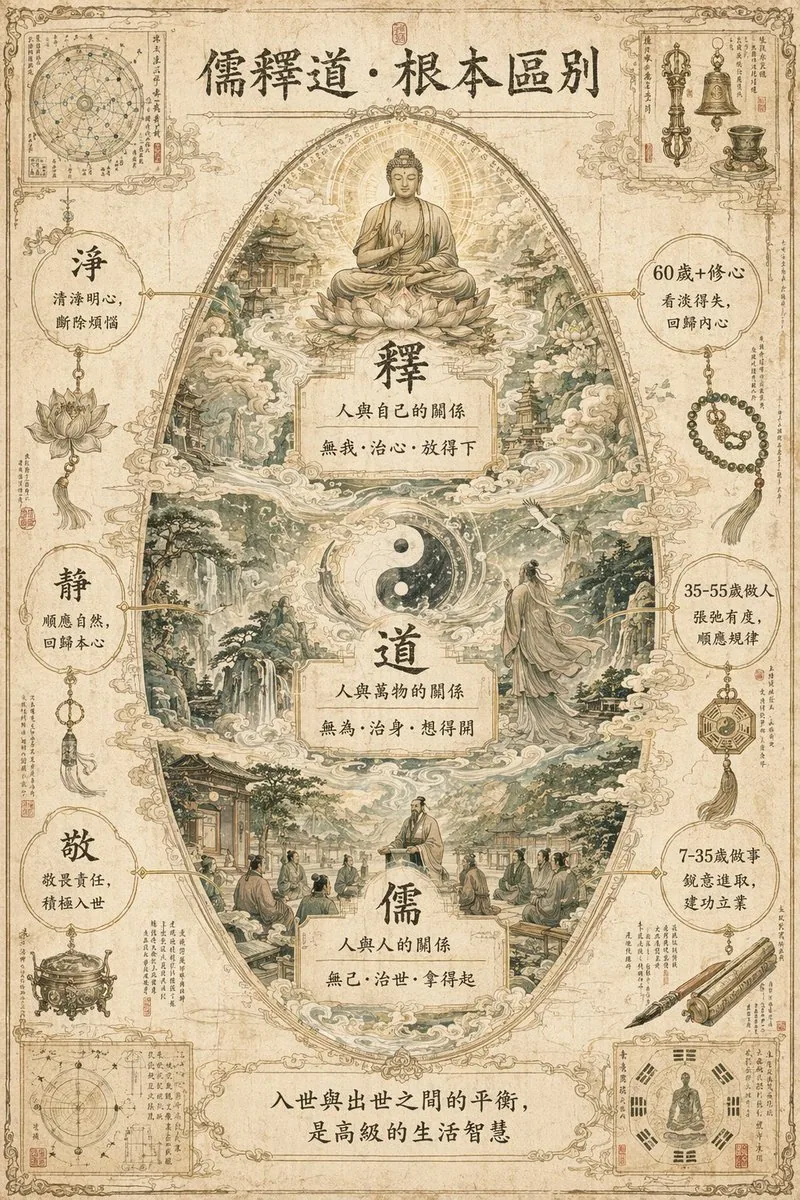
A breathtaking and extremely complex world-building infographic masterpiece conceptualizing the "{argument name="theme" default="Fundamental Differences between Confucianism, Buddhism, and Taoism"}", designed as a profound {argument name="style" default="ancient Oriental mythological manuscript"}.
Background: Pure white vintage textured canvas with a light beige aged parchment base color, subtle frayed edges, and water stain textures.
Core Layout: Central vision uses a grand "vertical egg-shaped layered structure", with Buddhism, Taoism, and Confucianism layers from top to bottom.
Margins: Four corners are decorated with fine micro-illustrations featuring ancient observation notes, ritual implements, and runes.
Colors: Low-saturation sage green, light gold, and off-white as main tones; overall light and soft without harsh high-saturation colors.
Details: Architectural lines, landscape brushwork, lotus patterns, and cloud layers are clearly visible and exquisitely detailed.
Seamless Fusion: The three layers transition naturally through clouds and flowing water; the Buddhist halo, Taoist Taiji mist, and Confucian scholarly aura connect seamlessly.
Style: Classical ink line art + low-saturation digital watercolor, with a light Chinese-style ancient book manuscript texture.
Text Annotations: Authentic Traditional Chinese characters in a mottled vintage Song typeface. Each annotation includes a short title + a line of poetic description, connected to corresponding details by dark gold hair-thin lines with no overlapping pointers.
Aspect Ratio: {argument name="aspect ratio" default="3:4"} vertical format, independent and complete.

Title Area (Top): `儒釋道·根本區別` (Confucianism, Buddhism, Taoism: Fundamental Differences)
Central Layer Labels:
Top "Buddhism": `釋`, `Relationship between man and self`, `Selflessness, governing the heart, letting go`
Middle "Taoism": `道`, `Relationship between man and all things`, `Non-action, governing the body, being open-minded`
Bottom "Confucianism": `儒`, `Relationship between man and man`, `No ego, governing the world, taking responsibility`
Side Annotations:
Left: `Purity`: pure heart and clear mind, cutting off troubles; `Stillness`: following nature, returning to the original heart; `Respect`: respecting responsibility, active involvement in society.
Right: `60+ Spiritual Cultivation`: looking lightly at gain/loss; `35-55 Conduct`: living with flexibility, following laws; `7-35 Actions`: forging ahead, building careers.
Bottom Summary: `The balance between being in the world and being out of the world is high-level life wisdom.`
한국어 번역
"{argument name="theme" default="유교·불교·도교의 근본적 차이"}"를 개념화한, 숨이 멎을 듯하고 극도로 복잡한 세계관 인포그래픽 걸작으로, 깊이 있는 {argument name="style" default="고대 동양 신화 필사본"}으로 디자인되었습니다.
배경: 연한 베이지색으로 세월이 묻어나는 양피지 바탕색, 미세하게 닳은 가장자리, 물얼룩 질감이 있는 순백색 빈티지 질감 캔버스.
핵심 레이아웃: 중앙의 비전은 웅장한 "수직 달걀형 층 구조"를 사용하며, 위에서 아래로 불교, 도교, 유교 층이 배치됩니다.
여백: 네 모서리는 고대 관측 기록, 제기, 룬 문자를 담은 정교한 마이크로 일러스트로 장식됩니다.
색상: 저채도의 세이지 그린, 연한 골드, 오프화이트를 주조색으로 하며, 전체적으로 밝고 부드럽고 강렬한 고채도 색상은 없습니다.
디테일: 건축선, 산수 붓놀림, 연꽃 문양, 구름 층이 선명하게 보이고 정교하게 묘사됩니다.
매끄러운 융합: 세 층은 구름과 흐르는 물을 통해 자연스럽게 전환되며, 불교의 광배, 도교의 태극 안개, 유교의 학자적 기운이 끊김 없이 이어집니다.
스타일: 고전 수묵 선화 + 저채도 디지털 수채화, 은은한 중국풍 고서 필사본 질감.
텍스트 주석: 얼룩덜룩한 빈티지 송체 활자의 정통 번체자. 각 주석은 짧은 제목 + 한 줄의 시적 설명으로 구성되며, 겹치는 화살표 없이 짙은 금색 실처럼 가는 선으로 해당 디테일과 연결됩니다.
화면 비율: {argument name="aspect ratio" default="3:4"} 세로 형식, 독립적이고 완결된 구성.

제목 영역 (상단): `儒釋道·根本區別` (유교·불교·도교: 근본적 차이)
중앙 층 라벨:
상단 "불교": `釋`, `인간과 자아의 관계`, `무아(無我), 마음을 다스림, 내려놓음`
중간 "도교": `道`, `인간과 만물의 관계`, `무위(無爲), 몸을 다스림, 열린 마음`
하단 "유교": `儒`, `인간과 인간의 관계`, `자아를 비움, 세상을 다스림, 책임을 짐`
측면 주석:
왼쪽: `淨`: 맑은 마음과 깨끗한 생각으로 번뇌를 끊음; `靜`: 자연을 따르고 본래의 마음으로 돌아감; `敬`: 책임을 존중하고 사회에 적극 참여함.
오른쪽: `60+ 수양(修養)`: 득실을 담담하게 봄; `35-55 처세(處世)`: 유연하게 살아가며 법도를 따름; `7-35 행동(行動)`: 앞으로 나아가 경력을 쌓음.
하단 요약: `세속에 있음과 세속을 벗어남의 균형이 고차원적인 삶의 지혜입니다.`
템플릿 변수
치환 가능한 매개변수가 있으며, 대괄호 안이 기본값입니다
theme = Fundamental Differences between Confucianism, Buddhism, and Taoismstyle = ancient Oriental mythological manuscriptaspect ratio = 3:4
출처
- 원작자
- GeekCatX
- 원문 출처
- 원문 보기 ↗
- 수록 출처
- freestylefly/awesome-gpt-image-2 · 65 · MIT