单图→4×4 舞蹈参考表→MiniMax 成片
上传角色一图,Image 2.5 出 16 格连续舞姿 sheet,再丢 MiniMax H3 接成流畅舞蹈视频。像素/二次元短动效流水线可直接抄图 prompt。
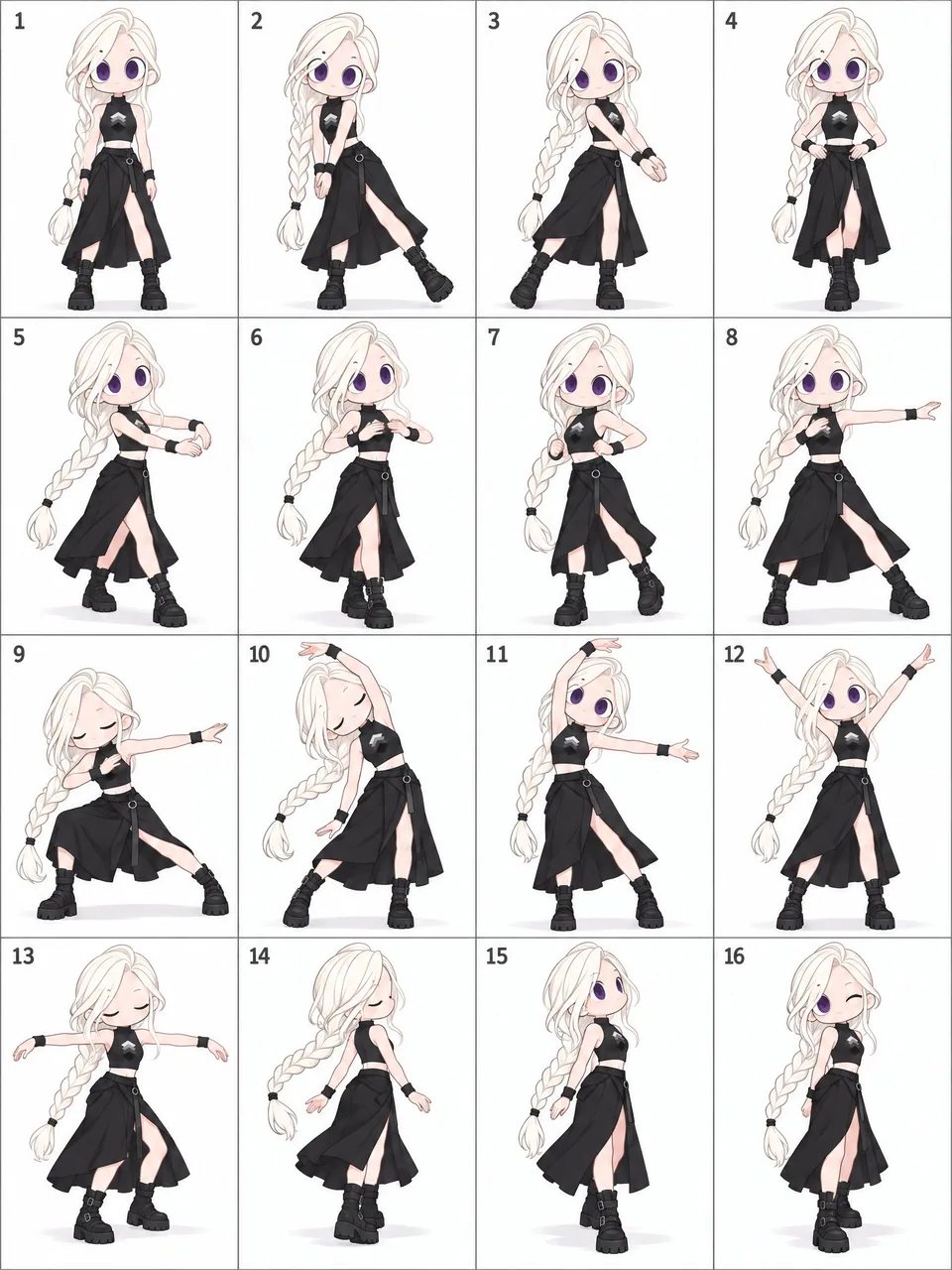
提示词
Create a polished square-format dance reference sheet featuring the character from the uploaded reference image. The final image should be arranged as a clean 4×4 grid containing exactly 16 equally sized panels. Each panel represents the next key pose in a single uninterrupted dance sequence, read from left to right and then top to bottom.

Reference Fidelity

Treat the uploaded character as the definitive visual reference throughout the sheet.

Across all 16 frames, keep the character’s identity completely stable, including:

face and facial features
hairstyle and hair length
color palette
body proportions and species
clothing and garment construction
accessories
overall illustration and rendering style

Any part of the character that is not visible in the reference should be inferred conservatively and then depicted the same way throughout the entire sequence.

Choose a style of dance that feels natural for the character’s personality, anatomy, outfit, and available range of motion.

Movement Logic

The sixteen images are consecutive moments from one continuous routine, not sixteen unrelated dance poses.

Every pose should flow naturally into the next through small steps, weight transfers, pivots, or continuing arm gestures. Keep the supporting limbs and direction of rotation physically consistent from frame to frame.

Changes in orientation, body height, balance, and momentum should happen progressively rather than suddenly.

Each frame should remain visually distinct while the overall routine develops through a clear progression: a relaxed opening, gradual build-up, expressive peak, and controlled settling finish.

Choreography

Follow this exact movement sequence:

1. Begin with feet comfortably apart, knees relaxed, and arms resting low.

2. Shift weight left, tapping the right foot outward as the hands drift left.

3. Transfer weight onto the right foot, letting both hands sweep low toward the right.

4. Draw the left foot inward while the hands continue upward to waist height.

5. Step the left foot forward diagonally, turning the torso slightly left as the arms round forward.

6. Rock onto the front left foot, allowing the rounded arms to rise toward chest height.

7. Push gently back onto the right foot, drawing the elbows toward the ribs.

8. Step the left foot out to the left, opening the left arm in the same direction.

9. Settle into a shallow left lunge while the right arm sweeps across the chest toward the left.

10. Deepen the lunge slightly as the right arm continues its arc overhead into a gentle left side bend.

11. Straighten gradually, keeping the right arm overhead while the left arm opens outward.

12. Reach the routine’s peak in a tall, grounded stance, extending both arms into an open upward diagonal.

13. Soften the knees and lower both arms outward through shoulder height.

14. Shift weight onto the left foot and pivot a quarter-turn left, letting the arms continue downward.

15. Bring the right foot forward into a small staggered stance, lifting the chest as the arms settle low behind the hips.

16. Finish in that same stance, turning the head toward the viewer with a character-appropriate expression and relaxed, deliberate hands.

If the character has nonhuman anatomy, reinterpret the steps and gestures as the closest anatomically appropriate equivalents while preserving the same order, rhythm, direction, and continuity.

Secondary Motion

Hair, loose garments, and hanging accessories should react naturally to the choreography rather than remaining static.

Their movement should follow the character’s momentum:

hair and fabric lag slightly behind steps and sweeping gestures
loose elements swing naturally during turns
hair and garments fall with gravity during bends
movement gradually settles as the routine approaches the final pose
light fabrics flutter subtly
heavier fabrics move with greater weight and slower follow-through
fitted clothing develops believable folds around bending and twisting joints

Keep all secondary motion proportional to this relatively gentle routine.

Hair length, clothing construction, and accessory placement must remain consistent in every frame.

Communicate movement through the changing shapes and positions of the hair and fabric themselves. Do not use motion lines, speed lines, ghosting, or movement trails.

Sheet Presentation

Use a square canvas containing a precise 4×4 grid.

The presentation should include:

exactly 16 equally sized panels
one full-body character in every panel
small, clearly readable numbers 1–16 in the upper-left corner of their corresponding panels
a clean white background
thin grid lines
consistent character scale
a fixed camera viewpoint
consistent lighting and rendering
comfortable empty space around every limb, hairstyle, ear, wing, tail, garment, and accessory
subtle ground shadows
clear silhouettes
anatomically plausible joints
convincing weight distribution and balance

The character should never be cropped by the panel boundaries.

Constraints

Do not introduce repeated or near-identical poses, abrupt movement transitions, identity drift, costume changes, additional characters, new props, scenery, captions, or watermarks.

Avoid extra or missing limbs, malformed hands, implausible joints, inconsistent supporting feet, accidental panel overlap, cropped features, sudden changes in character scale, or unexplained changes in orientation.

The finished sheet should read immediately as sixteen carefully selected consecutive keyframes from one coherent dance performance by the same character.
中文译文
创作一张精致的方形舞蹈参考图,角色取自上传的参考图片。最终图像应排布为整洁的 4×4 网格,正好包含 16 个等大面板。每个面板代表一段单一不间断舞蹈序列中的下一个关键姿势,按从左到右、再从上到下的顺序阅读。

参考一致性

将上传的角色视为整张参考图中权威的视觉参考。

在全部 16 帧中,保持角色身份完全稳定,包括:

面部与五官
发型与发长
配色方案
身体比例与物种
服装与衣物结构
配饰
整体插画与渲染风格

角色在参考图中不可见的任何部分,都应保守推断,并在整个序列中以相同方式描绘。

选择一种契合角色性格、解剖结构、服装与可用动作幅度的舞蹈风格。

动作逻辑

这十六幅图像是一段连续动作中的连续瞬间,而非十六个互不相关的舞蹈姿势。

每个姿势都应通过小步移动、重心转移、旋转或延续的手臂动作自然过渡到下一个。让支撑肢体与旋转方向在帧与帧之间保持物理一致。

朝向、身体高度、平衡与动量的变化应渐进发生,而非突然变化。

每一帧都应保持视觉上的独特性,同时整体动作通过清晰的推进发展:放松的开场、逐步蓄势、富有表现力的高潮,以及克制的收尾落定。

编舞

严格遵循以下动作序列:

1. 起始时双脚自然分开,膝盖放松,双臂低垂。

2. 重心左移,右脚向外点地,双手随之向左漂移。

3. 将重心转移到右脚上,让双手沿低处向右扫过。

4. 将左脚向内收回,同时双手继续向上抬至腰高。

5. 左脚斜向前迈出,躯干略微左转,双臂向前成圆弧。

6. 身体前压到左前脚上,让成圆弧的双臂升至胸高。

7. 轻缓地向后推回右脚,将双肘收向肋部。

8. 左脚向左侧迈出,左臂朝同一方向展开。

9. 稳定成一个浅浅的左侧弓步,同时右臂横过胸前向左扫去。

10. 略微加深弓步,右臂继续其弧线越过头顶,形成柔和的左侧屈体。

11. 逐渐直起身,右臂保持过头,同时左臂向外展开。

12. 以挺拔、扎实的站姿达到整套动作的高潮,双臂伸展成开放的上方斜线。

13. 放松膝盖,双臂经肩高向外下落。

14. 将重心移到左脚并向左旋转四分之一圈,让双臂继续向下。

15. 右脚向前带入一个小的错步站姿,挺起胸膛,双臂在髋后低处落定。

16. 在同一站姿中收尾,将头转向观者,做出契合角色的表情,双手放松而有分寸。

如果角色具有非人类解剖结构,则将这些步骤与手势重新诠释为解剖上最接近的对应动作,同时保持相同的顺序、节奏、方向与连贯性。

次级运动

头发、宽松衣物和垂挂配饰应对编舞做出自然反应,而非保持静止。

它们的运动应遵循角色的动量:

头发与布料略微滞后于步伐和扫掠手势
松弛元素在转身时自然摆动
头发与衣物在屈体时受重力垂落
随着动作接近最终姿势,运动逐渐平息
轻薄布料轻微飘动
较厚重的布料移动更具重量感、跟随更慢
贴身衣物在关节弯折与扭转处形成可信的褶皱

让所有次级运动与这套相对轻柔的动作保持相称的比例。

发长、衣物结构与配饰位置在每一帧中都必须保持一致。

通过头发与布料本身不断变化的形状和位置来传达运动。不要使用运动线、速度线、残影或运动拖尾。

参考图呈现

使用包含精确 4×4 网格的方形画布。

呈现应包含:

正好 16 个等大面板
每个面板中一个全身角色
对应面板左上角有小而清晰可读的数字 1–16
干净的白色背景
细网格线
一致的角色比例
固定机位视角
一致的光照与渲染
每个肢体、发型、耳朵、翅膀、尾巴、衣物和配饰周围都留有舒适空白
细微的地面阴影
清晰的剪影
解剖上合理的关节
可信的重量分布与平衡

角色绝不能被面板边界裁切。

约束

不要引入重复或近乎相同的姿势、突兀的动作转换、身份漂移、服装变化、额外角色、新道具、场景、文字说明或水印。

避免多余或缺失的肢体、畸形的手、不合理的关节、支撑脚不一致、面板意外重叠、特征被裁切、角色比例骤变或朝向的无端变化。

完成后的参考图应能立刻被读作同一角色一段连贯舞蹈表演中精心挑选的十六个连续关键帧。
溯源
- 原作者
- Scenario_gg
- 发布日期
- 2026-09-15
- 原始出处
- 查看原帖 ↗
- 收录来源
- xianyu110/awesome-gpt-image2.5 · 2099797670516695385 · MIT