建築写真→ハーフトーン旅行ポスター:上下分割テンプレート
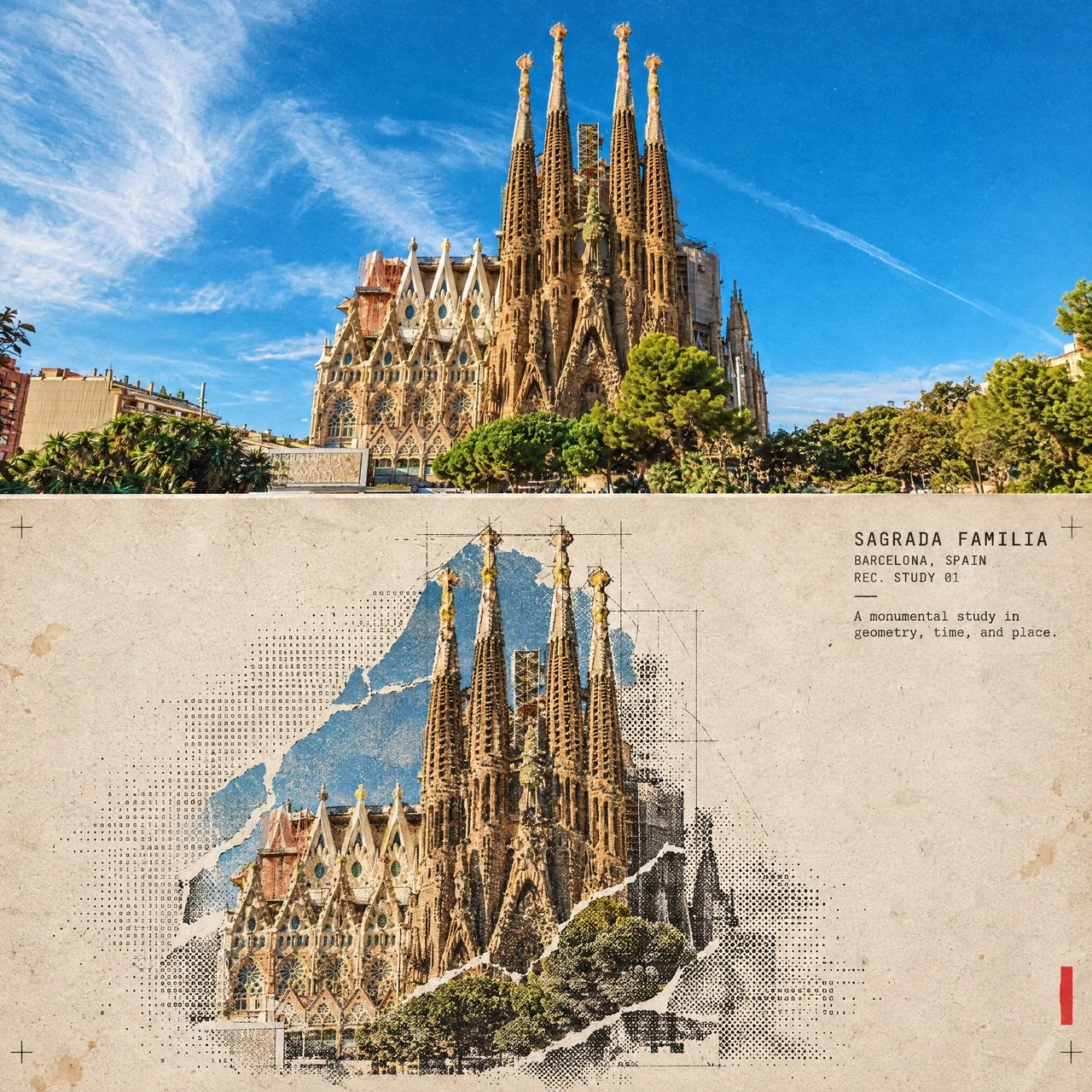
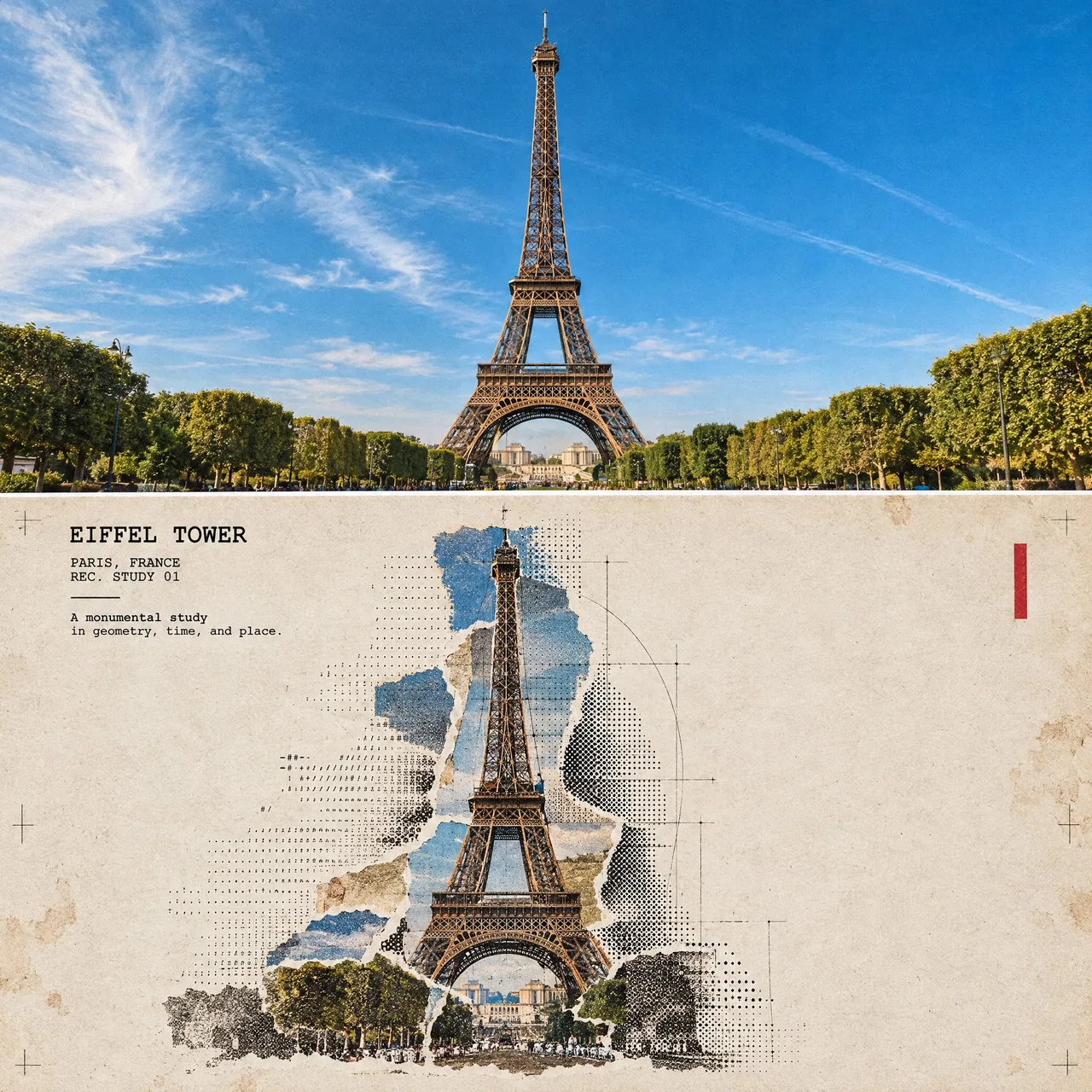
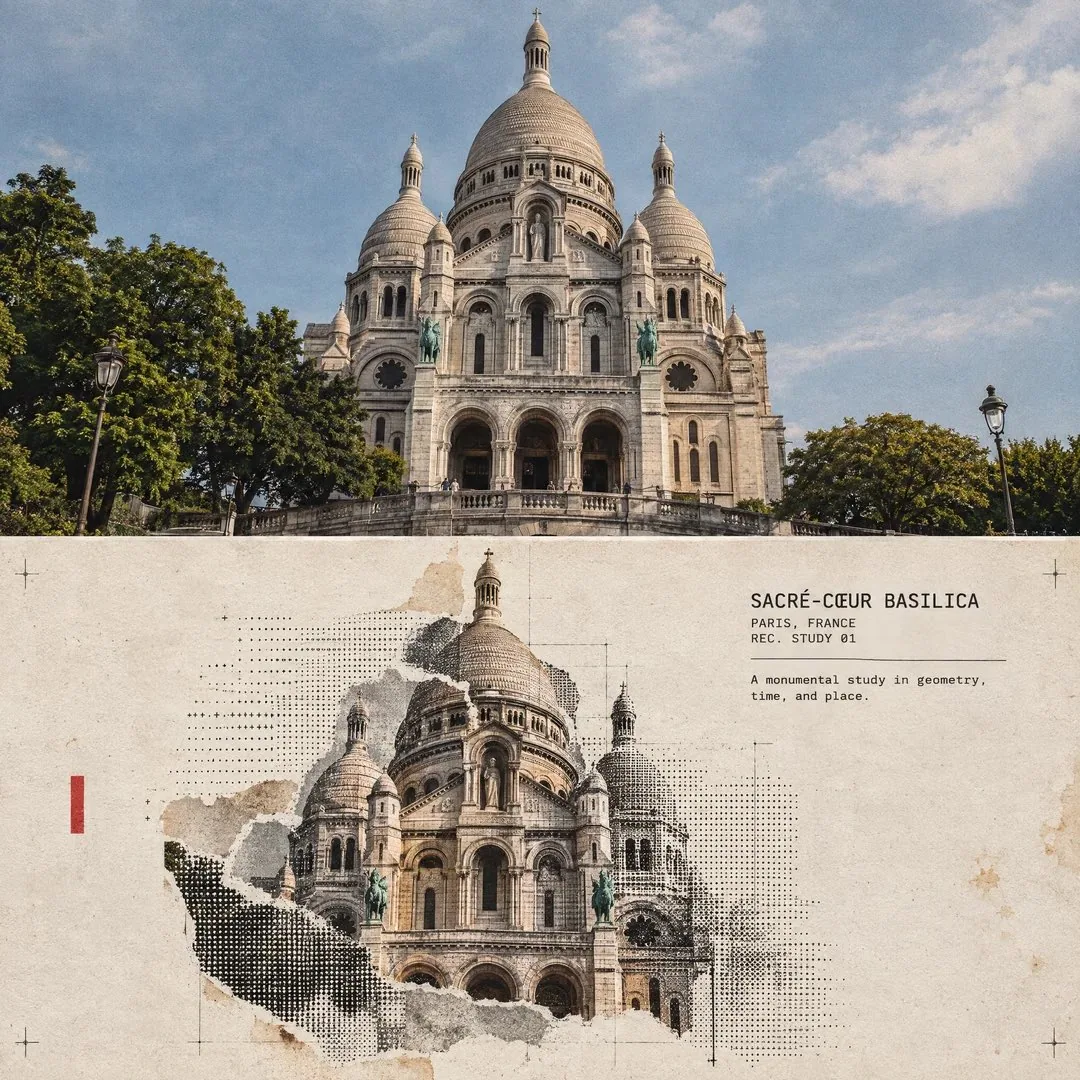
上半分は実写の構造物を保持、下半分は破れた紙片+ASCII+コピー機ハーフトーンで同じ建築を再構築。不動産/観光の量産出稿に対応、分割フォーマットは固定で再利用可能。
プロンプト
Turn this structure photo into a single high-end halftone architectural travel-collage poster. Output one poster per uploaded photo — never merge multiple structures or photos into one frame.

FORMAT

3:4 vertical canvas. Split into two roughly equal zones — real architectural photo on top, printed reconstruction below — divided by one clean, sharp horizontal line.

Do not stretch, warp, tilt, or unnaturally reposition the structure to force the proportions.

TOP HALF — THE REAL SHOT

Preserve the original structure faithfully: same architecture, proportions, perspective, distinctive details, surrounding elements, natural light and shadow, and original color mood.

Keep recognizable features such as:

* façade
* windows and arches
* towers or domes
* doors and structural details
* roofline
* surrounding landscape or street elements

Add only a subtle high-end color grade and the faintest film grain. Do not redesign or reinterpret the architecture.

BOTTOM HALF — THE PRINTED RECONSTRUCTION

Rebuild the same structure as an experimental printed architectural collage using:

torn photographic fragments + fixed-width ASCII character fields + photocopy halftone dots + architectural linework.

The structure must remain immediately recognizable.

* Torn-edge photographic fragments preserve the most important architectural details.
* Brick, stone, glass, metal, shadows, windows, and surrounding textures gradually dissolve outward into ASCII characters, black halftone dots, fragmented print grain, and fine architectural drafting lines.
* Use thin technical construction lines to subtly trace the structure’s geometry.
* Let selected areas break apart into paper fibers and halftone fragments, creating the feeling that the building is emerging from an archival print.
* Keep the main silhouette strong and readable.
* Texture: rough white paper-fiber edges, subtle photocopy imperfections, slight print misregistration, faded ink, old-paper stains, a few restrained crop marks, and one small red calibration bar.
* Color: warm gray old-paper background + black ink + the structure’s original muted colors + a single restrained red accent.
* Never fully desaturate the structure.

The structure should occupy roughly 60–88% of the frame width, scaled according to what reads best for the architecture.

Leave 22–38% of the paper visibly untouched and empty, creating generous negative space so the poster feels like an archival architectural specimen rather than a packed digital screen.

TYPOGRAPHY

Add one clean, readable fixed-width architectural title based on the structure:

[STRUCTURE NAME]

Below it include:

[CITY, COUNTRY]
REC. STUDY 01

Add one short observational caption related to the architecture, such as:

“A monumental study in geometry, time, and place.”

Typography should feel like an old architectural archive mixed with an underground experimental design journal.

A few loose ASCII glyphs may trace the outer silhouette or architectural edges as texture only — never use ASCII to invent windows, doors, structural details, or technical specifications.

MOOD

Early digital systems × analog photocopy × architectural archive × underground zine × modern travel editorial.

The structure should feel like it is surfacing from an old printed document — half photograph, half architectural drawing, half experimental print.

Sophisticated, minimal, tactile, intellectual, slightly mysterious, and highly collectible.

AVOID

Solid black terminal backgrounds, dense walls of code, cyberpunk neon, excessive ASCII, distorted architecture, impossible geometry, invented architectural details, fake technical specifications, random symbols with no meaning, garbled text, excessive colors, brand logos, QR codes, watermarks, author credits, or tourist-poster clichés.

Priority: Preserve the structure’s identity and architectural accuracy first. The experimental halftone/ASCII treatment should enhance the architecture, not hide it.
日本語訳
この構造物の写真を、単一のハイエンドなハーフトーン建築トラベルコラージュポスターに変換してください。アップロードされた写真1枚につき1枚のポスターを出力 — 複数の構造物や写真を1つのフレームに統合しないでください。

フォーマット

3:4の縦長キャンバス。ほぼ等しい2つのゾーンに分割 — 上部は実際の建築写真、下部は印刷された再構成 — 1本のクリーンでシャープな水平線で区切る。

比率を合わせるために構造物を引き伸ばしたり、歪めたり、傾けたり、不自然に位置を変えたりしないでください。

上半分 — 実際のショット

元の構造物を忠実に保つ:同じ建築、比率、遠近感、特徴的なディテール、周囲の要素、自然な光と影、元の色調。

以下のような認識可能な特徴を保つ:

* ファサード
* 窓とアーチ
* 塔やドーム
* 扉と構造的ディテール
* 屋根のライン
* 周囲の風景や街の要素

控えめでハイエンドなカラーグレーディングとごくわずかなフィルムグレインのみを加える。建築を再設計したり再解釈したりしないでください。

下半分 — 印刷された再構成

同じ構造物を実験的な印刷建築コラージュとして再構築する。用いるのは:

破れた写真断片 + 固定幅ASCII文字フィールド + コピー機のハーフトーンドット + 建築ラインワーク。

構造物は即座に認識できる状態を保たなければならない。

* 破れた縁の写真断片が最も重要な建築ディテールを保持する。
* レンガ、石、ガラス、金属、影、窓、周囲のテクスチャは、外側に向かって徐々にASCII文字、黒いハーフトーンドット、断片化した印刷粒状感、細かい建築製図線へと溶けていく。
* 細いテクニカルな作図線で構造物の幾何学をさりげなくなぞる。
* 選択した領域を紙の繊維とハーフトーン断片へと崩し、建物がアーカイブ印刷物から浮かび上がってくるような感覚を生み出す。
* 主要なシルエットは強く読み取り可能に保つ。
* テクスチャ:粗い白い紙繊維の縁、微妙なコピー機の不完全さ、わずかな印刷の見当ずれ、色あせたインク、古紙の染み、控えめなトンボをいくつか、そして小さな赤いキャリブレーションバーを1つ。
* 色:温かみのあるグレーの古紙背景 + 黒インク + 構造物本来のくすんだ色 + 控えめな赤のアクセントを1つ。
* 構造物を完全に脱色しないこと。

構造物はフレーム幅のおよそ60~88%を占め、建築にとって最もよく読めるようにスケール調整する。

紙の22~38%は目に見えて未使用かつ空白のまま残し、ゆとりのあるネガティブスペースを作ることで、ポスターが詰め込まれたデジタル画面ではなくアーカイブの建築標本のように感じられるようにする。

タイポグラフィ

構造物に基づいた、クリーンで読みやすい固定幅の建築タイトルを1つ加える:

[STRUCTURE NAME]

その下に以下を含める:

[CITY, COUNTRY]
REC. STUDY 01

建築に関連する短い観察的なキャプションを1つ加える。例えば:

“幾何学、時間、そして場所に関する記念碑的な研究。”

タイポグラフィは、古い建築アーカイブとアンダーグラウンドな実験デザインジャーナルが混ざったように感じられるべき。

いくつかのゆるいASCIIグリフが外側のシルエットや建築のエッジをテクスチャとしてなぞってもよい — ASCIIを使って窓、扉、構造的ディテール、技術仕様を捏造してはならない。

ムード

初期デジタルシステム × アナログコピー × 建築アーカイブ × アンダーグラウンドジン × モダントラベル編集。

構造物は古い印刷物から浮かび上がってくるように感じられるべき — 半分は写真、半分は建築図面、半分は実験的印刷。

洗練され、ミニマルで、触感的で、知的で、やや神秘的で、非常にコレクタブル。

避ける

漆黒のターミナル背景、密集したコードの壁、サイバーパンクネオン、過剰なASCII、歪んだ建築、不可能な幾何学、捏造された建築ディテール、偽の技術仕様、意味のないランダムな記号、文字化けしたテキスト、過剰な色、ブランドロゴ、QRコード、透かし、著者クレジット、観光ポスターのクリシェ。

優先事項:構造物のアイデンティティと建築的正確さを第一に保つ。実験的なハーフトーン/ASCII処理は建築を引き立てるものであり、隠すものではない。
出典
- 原作者
- Naiknelofar788
- 公開日
- 2026-09-16
- 原典
- 元の投稿を見る ↗
- 収録元
- xianyu110/awesome-gpt-image2.5 · 2100067049288634730 · MIT