레이어링 코디 전체 교체 가능 prompt
일본풍 레이어드 룩 장문 레시피, 아이템 교체 가능. 이커머스 착장 이미지와 小红书 OOTD에서 상품 번호만 바꿔 바로 사용.
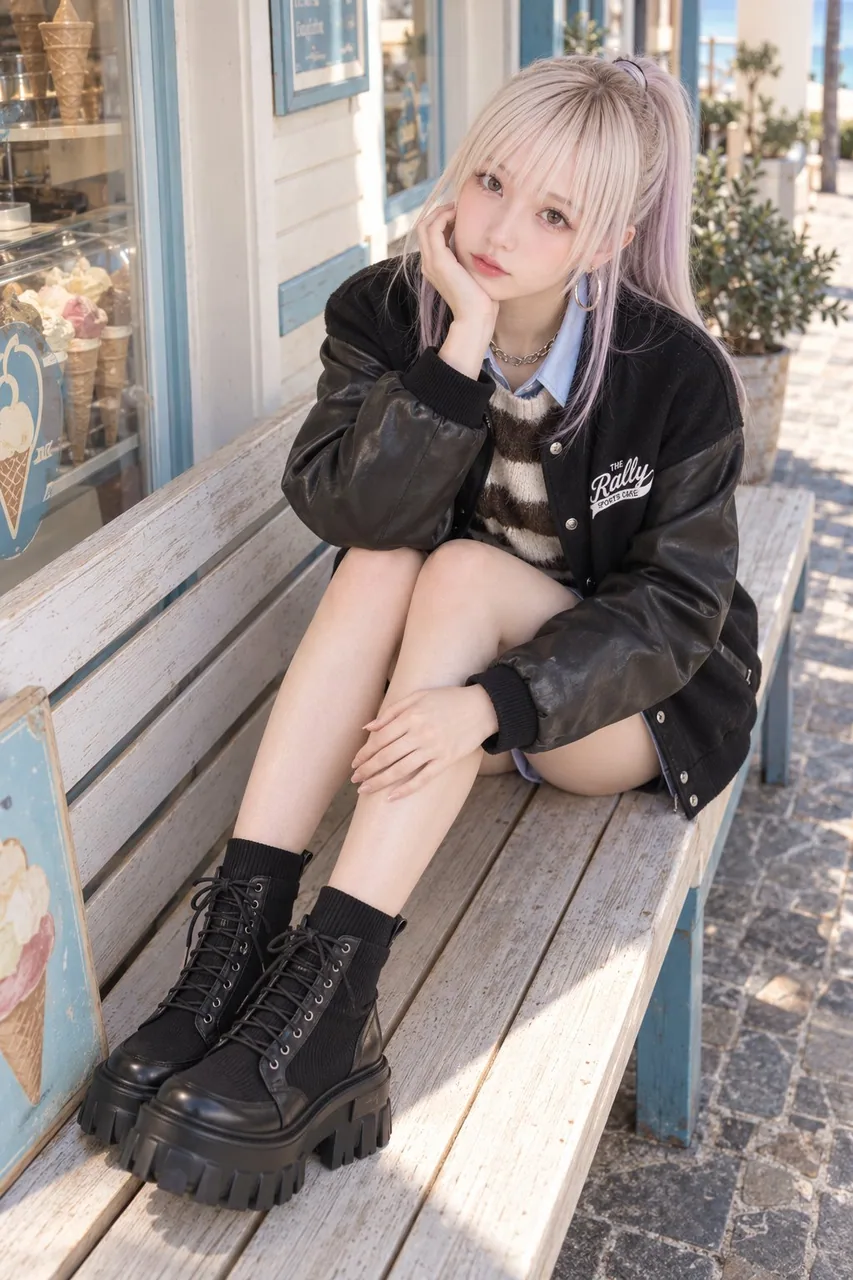
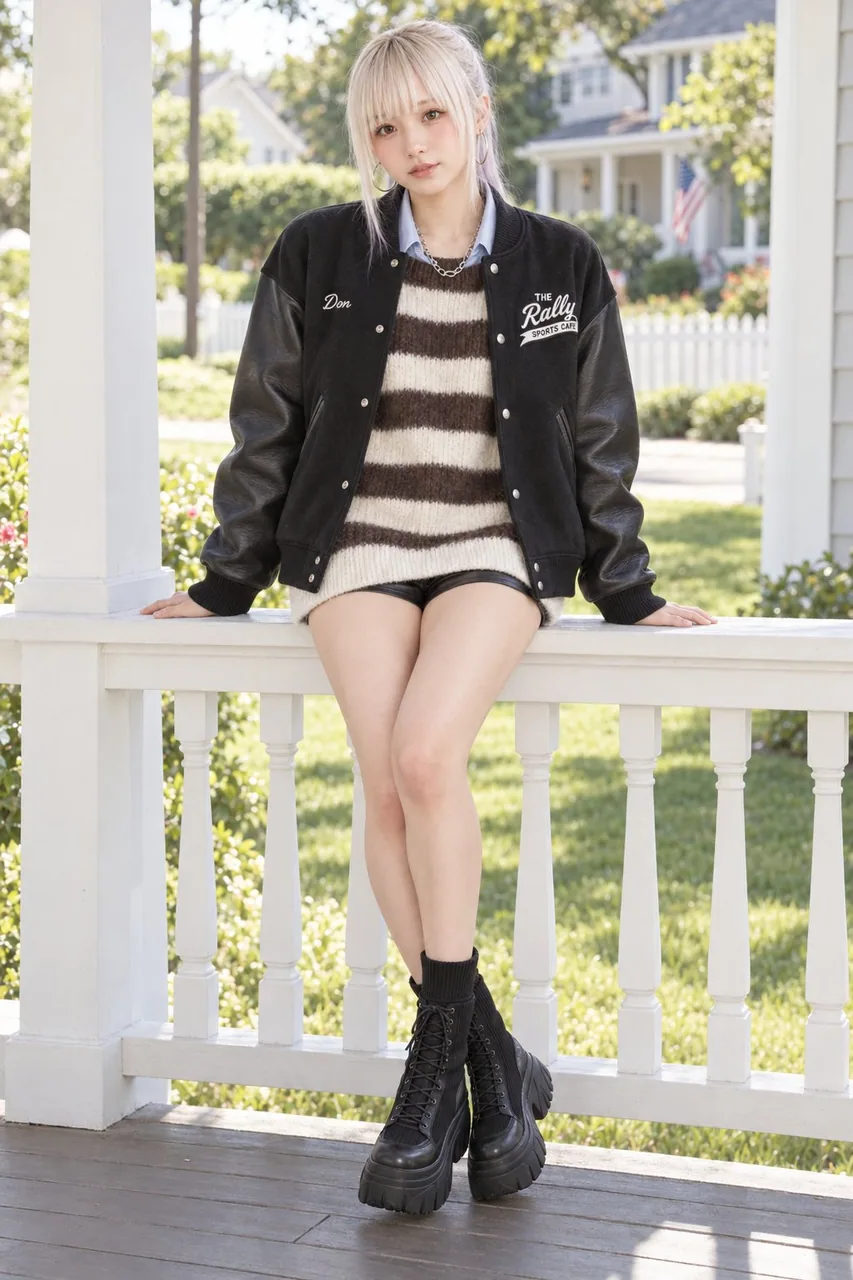
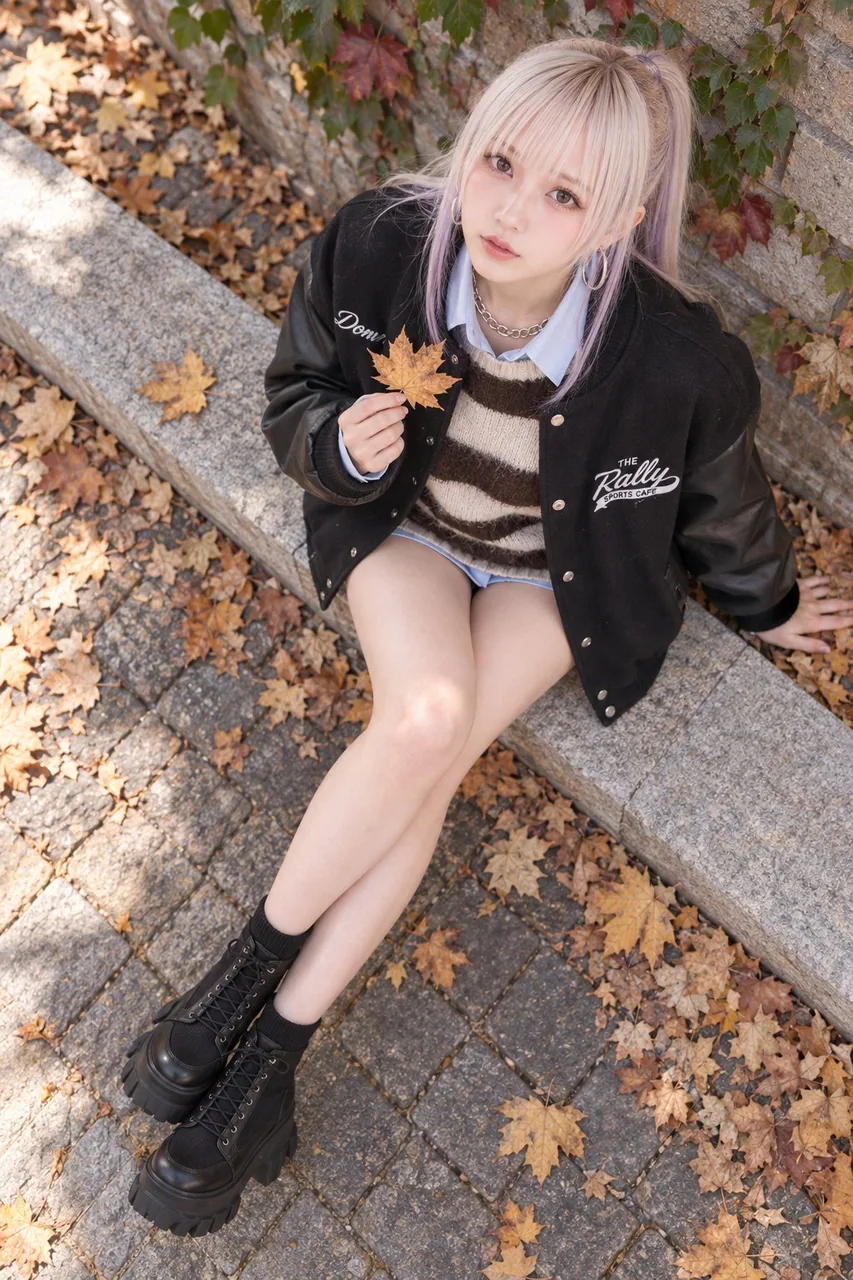
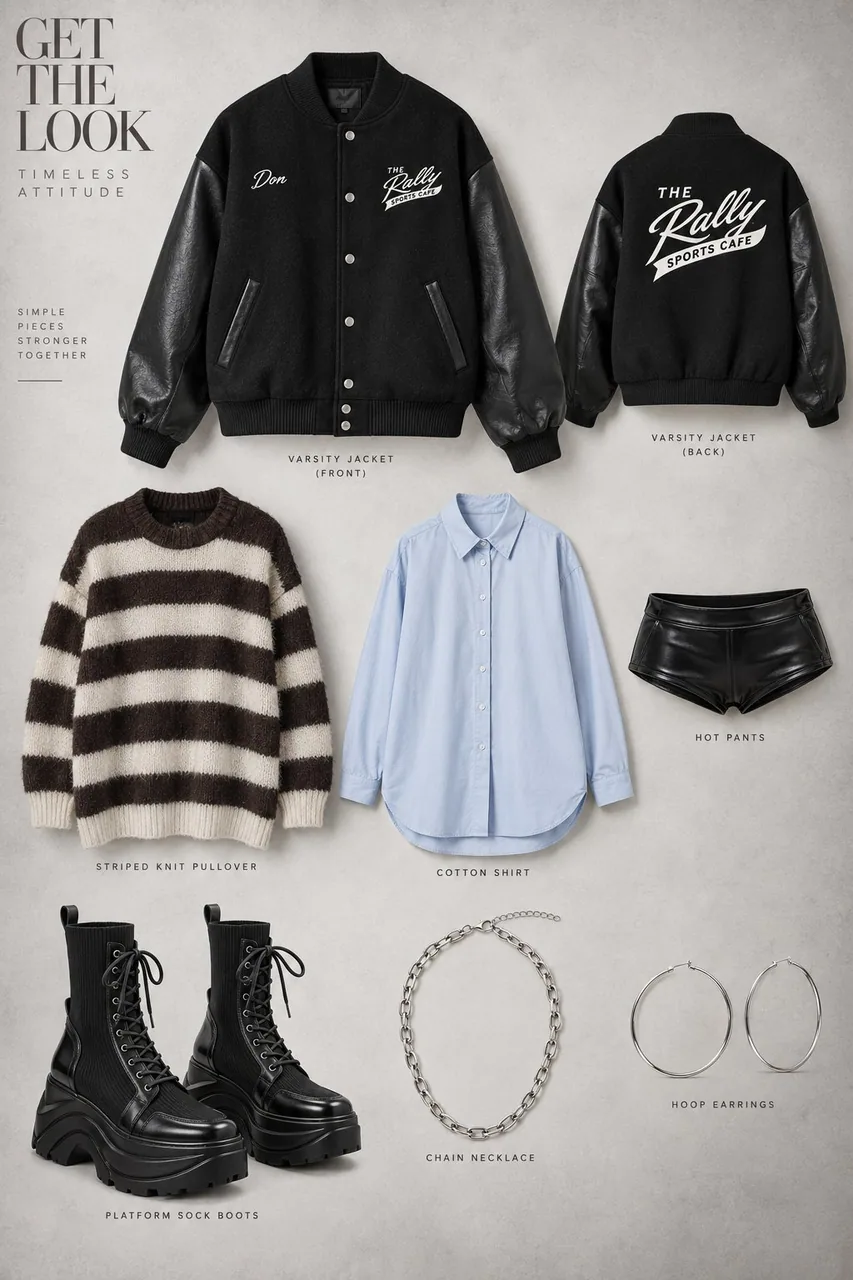
프롬프트
Photorealistic fashion portrait of a single adult woman, vertical 2:3, strongly person-dominant.

POSE AND LEG GEOMETRY:
Sit lengthwise on a deep storefront bench. Keep the pelvis toward frame-right and extend both lower legs forward along the seat toward frame-lower-left.
The knees stay close together and bent, but both ankles are placed well forward of the knees instead of tucked underneath them.
Keep the knees in front of the lap rather than pulled back against the chest.
Show long descending shin lines: each knee-to-ankle segment slopes approximately 25–35 degrees toward frame-left from image vertical.
Both feet rest fully on the bench top, with complete sole contact and visible seating surface beneath them. Keep the feet inside the seat perimeter rather than hanging over its front.
Preserve natural anatomy and the rounded knee bends; do not substitute completely straight legs.

ANATOMICAL LEFT/RIGHT LOCK:
Keep the anatomical left leg nearer the camera and on frame-right within the pair. Keep the anatomical right leg farther from the camera and on frame-left.
Both legs remain uncrossed. The left foot sits slightly farther forward, appearing slightly lower in the image.
Rest the anatomical right elbow on the right knee through a slight forward torso inclination. The right palm supports the right cheek.
Gently tilt the head toward anatomical right, with a calm direct gaze.
The anatomical left forearm drapes diagonally across the knees; the left hand rests along the anatomical right shin, fingers directed toward the right ankle.
Do not mirror, reverse, or exchange these relationships.

CAMERA AND COMPOSITION:
Full-frame camera with a 45mm rectilinear lens.
Camera height approximately 1.60 meters and horizontal distance approximately 1.90 meters from the hips.
Front-left-quarter viewpoint, approximately 35 degrees toward anatomical left from frontal. Photograph across the bench’s outer long side, not straight along the legs.
Downward pitch approximately 24 degrees; roll 0 degrees; optical axis near the waist.
Keep the bench running from lower-left foreground to upper-right background.
Include the full seated figure and both feet at approximately 86–90% of frame height.
Aperture f/5.6, shutter 1/320 sec, ISO 200. Focus on the eyes, with both lower-leg directions and sole-to-seat contacts clearly readable.

WARDROBE-VISIBILITY NON-OPTIMIZATION:
Do not modify knee bends, forward leg extension, foot contacts, arm positions, torso orientation, camera azimuth, height, pitch, focal length, crop, or scale to reveal clothing, footwear, accessories, graphics, or hardware. Preserve natural concealment and original detail placement. Do not rotate the feet for display. The setting must fit the pose.

BACKGROUND AND LIGHTING:
A seaside gelato-shop veranda with a deep wooden or painted bench, pale cream walls, airy coastal trim, a large shop window, and restrained glimpses of blue sky and greenery at the arcade edge. Keep the coastal setting secondary rather than opening into a landscape. Clean coastal daylight and soft sky fill illuminate the face. Background signs are fictional and unreadable.PROTECTED WARDROBE RULE — HIGHEST PRIORITY: Treat each garment description below as its immutable final product identity. Preserve construction, parts, hardware, material, pattern, and every registered graphic or marking—its surface, side, orientation, scale, colors, content, spelling, and count. FINAL WORN STATE overrides only the scoped item's use, position, side, orientation, fastening, layering, folds, tucks, knots, and drape. A SOURCE GARMENT label describes the unstyled item, never the completed silhouette. Do not redesign, add, remove, mirror, duplicate, relocate, or redraw protected details.

Wardrobe:

Hair — final selected state: HAIR GEOMETRY AUTHORITY — Every selected axis below replaces the source hair geometry only on that axis; retain source geometry only for axes explicitly set to Preserve.
TEXTURE CHECKSUM — Straight. Form continuous root-to-tip straight strands with natural body and no wave, curl, or coil pattern. At normal portrait scale, smooth straight strand direction with natural body must remain readable across multiple visible strand groups; one gravity or gathering arc is allowed, but repeating S-waves, ringlets, tight coils, and frizz are not. FRINGE — Keep the exact selected fringe visibly straight with natural body; do not add an S-wave, ringlet, or tight coil pattern to it; apply this to every selected-fringe strand without changing its roots, density, coverage, part, direction, route, or endpoint. MAIN HAIR — apply the same texture consistently to every declared visible hair-bearing cut-excluded section, the complete root-to-anchor scalp lead-in, and the arrangement's final visible tail, bun, twist, or other gathered mass. Texture changes strand path and surface relief only; keep the selected cut silhouette, fringe route, arrangement topology, and endpoints, create no hair merely to display texture, and never texture a shaved or scalp-close skin field. Reject a hybrid result in which only a terminal tail, bun, crest, panel edge, or endpoint carries the selected straight texture while another visible hair-bearing domain remains wavy, curly, coily, or frizzy. GATHERED LAYER CHECK — apply straight strand behavior through every scalp-following route, gathered section, braid, tail, bun, or twist surface; do not release reachable hair merely to display underlying layer endpoints.
CUT VISUAL TARGET — RELEASED SOURCE REFERENCE FOR FULL ARRANGEMENT — Medium layers: Length — collarbone perimeter; Front — shorter jaw-to-upper-neck layer endpoints; Side — intermediate shoulder-side endpoints; Rear — connected upper-neck-to-collarbone progression; Dominant perimeter weight — lower collarbone length remains visible; Layer topology — connected increasing layers with readable front, side and rear endpoints.
FULL ARRANGEMENT CUT VISIBILITY — The released cut geometry is not a competing final hairstyle. Hide every released endpoint belonging to arrangement-assigned hair inside the final gathered structure. Keep the exact selected fringe, selected face framing, every cut-specific arrangement-excluded zone, and every scalp-close or shaved field visible exactly as declared; never hide those retained zones merely because the arrangement mode is full.
ARRANGEMENT VISUAL TARGET — Mid ponytail: Final worn silhouette — exactly one full-volume tail emerging from one middle-occipital center-back anchor; Underlying cut priority — CUT VISUAL TARGET and Cut describe only the source strand lengths and layer topology when fully released before styling; this full arrangement controls the final visible silhouette, so no arrangement-assigned released endpoint may remain visible merely to display the cut, length, or texture; Arrangement mass priority — include every physically reachable arrangement-assigned strand in the declared structure; no reachable assigned hair may remain as an undeclared parallel loose mass; Loose-hair boundary — outside the final gathered structure permit only the exact selected fringe, the exact selected face-framing sections, only structural zones explicitly excluded by the cut-specific arrangement scope, only selected-cut layers genuinely unable to reach their required anchor or local braid pickup; Every exception must stay inside its declared rooted cut zone and must not recreate a duplicate loose version of arrangement-assigned hair, a parallel long curtain, or an undeclared second mass; Reject — a high top-knot, low nape anchor, second tail, loose underlayer, parallel rear curtain, or detached tail; Straight texture — permitted loose exceptions and gathered lead-ins remain straight, with no S-wave, curl, or rippled loose sheet.
Front sections: Fringe — Form a sparse airy fringe from fine separated strands across the forehead, keeping the eyebrows readable and avoiding one solid blunt edge. Keep all wispy strands on the forehead; none becomes a separate face-framing tendril. Face framing — Release exactly one narrow continuous section rooted at each temple and curve it beside the corresponding temple or cheek, ending no lower than the jaw within the selected haircut's available length; create no additional wisps. Keep every face-framing section outside the hair assigned to the Mid ponytail and independently rooted from its main routed structure. Root ownership — The fringe uses only the frontal hairline zone; selected face-framing uses one separate narrow temple-rooted band; all other roots remain in the main cut.
Preserve the natural hairline and exact source hair colors, including roots, highlights, lowlights, accents, and gradients; preserve all unselected hair attributes.
Cut: RELEASED SOURCE REFERENCE FOR FULL ARRANGEMENT — When released, form connected collarbone-length medium layers. Keep the longest lower perimeter at both collarbones; let shorter crown and upper-side layers end around the jaw and upper neck, then pass through intermediate shoulder-side and rear tips in one readable cascade into the collarbone edge. Preserve balanced crown lift, visible jaw-to-upper-neck and shoulder transitions, and a softly weighted collarbone perimeter in the front, sides, and rear. Do not flatten the cut into a one-length lob or turn it into a choppy shag, wolf cut, or pointed nape. Keep one naturally rooted haircut with no retained longer source underlayer, extension, wig edge, or duplicate hair mass.
Arrangement: Arrangement-assigned hair excludes the exact selected fringe and selected face-framing sections. For this varied-length cut, assign every arrangement-assigned strand within the geometry-declared source that can reach its corresponding declared hairstyle anchor from its own root; evaluate reachability to that anchor, not against the complete route or the final tail, braid, bun, or twist length. Keep only strands genuinely too short to reach their corresponding anchor at their selected rooted zones, without extending or reclassifying them; those exceptions must not recreate a duplicate loose version of arrangement-assigned hair, a parallel long curtain, or an undeclared second mass. Use all arrangement-assigned hair; draw both sides symmetrically backward along the scalp toward the middle occipital area. At the hairstyle anchor, use one center-back anchor halfway between the nape hairline and crown apex; let exactly one tail emerge continuously from that base. leave no other free side or back section; create no high top-knot, low nape anchor, second tail, loose underlayer, or detached tail. The route, anchor, result, free-section, and integrity clauses apply only to arrangement-assigned hair; keep every cut-excluded structural zone in the final haircut state declared above.
Measure the selected length on fully extended strands only to calculate underlying source mass and route reachability before gathering; do not compensate for wave, curl, or coil shrinkage when calculating that source mass; the full arrangement, not the released endpoints, controls the final visible silhouette.
Apply the selected texture within the declared arrangement; do not release gathered hair merely to display length or texture.

Outerwear / layers:

A relaxed hip-length black varsity jacket with a dense matte wool-blend body, dropped shoulders and full black leather sleeves with a supple, softly grained sheen. A low black rib-knit stand collar, ribbed cuffs and a broad ribbed waistband frame the boxy shape. Silver-tone snaps close the front, with a closely spaced lower pair at the waistband, and diagonal welt pockets sit at both sides. Small white cursive embroidery reading "Don" sits on the wearer's right chest. The left chest carries a compact white composition reading "THE" above "Rally" in flowing slanted script; the terminal stroke sweeps into a white underline ribbon containing black serif capitals reading "SPORTS CAFE", with a split pointed tail at the ribbon's left end. The same composition appears much larger across the upper back, surrounded by generous black space. Smooth black satin lining completes the interior.

Final worn state:
- Layering: Final state: keep this garment the complete outer layer over the second selected Top item; open only its original center-front fastening run within existing endpoints. Preserve source neckline, collar, front/rear panels, selected shoulder, sleeve, and body positions, plus fastening inventory, receiver mapping, order, spacing, endpoints, and placket length; add, remove, move, or extend nothing. FINAL FASTENING STATE: change only the source-registered primary closure mechanism inside its exact original endpoints. Preserve that mechanism, all original parts, its source length, and the garment construction beyond both endpoints; do not reinterpret a seam, fold, rib, placket, or panel edge as an extension, and add, duplicate, remove, or relocate nothing. Only layer order, contact, occlusion, and optical transmission change. Every visible garment boundary follows the outer item's source geometry or separately selected fold-return line; inner contours remain optically behind it. Keep panel contact shallow. Relaxed handling within this same operation: Use light stable contact and broader material-correct ease without changing the selected layer order.

Top:

An oversized long crew-neck pullover in thick, loosely knitted mohair-blend yarn with a soft shaggy halo and visible stockinette stitches. The straight relaxed body reaches the upper thighs, with dropped shoulders and roomy long sleeves. Ten broad horizontal bands alternate dark chocolate brown and ivory across the torso in approximately equal widths, starting with a brown band interrupted by the neckline and ending with ivory at the hem. The same stripe scale continues around the back and along the sleeves, with softly feathered color boundaries. A brown ribbed crew neck, ivory ribbed cuffs and a broad ivory ribbed hem finish the knit.

A relaxed long light-blue cotton-poplin shirt with a crisp pointed collar on a narrow stand and a full front placket of small pale buttons. The lightly structured woven fabric forms a roomy straight body, long sleeves with buttoned cuffs and a simple back yoke. Rounded shirttails reach the upper thighs, rising at the side seams, with the two front tails separating below the final button. The fabric is plain and smooth throughout.

Final worn state:
For the second item description above only:
- Front closure: Final state: within the original center-front fastening run, disconnect only its upper approximately one-third; keep every original below connected in place. Preserve the source count, type, order, spacing, endpoints, and placket length; never extend the run toward the hem or add, duplicate, remove, or relocate any fastening or receiver FINAL FASTENING STATE: every selected closed position is physically connected to its matching receiver; every selected open position is visibly disconnected, and panel overlap does not imitate a fastening. Preserve the source-defined fastening count, type, spacing, endpoints, and placket length; do not extend the fastening run or add, duplicate, remove, or relocate any fastening or receiver. Change only the selected registered state and leave every unselected component and connection unchanged.
- Layering: Final state: place this garment underneath the first selected Top item across the upper body. the first selected Top item remains the outer garment and retains and owns its exact source neckline aperture and edge, armholes, panel connectivity, closure state, straps, sleeves, and selected final hem or fold-return line. This inner garment contributes appearance only through the outer material's existing optical apertures; no inner contour becomes an outer boundary. Only layer order, contact, occlusion, and optical transmission change. Every visible garment boundary follows the outer item's source geometry or separately selected fold-return line; inner contours remain optically behind it. Keep panel contact shallow. Natural handling within this same operation: Use soft stable contact with limited material-correct ease.

Bottom: Low-rise, close-fitting black hot pants in glossy stretch faux leather, with a smooth contoured waistband, shaped front and back panels, a fitted crotch and very short legs. Narrow stitched hems curve upward at the outer hips and beneath the seat, while subtle seam lines shape the opaque body. A concealed side zipper closes the waistband, keeping the exterior clean and unembellished.

Footwear: A pair of black lace-up platform sock boots with close-fitting rib-knit shafts rising above the ankles and broad ribbed cuffs. The knit continues down the sides and across the vamp beneath smooth black leather-look toe surrounds, heel counters and curved lace facings. Round black laces cross through small loops over knitted tongues, and rear pull tabs assist entry. Rounded closed toes sit above extremely thick black molded soles with sweeping wave-like ridges, angular projecting side blocks, a recessed arch and deep segmented tread. Stretch collars, adjustable lacing and cushioned insoles complete the boots.

Necklace: A silver-tone necklace made from medium-sized rounded oval cable links with open centers and softly polished edges. The links alternate in angle to form a supple, moderately substantial chain that falls in a shallow U at the upper chest. A small rear lobster clasp and short matching extension complete the necklace, with no pendant.

Earrings: A pair of large silver-tone hoop earrings made from slender smooth round wire. The polished circular hoops have open centers and a light, undecorated profile, with small hinged posts closing discreetly at the earlobes.
한국어 번역
포토리얼리스틱 패션 인물 사진, 성인 여성 한 명, 세로 2:3, 인물 중심 구도가 강하게 강조됨.

포즈와 다리 기하 구조:
매장 앞의 깊은 벤치에 세로 방향으로 앉습니다. 골반은 프레임 오른쪽을 향하게 하고, 두 하퇴를 좌면을 따라 프레임 왼쪽 아래 방향으로 앞으로 뻗습니다.
무릎은 서로 가깝게 붙이고 굽힌 상태를 유지하되, 양쪽 발목은 무릎 아래로 접어 넣지 말고 무릎보다 훨씬 앞쪽에 둡니다.
무릎은 가슴 쪽으로 끌어당기지 말고 무릎 앞쪽에 유지합니다.
길게 내려가는 정강이 선을 보여줍니다: 각 무릎–발목 구간은 이미지 수직선을 기준으로 프레임 왼쪽으로 약 25–35도 기울어집니다.
두 발은 벤치 상판에 완전히 얹혀 발바닥 전체가 닿고, 발 아래로 좌면이 보이게 합니다. 발은 좌면 앞쪽으로 걸치지 말고 좌면 경계 안쪽에 둡니다.
자연스러운 해부학적 구조와 둥글게 굽은 무릎을 유지하고, 완전히 곧은 다리로 대체하지 않습니다.

해부학적 좌/우 고정:
해부학적 왼쪽 다리는 카메라에 더 가깝게, 그리고 두 다리 중 프레임 오른쪽에 둡니다. 해부학적 오른쪽 다리는 카메라에서 더 멀리, 프레임 왼쪽에 둡니다.
두 다리는 꼬지 않은 상태를 유지합니다. 왼발은 약간 더 앞쪽에 놓여 이미지에서 조금 더 낮게 보입니다.
상체를 약간 앞으로 기울여 해부학적 오른쪽 팔꿈치를 오른쪽 무릎 위에 얹습니다. 오른손바닥은 오른쪽 뺨을 받칩니다.
고개를 해부학적 오른쪽으로 살짝 기울이고, 차분하게 정면을 응시합니다.
해부학적 왼쪽 팔뚝은 무릎 위를 대각선으로 걸치고, 왼손은 해부학적 오른쪽 정강이를 따라 놓이며 손가락은 오른쪽 발목을 향합니다.
이 관계를 거울처럼 반전하거나 뒤집거나 서로 바꾸지 않습니다.

카메라와 구도:
45mm 직선 렌즈를 사용한 풀프레임 카메라.
카메라 높이는 약 1.60미터, 골반으로부터의 수평 거리는 약 1.90미터입니다.
정면에서 해부학적 왼쪽으로 약 35도 기울어진 전좌측 4분면 시점. 다리를 따라 곧게 찍지 말고 벤치의 바깥쪽 긴 면을 가로질러 촬영합니다.
하향 피치 약 24도, 롤 0도, 광축은 허리 근처입니다.
벤치는 왼쪽 아래 전경에서 오른쪽 위 배경으로 이어지게 합니다.
앉은 인물 전체와 두 발을 프레임 높이의 약 86–90%로 포함합니다.
조리개 f/5.6, 셔터 1/320초, ISO 200. 눈에 초점을 맞추고, 두 하퇴의 방향과 발바닥–좌면 접촉이 명확히 판독되게 합니다.

의상 가시성 비최적화:
의상, 신발, 액세서리, 그래픽, 하드웨어를 드러내기 위해 무릎 굽힘, 다리의 앞쪽 뻗음, 발 접촉, 팔 위치, 상체 방향, 카메라 방위각, 높이, 피치, 초점 거리, 크롭, 스케일을 변경하지 않습니다. 자연스러운 가림과 원래 디테일 배치를 유지합니다. 노출을 위해 발을 회전하지 않습니다. 배경은 포즈에 맞아야 합니다.

배경과 조명:
바닷가 젤라토 가게의 베란다로, 깊은 나무 또는 페인트칠한 벤치, 옅은 크림색 벽, 산뜻한 해안풍 장식, 큰 가게 창문, 그리고 아케이드 가장자리로 절제되게 보이는 파란 하늘과 녹음이 있습니다. 해안 배경은 풍경처럼 펼쳐지지 않게 부차적으로 유지합니다. 깨끗한 해안의 자연광과 부드러운 하늘 확산광이 얼굴을 비춥니다. 배경 간판은 허구이며 판독할 수 없습니다.PROTECTED WARDROBE RULE(보호 의상 규칙) — 최우선 순위: 아래의 각 의상 설명을 변경할 수 없는 최종 제품 정체성으로 취급하십시오. 구조, 부품, 하드웨어, 소재, 패턴, 그리고 등록된 모든 그래픽이나 마킹—그 표면, 면, 방향, 크기, 색상, 내용, 철자, 개수—을 보존하십시오. FINAL WORN STATE(최종 착용 상태)는 해당 범위 항목의 용도, 위치, 면, 방향, 여밈, 레이어링, 주름, 턱, 매듭, 드레이프만을 재정의합니다. SOURCE GARMENT(원본 의상) 라벨은 스타일링되지 않은 항목을 설명하며, 완성된 실루엣을 결코 설명하지 않습니다. 보호된 디테일을 재설계, 추가, 제거, 반전, 복제, 재배치 또는 다시 그리지 마십시오.

의상:

헤어 — 최종 선택 상태: HAIR GEOMETRY AUTHORITY(헤어 기하 구조 권한) — 아래의 각 선택 축은 해당 축에서만 원본 헤어 기하 구조를 대체합니다. 명시적으로 Preserve로 설정된 축에 대해서만 원본 기하 구조를 유지하십시오.
TEXTURE CHECKSUM(텍스처 체크섬) — Straight. 웨이브, 컬, 코일 패턴 없이 자연스러운 볼륨을 지닌 연속적인 뿌리-끝 직모 가닥을 형성하십시오. 일반적인 인물 사진 스케일에서 자연스러운 볼륨을 지닌 매끄러운 직모 가닥 방향이 여러 가시적 가닥 그룹에 걸쳐 판독 가능해야 합니다. 중력 또는 모임에 의한 곡선 하나는 허용되지만, 반복되는 S자 웨이브, 링렛, 촘촘한 코일, 곱슬거림은 허용되지 않습니다. FRINGE(앞머리) — 선택된 앞머리를 자연스러운 볼륨을 지닌 채 눈에 띄게 곧게 유지하고, 여기에 S자 웨이브, 링렛, 촘촘한 코일 패턴을 추가하지 마십시오. 이는 뿌리, 밀도, 커버리지, 가르마, 방향, 경로, 끝점을 변경하지 않고 모든 선택된 앞머리 가닥에 적용하십시오. MAIN HAIR(주요 모발) — 동일한 텍스처를 선언된 모든 가시적 모발 보유·컷 제외 구역, 전체 뿌리-앵커 두피 리드인, 그리고 배열의 최종 가시 테일, 번, 트위스트 또는 기타 모인 덩어리에 일관되게 적용하십시오. 텍스처는 가닥 경로와 표면 요철만 변경합니다. 선택된 컷 실루엣, 앞머리 경로, 배열 토폴로지, 끝점을 유지하고, 텍스처를 보여주기 위해 모발을 새로 만들어내지 말며, 삭발되었거나 두피에 밀착된 피부 영역에는 절대 텍스처를 적용하지 마십시오. 말단 테일, 번, 크레스트, 패널 가장자리 또는 끝점에만 선택된 직모 텍스처가 있고 다른 가시적 모발 보유 영역은 여전히 웨이브, 컬, 코일 또는 곱슬로 남아 있는 혼합 결과는 거부하십시오. GATHERED LAYER CHECK(모인 레이어 점검) — 모든 두피 추종 경로, 모인 구역, 브레이드, 테일, 번, 트위스트 표면에 걸쳐 직모 가닥 거동을 적용하고, 하위 레이어 끝점을 보여주기 위한 목적만으로 도달 가능한 모발을 풀지 마십시오.
CUT VISUAL TARGET(컷 시각 목표) — RELEASED SOURCE REFERENCE FOR FULL ARRANGEMENT(전체 배열을 위한 릴리스된 원본 레퍼런스) — 중간 레이어: 길이 — 쇄골 둘레; 앞 — 더 짧은 턱-상부 목 레이어 끝점; 옆 — 중간 정도의 어깨 옆 끝점; 뒤 — 연결된 상부 목-쇄골 진행; 지배적 둘레 무게 — 아래쪽 쇄골 길이가 계속 보임; 레이어 토폴로지 — 앞, 옆, 뒤 끝점이 판독 가능한 연결된 증가형 레이어.
FULL ARRANGEMENT CUT VISIBILITY(전체 배열 컷 가시성) — 릴리스된 컷 기하 구조는 경쟁하는 최종 헤어스타일이 아닙니다. 배열에 할당된 모발에 속하는 모든 릴리스된 끝점을 최종 모인 구조 안에 숨기십시오. 정확히 선택된 앞머리, 선택된 얼굴 프레이밍, 컷별 배열 제외 구역, 그리고 두피 밀착 또는 삭발 영역을 선언된 그대로 정확히 보이게 유지하십시오. 배열 모드가 full이라는 이유만으로 그 유지 구역을 절대 숨기지 마십시오.
ARRANGEMENT VISUAL TARGET(배열 시각 목표) — 중간 포니테일: 최종 착용 실루엣 — 후두 중앙 뒤통수 앵커 하나에서 나오는 정확히 하나의 풍성한 테일; 하위 컷 우선순위 — CUT VISUAL TARGET과 Cut은 스타일링 전 완전히 릴리스된 상태의 원본 가닥 길이와 레이어 토폴로지만을 설명합니다. 이 전체 배열이 최종 가시 실루엣을 제어하므로, 컷, 길이 또는 텍스처를 보여주기 위한 목적만으로 배열에 할당된 릴리스된 끝점이 보이게 남아 있어서는 안 됩니다; 배열 질량 우선순위 — 선언된 구조에 물리적으로 도달 가능한 배열 할당 가닥을 모두 포함하십시오. 도달 가능한 할당 모발이 선언되지 않은 평행한 느슨한 덩어리로 남아서는 안 됩니다; 느슨한 모발 경계 — 최종 모인 구조 밖에는 정확히 선택된 앞머리, 정확히 선택된 얼굴 프레이밍 구역, 컷별 배열 범위에서 명시적으로 제외된 구조 구역, 그리고 필요한 앵커나 국소 브레이드 픽업에 실제로 도달할 수 없는 선택 컷 레이어만 허용됩니다. 모든 예외는 선언된 뿌리 컷 구역 안에 머물러야 하며, 배열 할당 모발의 중복된 느슨한 버전, 평행한 긴 커튼, 또는 선언되지 않은 두 번째 덩어리를 재현해서는 안 됩니다; 거부 — 높은 상투, 낮은 뒤통수 앵커, 두 번째 테일, 느슨한 하위 레이어, 평행한 뒤 커튼, 또는 분리된 테일; 직모 텍스처 — 허용된 느슨한 예외와 모인 리드인은 곧게 유지되며, S자 웨이브, 컬, 물결치는 느슨한 시트가 없어야 합니다.
앞 구역: 앞머리 — 이마를 가로질러 가늘게 분리된 가닥으로 성기고 산뜻한 앞머리를 만들고, 눈썹이 판독되게 유지하며 하나의 뭉툭한 덩어리 가장자리를 피하십시오. 모든 가느다란 가닥은 이마 위에 두고, 어느 것도 별도의 얼굴 프레이밍 잔머리가 되지 않게 하십시오. 얼굴 프레이밍 — 각 관자놀이에 뿌리를 둔 좁고 연속적인 구역을 정확히 하나씩 풀어 해당 관자놀이나 뺨 옆으로 휘어지게 하고, 선택된 헤어컷의 가용 길이 내에서 턱보다 낮게 끝나지 않게 하십시오. 추가 잔머리를 만들지 마십시오. 모든 얼굴 프레이밍 구역은 중간 포니테일에 할당된 모발 밖에 두고, 그 주 경로 구조와 독립적으로 뿌리를 두게 하십시오. 뿌리 소유권 — 앞머리는 앞 헤어라인 구역만 사용합니다. 선택된 얼굴 프레이밍은 별도의 좁은 관자놀이 뿌리 밴드 하나를 사용합니다. 다른 모든 뿌리는 주 컷에 남습니다.
자연스러운 헤어라인과 정확한 원본 모발 색상(뿌리, 하이라이트, 로우라이트, 악센트, 그라데이션 포함)을 보존하고, 선택되지 않은 모든 모발 속성을 보존하십시오.
컷: RELEASED SOURCE REFERENCE FOR FULL ARRANGEMENT(전체 배열을 위한 릴리스된 원본 레퍼런스) — 릴리스 시 쇄골 길이의 연결된 중간 레이어를 형성하십시오. 가장 긴 아래 둘레는 양쪽 쇄골에 유지하고, 더 짧은 정수리와 상부 옆 레이어는 턱과 상부 목 부근에서 끝나게 한 뒤, 중간 정도의 어깨 옆과 뒤 끝을 거쳐 하나의 판독 가능한 캐스케이드로 쇄골 가장자리까지 이어지게 하십시오. 균형 잡힌 정수리 볼륨, 보이는 턱-상부 목 및 어깨 전환, 그리고 앞, 옆, 뒤의 부드럽게 무게감이 실린 쇄골 둘레를 유지하십시오. 컷을 단일 길이의 롭으로 평평하게 만들거나, 들쭉날쭉한 섀그, 울프 컷, 뾰족한 뒤통수로 바꾸지 마십시오. 유지된 더 긴 원본 하위 레이어, 익스텐션, 가발 가장자리, 중복된 모발 덩어리 없이 자연스럽게 자란 하나의 헤어컷을 유지하십시오.
배열: 배열 할당 모발은 정확히 선택된 앞머리와 선택된 얼굴 프레이밍 구역을 제외합니다. 이 다양한 길이의 컷에서는 기하 구조로 선언된 원본 내에서 자기 뿌리로부터 해당 선언된 헤어스타일 앵커에 도달할 수 있는 모든 배열 할당 가닥을 할당하십시오. 전체 경로나 최종 테일, 브레이드, 번, 트위스트 길이가 아니라 그 앵커에 대한 도달 가능성을 평가하십시오. 선택된 뿌리 구역에서 해당 앵커에 도달하기에 실제로 너무 짧은 가닥만 연장하거나 재분류하지 말고 유지하십시오. 그 예외는 배열 할당 모발의 중복된 느슨한 버전, 평행한 긴 커튼, 또는 선언되지 않은 두 번째 덩어리를 재현해서는 안 됩니다. 모든 배열 할당 모발을 사용하고, 양쪽을 두피를 따라 대칭적으로 뒤쪽 중간 후두부 방향으로 당기십시오. 헤어스타일 앵커로는 뒤통수 헤어라인과 정수리 정점의 중간 지점에 하나의 중앙 뒤 앵커를 사용하고, 그 기저에서 정확히 하나의 테일만 연속적으로 나오게 하십시오. 다른 자유로운 옆이나 뒤 구역을 남기지 마십시오. 높은 상투, 낮은 뒤통수 앵커, 두 번째 테일, 느슨한 하위 레이어, 분리된 테일을 만들지 마십시오. 경로, 앵커, 결과, 자유 구역, 무결성 조항은 배열 할당 모발에만 적용됩니다. 모든 컷 제외 구조 구역은 위에 선언된 최종 헤어컷 상태로 유지하십시오.
선택된 길이는 완전히 펼친 가닥에서만 측정하여 모으기 전의 하위 원본 질량과 경로 도달 가능성을 계산하십시오. 그 원본 질량을 계산할 때 웨이브, 컬, 코일의 수축을 보정하지 마십시오. 최종 가시 실루엣을 제어하는 것은 릴리스된 끝점이 아니라 전체 배열입니다.
선언된 배열 내에서 선택된 텍스처를 적용하십시오. 길이나 텍스처를 보여주기 위한 목적만으로 모인 모발을 풀지 마십시오.

아우터 / 레이어:

힙 길이의 여유로운 블랙 바시티 재킷으로, 촘촘한 무광 울 혼방 몸판, 드롭 숄더, 그리고 유연하고 부드러운 결의 광택이 도는 전체 블랙 가죽 소매를 지녔습니다. 낮은 블랙 리브 니트 스탠드 칼라, 리브 커프스, 넓은 리브 허리 밴드가 박시한 형태를 잡아줍니다. 실버 톤 스냅이 앞을 여미며 허리 밴드에 촘촘히 배치된 아래쪽 한 쌍이 있고, 양옆에 대각선 웰트 포켓이 있습니다. 착용자의 오른쪽 가슴에 "Don"이라고 적힌 작은 흰색 필기체 자수가 있습니다. 왼쪽 가슴에는 "THE"가 "Rally" 위에 오는, 흐르듯 기울어진 필기체의 작은 흰색 구성이 있으며, 마지막 획이 검정 세리프 대문자로 "SPORTS CAFE"라고 적힌 흰색 밑줄 리본으로 이어지고, 리본 왼쪽 끝에는 갈라진 뾰족한 꼬리가 있습니다. 같은 구성이 상부 등 전체에 훨씬 크게 나타나며 넉넉한 블랙 여백으로 둘러싸여 있습니다. 매끄러운 블랙 새틴 안감이 내부를 마무리합니다.

최종 착용 상태:
- 레이어링: 최종 상태: 이 의상을 두 번째 선택된 상의 위에 완전한 바깥 레이어로 유지하십시오. 기존 끝점 범위 안에서 원래의 중앙 앞 여밈 열만 여십시오. 원본 네크라인, 칼라, 앞/뒤 패널, 선택된 어깨, 소매, 몸판 위치와 함께 여밈 구성, 리시버 매핑, 순서, 간격, 끝점, 플래킷 길이를 보존하십시오. 아무것도 추가, 제거, 이동, 연장하지 마십시오. FINAL FASTENING STATE(최종 여밈 상태): 원본에 등록된 주 여밈 기구만 정확한 원래 끝점 안에서 변경하십시오. 그 기구, 모든 원래 부품, 원본 길이, 그리고 양쪽 끝점 너머의 의상 구조를 보존하십시오. 솔기, 주름, 리브, 플래킷, 패널 가장자리를 연장으로 재해석하지 말고, 아무것도 추가, 복제, 제거, 재배치하지 마십시오. 레이어 순서, 접촉, 가림, 광학 투과만 변경됩니다. 보이는 모든 의상 경계는 바깥 항목의 원본 기하 구조나 별도로 선택된 폴드 리턴 라인을 따릅니다. 안쪽 윤곽은 광학적으로 그 뒤에 남습니다. 패널 접촉은 얕게 유지하십시오. 이 동일 작업 내에서의 편안한 처리: 선택된 레이어 순서를 바꾸지 않으면서 가볍고 안정적인 접촉과 더 넓은 소재에 맞는 여유를 사용하십시오.

상의:

두껍고 성글게 짠 모헤어 혼방 실로 만든 오버사이즈 롱 크루넥 풀오버로, 부드럽게 보송거리는 헤일로와 눈에 보이는 스토키네트 편직이 특징입니다. 곧고 여유로운 몸판은 허벅지 위까지 내려오며, 드롭 숄더와 넉넉한 긴 소매를 지녔습니다. 몸통을 가로질러 열 개의 넓은 가로 밴드가 다크 초콜릿 브라운과 아이보리로 거의 같은 폭으로 번갈아 나타나며, 네크라인에 끊긴 브라운 밴드로 시작해 밑단의 아이보리로 끝납니다. 같은 스트라이프 스케일이 등 전체와 소매를 따라 이어지고, 색 경계는 부드럽게 풀립니다. 브라운 리브 크루넥, 아이보리 리브 커프스, 넓은 아이보리 리브 밑단이 니트를 마무리합니다.

좁은 스탠드에 또렷한 포인트 칼라가 달리고 작은 옅은 색 단추가 있는 전체 앞 플래킷을 갖춘, 여유로운 롱 라이트블루 코튼 포플린 셔츠입니다. 가볍게 구조가 잡힌 직물이 넉넉하고 곧은 몸판, 단추 커프스가 있는 긴 소매, 단순한 뒤 요크를 이룹니다. 둥근 셔츠 밑단은 허벅지 위까지 내려오고 옆 솔기에서 올라가며, 두 앞자락은 마지막 단추 아래에서 갈라집니다. 직물은 전체적으로 무지하고 매끄럽습니다.

최종 착용 상태:
위의 두 번째 항목 설명에만 적용:
- 앞 여밈: 최종 상태: 원래의 중앙 앞 여밈 열 안에서 위쪽 약 3분의 1만 분리하십시오. 아래쪽의 모든 원래 여밈은 연결된 상태로 유지하십시오. 원본 개수, 종류, 순서, 간격, 끝점, 플래킷 길이를 보존하십시오. 여밈 열을 밑단 쪽으로 연장하거나 어떤 여밈 또는 리시버도 추가, 복제, 제거, 재배치하지 마십시오. FINAL FASTENING STATE(최종 여밈 상태): 선택된 모든 닫힘 위치는 대응하는 리시버에 물리적으로 연결되어 있고, 선택된 모든 열림 위치는 눈에 띄게 분리되어 있으며, 패널 겹침이 여밈을 흉내 내지 않습니다. 원본에 정의된 여밈 개수, 종류, 간격, 끝점, 플래킷 길이를 보존하십시오. 여밈 열을 연장하거나 어떤 여밈 또는 리시버도 추가, 복제, 제거, 재배치하지 마십시오. 선택된 등록 상태만 변경하고 선택되지 않은 모든 구성 요소와 연결은 그대로 두십시오.
- 레이어링: 최종 상태: 이 의상을 상체 전체에서 첫 번째 선택된 상의 아래에 배치하십시오. 첫 번째 선택된 상의는 바깥 의상으로 남아 정확한 원본 네크라인 개구부와 가장자리, 암홀, 패널 연결성, 여밈 상태, 스트랩, 소매, 선택된 최종 밑단 또는 폴드 리턴 라인을 유지하고 소유합니다. 이 안쪽 의상은 바깥 소재의 기존 광학 개구부를 통해서만 외관에 기여하며, 어떤 안쪽 윤곽도 바깥 경계가 되지 않습니다. 레이어 순서, 접촉, 가림, 광학 투과만 변경됩니다. 보이는 모든 의상 경계는 바깥 항목의 원본 기하 구조나 별도로 선택된 폴드 리턴 라인을 따릅니다. 안쪽 윤곽은 광학적으로 그 뒤에 남습니다. 패널 접촉은 얕게 유지하십시오. 이 동일 작업 내에서의 자연스러운 처리: 제한된 소재에 맞는 여유와 함께 부드럽고 안정적인 접촉을 사용하십시오.

하의: 광택이 나는 스트레치 인조 가죽 소재의 로우라이즈 밀착 블랙 핫팬츠로, 매끄럽게 곡선을 이룬 허리 밴드, 형태를 잡은 앞뒤 패널, 밀착된 밑위와 매우 짧은 다리를 지녔습니다. 좁은 스티치 밑단은 바깥쪽 힙과 엉덩이 아래에서 위로 휘어지고, 은은한 솔기 선이 불투명한 몸판을 잡아줍니다. 숨겨진 옆 지퍼가 허리 밴드를 여미어 외관을 깔끔하고 장식 없이 유지합니다.

신발: 발목 위까지 올라오는 밀착 리브 니트 축과 넓은 리브 커프스를 갖춘 블랙 레이스업 플랫폼 삭스 부츠 한 켤레. 니트는 옆면을 따라 내려가 매끄러운 블랙 가죽 느낌의 토 캡, 힐 카운터, 곡선형 레이스 페이싱 아래의 뱀프까지 이어집니다. 둥근 블랙 레이스가 니트 텅 위의 작은 고리를 교차하고, 뒤쪽 풀 탭이 착용을 돕습니다. 둥글게 닫힌 토는 물결 모양 능선이 휩쓰는 매우 두꺼운 블랙 성형 밑창, 각진 돌출 옆 블록, 함몰된 아치, 깊게 분할된 트레드 위에 놓입니다. 스트레치 칼라, 조절 가능한 레이싱, 쿠션 인솔이 부츠를 완성합니다.

목걸이: 중간 크기의 둥근 타원형 케이블 링크로 만든 실버 톤 목걸이로, 중심이 열려 있고 가장자리는 부드럽게 연마되어 있습니다. 링크는 각도를 번갈아 가며 유연하고 적당히 묵직한 체인을 이루어 상부 가슴에서 얕은 U자로 떨어집니다. 작은 뒤쪽 랍스터 클래스프와 짧은 동일 디자인 연장 체인이 목걸이를 완성하며, 펜던트는 없습니다.

귀걸이: 가늘고 매끄러운 둥근 와이어로 만든 큰 실버 톤 링 귀걸이 한 쌍. 연마된 원형 링은 중심이 열려 있고 가볍고 장식 없는 실루엣을 지녔으며, 작은 힌지 포스트가 귓불에서 눈에 띄지 않게 잠깁니다.
출처
- 원작자
- MoodLock_JP
- 게시일
- 2026-09-10
- 원문 출처
- 원문 보기 ↗
- 수록 출처
- xianyu110/awesome-gpt-image2.5 · 2097937963523145829 · MIT