任意角色→12 格变身分镜:完整 prompt
3×4 变身 storyboard:从原装到终态逐步揭示,禁套娃恶魔翅膀。短剧 / 广告分镜模板,线程附视频接法。
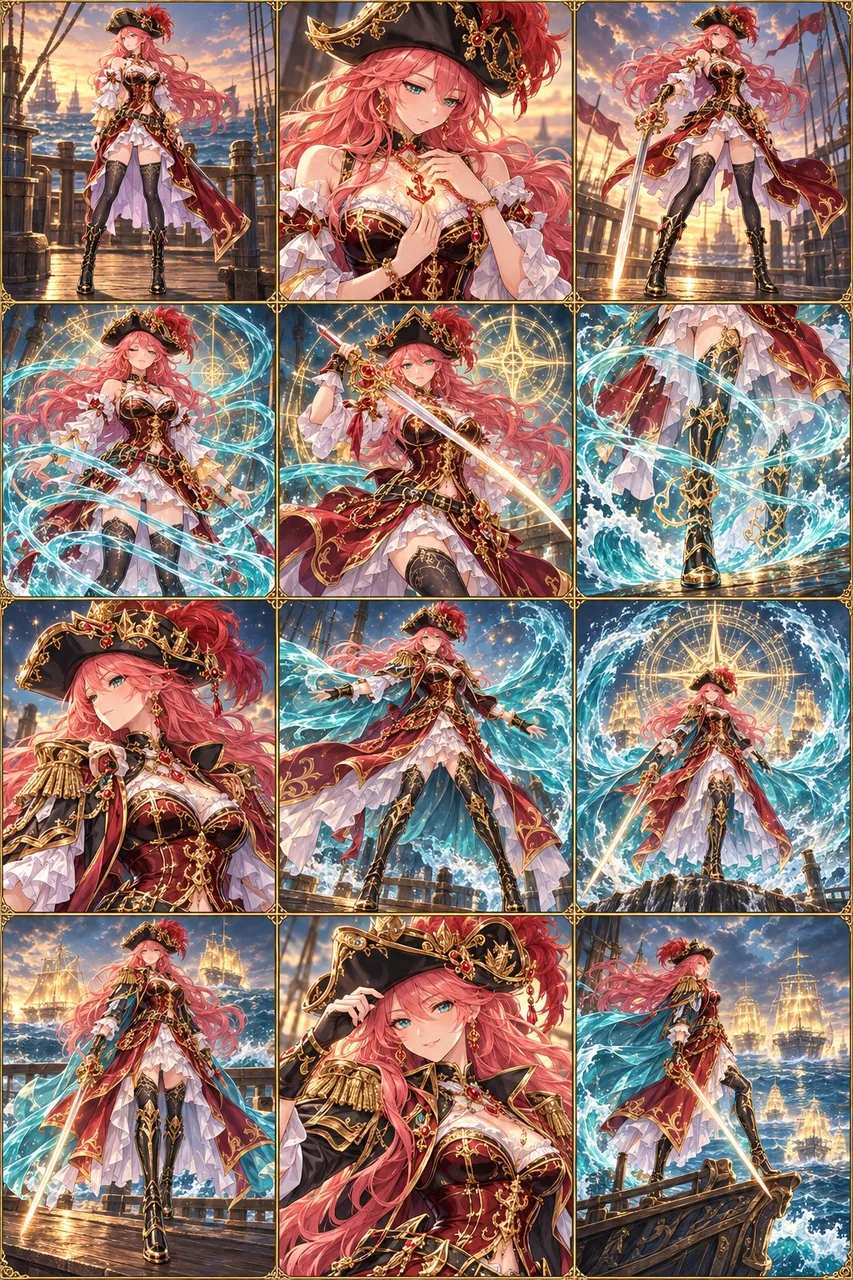
提示词
Create a 12-panel transformation storyboard for the character in the uploaded reference image, arranged in a clean 3-column × 4-row grid, read left to right and top to bottom.

CHARACTER AND CONCEPT
First, visually analyze the character’s identity, outfit, signature accessories, color palette, personality, and apparent world or profession. Use these details to invent a distinctive transformation theme that feels like a natural evolution of this specific character.

Choose a coherent power source, visual effects, transformation mechanism, and final evolved form. Derive these from the character rather than defaulting to generic demon wings, horns, purple lightning, or an unrelated costume.

The final form must show a substantial, deliberate change in silhouette, costume structure, materials, and signature accessories—not merely the original outfit with a glowing aura. Preserve enough recognizable motifs that the result unmistakably feels like the same character.

IDENTITY CONSISTENCY
Keep the same face, apparent age, body proportions, skin tone, and defining features throughout all 12 panels. Preserve the character’s signature hair color and recognizable hairstyle, allowing natural movement and subtle styling changes. Maintain the reference image’s illustration style.

Begin with the original outfit faithfully reproduced. Design one coherent final outfit and reveal it progressively. Once a transformed element appears, keep its design consistent in all subsequent panels.

12-PANEL SEQUENCE
Panel 1 — Original state: Clearly establish the reference character in their original outfit, with a readable full-body silhouette in an appropriate setting.
Panel 2 — Trigger: A signature accessory, gesture, or environmental element activates the character’s latent power.
Panel 3 — Response: The character notices the change and makes a purposeful movement. Small thematic effects begin to gather.
Panel 4 — Gathering power: The transformation energy establishes a clear direction and motion around the character.
Panel 5 — First visible change: One important costume element or accessory evolves, clearly showing the transformation mechanism.
Panel 6 — Progression: The transformation travels across the body, forming new clothing, armor, ornamentation, or other theme-appropriate details.
Panel 7 — Defining detail: Show a closer view of a major identity-linked upgrade, such as headwear, shoulder pieces, a weapon, or a magical accessory.
Panel 8 — Silhouette expansion: Reveal the largest structural change, such as a flowing mantle, elongated coat, layered armor, or another character-specific feature.
Panel 9 — Climax: Show the peak of the transformation with a powerful pose and dramatic thematic effects. Keep the character readable.
Panel 10 — Full reveal: Effects clear to reveal the complete evolved form in a clean full-body view.
Panel 11 — Personality moment: The character makes a small expressive gesture that conveys their personality and newfound confidence.
Panel 12 — Final hero image: Finish with a striking full-body pose that clearly displays the completed design, with restrained residual effects and a resolved background.

VISUAL DIRECTION
Build a clear emotional progression from anticipation to awakening to mastery, adapted to the character’s personality. The character actively participates in the transformation rather than simply standing still.

Use a cohesive environment and lighting progression across the sequence. Vary framing between full-body, three-quarter, and selective detail shots while maintaining spatial continuity. Prioritize full-body views for the original state, major silhouette changes, and final reveal.

Make every panel advance the transformation. Show intermediate stages with clear visual cause and effect; do not jump abruptly from the original outfit to the final costume.

Use elegant, theme-specific transitions such as flowing material, particles assembling into solid forms, unfolding structures, or energy passing over and revealing new costume elements. Keep anatomy stable and clothing coherent. No nudity or erotic framing.

OUTPUT
One polished, high-resolution storyboard image containing exactly 12 distinct panels with thin, consistent borders. Balance character detail with visual clarity. No captions, labels, speech bubbles, logos, or watermarks.

Do not reproduce the uploaded reference sheet’s layout or duplicate its multiple views. Use the uploaded image to identify one character, then depict that same character across a new, continuous transformation sequence.
中文译文
为上传参考图中的角色创作一张 12 格变身分镜,按整洁的 3 列 × 4 行网格排列,从左到右、从上到下阅读。

角色与概念
首先,从视觉上分析角色的身份、服装、标志性配饰、色彩搭配、性格,以及其所处的世界或职业。利用这些细节设计一个独特的变身主题,使其感觉像是这个特定角色的自然进化。

选择一个自洽的力量来源、视觉效果、变身机制与最终进化形态。这些都应从角色本身推导而来,而不要默认套用通用的恶魔翅膀、犄角、紫色闪电或与角色无关的服装。

最终形态必须在剪影、服装结构、材质与标志性配饰上体现显著且刻意的变化——而不仅仅是原服装加上发光气场。保留足够的可识别元素,让结果毫无疑问仍是同一个角色。

身份一致性
在全部 12 格中保持相同的面容、表面年龄、身体比例、肤色与标志性特征。保留角色标志性的发色与可辨识的发型,允许自然摆动与细微的造型变化。保持参考图的插画风格。

以忠实还原的原始服装开场。设计一套自洽的最终服装,并逐步揭示。一旦某个变身元素出现,其后所有分格中都要保持其设计一致。

12 格分镜顺序
第 1 格 — 原始状态:在合适的环境中清晰呈现处于原始服装的参考角色,全身剪影可辨。
第 2 格 — 触发:某个标志性配饰、动作或环境元素激活了角色潜藏的力量。
第 3 格 — 反应:角色察觉到变化,做出有目的的动作。细小的主题特效开始聚集。
第 4 格 — 蓄力:变身能量在角色周围形成明确的方向与运动。
第 5 格 — 首次可见变化:一个重要的服装元素或配饰发生进化,清晰展现变身机制。
第 6 格 — 推进:变身蔓延至全身,形成新的衣物、盔甲、装饰或其他契合主题的细节。
第 7 格 — 关键细节:以更近的视角展示与身份相关的重要升级,例如头饰、肩甲、武器或魔法配饰。
第 8 格 — 剪影扩展:揭示最大的结构变化,例如飘逸的披风、加长的外套、层叠盔甲或其他该角色独有的特征。
第 9 格 — 高潮:以强有力的姿态与戏剧化的主题特效展现变身的巅峰。保持角色可辨。
第 10 格 — 完全揭示:特效散去,以干净的全身视角展现完整的进化形态。
第 11 格 — 性格时刻:角色做出一个富有表现力的小动作,传达其性格与新获得的自信。
第 12 格 — 最终主视觉:以一个醒目的全身姿态收尾,清晰展示完成后的设计,残留特效克制,背景收束完整。

视觉方向
构建一条清晰的情绪脉络:从期待到觉醒再到掌控,并贴合角色的性格。角色要主动参与变身,而不是单纯站着不动。

整组分镜使用统一的环境与灯光渐变。在全身、四分之三与局部细节镜头之间变换取景,同时保持空间连续性。原始状态、重大剪影变化与最终揭示优先使用全身视角。

让每一格都推进变身进程。以清晰的视觉因果关系展示中间阶段;不要从原始服装突然跳到最终服装。

使用优雅且契合主题的过渡方式,例如流动的材质、粒子聚合成实体、结构展开,或能量掠过并显露出新的服装元素。保持人体结构稳定、服装连贯。无裸露或情色化取景。

输出
一张精修的高分辨率分镜图,恰好包含 12 个清晰分格,边框纤细统一。在角色细节与视觉清晰度之间取得平衡。无字幕、无标签、无对话气泡、无 logo、无水印。

不要复制上传参考设定图的版式,也不要重复其多个视角。使用上传图片确定一个角色,然后在新的一段连续变身序列中描绘同一个角色。
溯源
- 原作者
- Mayz1169
- 发布日期
- 2026-09-16
- 原始出处
- 查看原帖 ↗
- 收录来源
- xianyu110/awesome-gpt-image2.5 · 2100135954032087346 · MIT