剪纸海报四联:一层剪开一个小世界
CUT TO MOVE / BELOW THE SURFACE / AFTERLIGHT / SPACES BETWEEN——大剪影里叠 6–9 层纸,深处藏叙事。展览/文化海报配方可换槽。
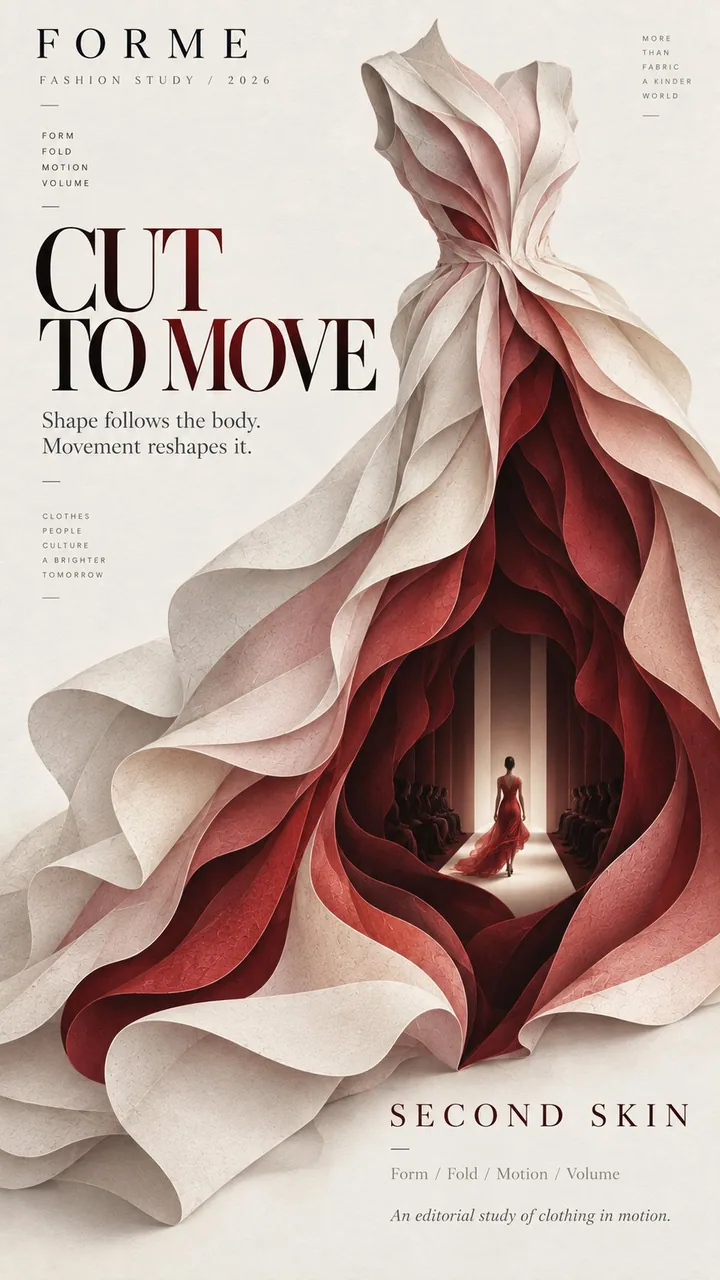
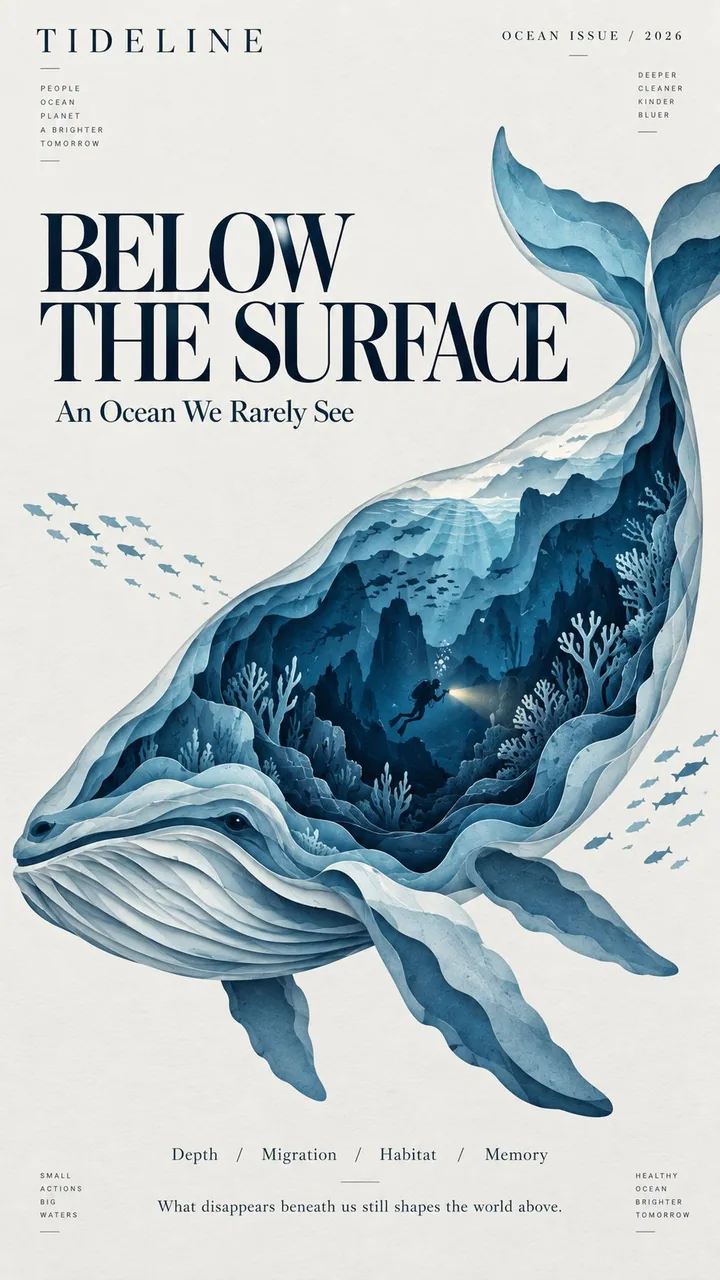
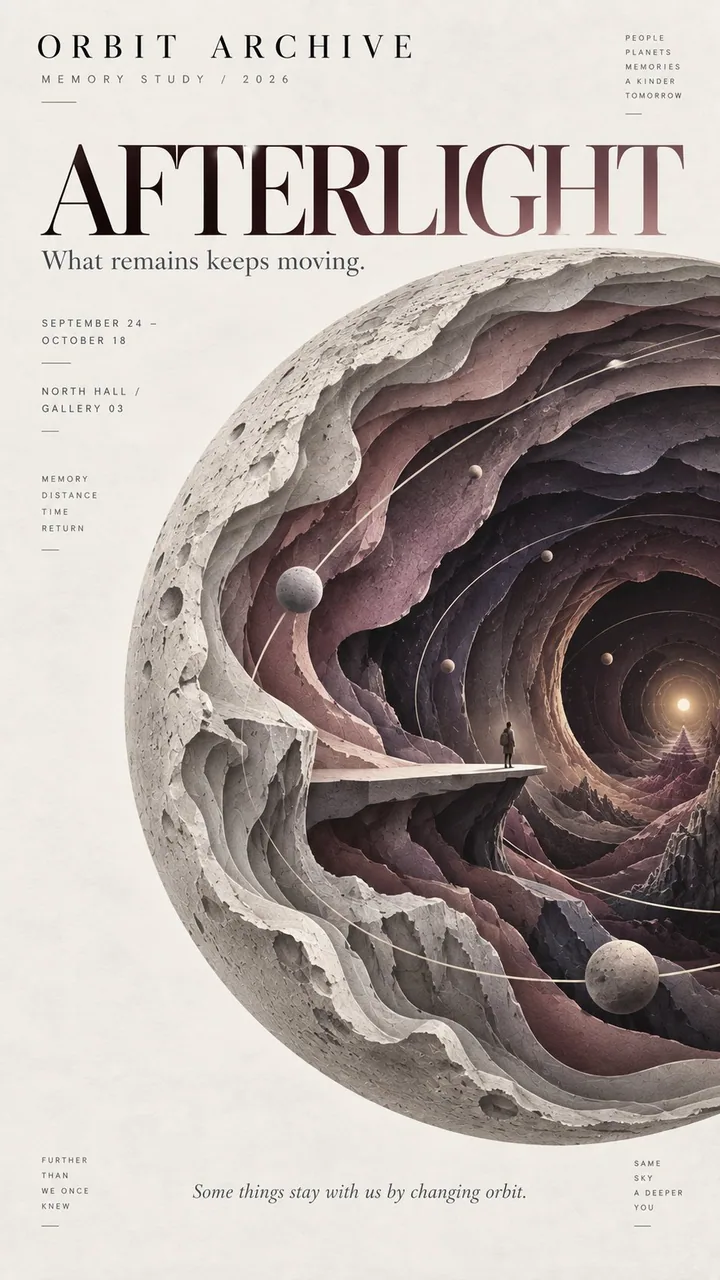
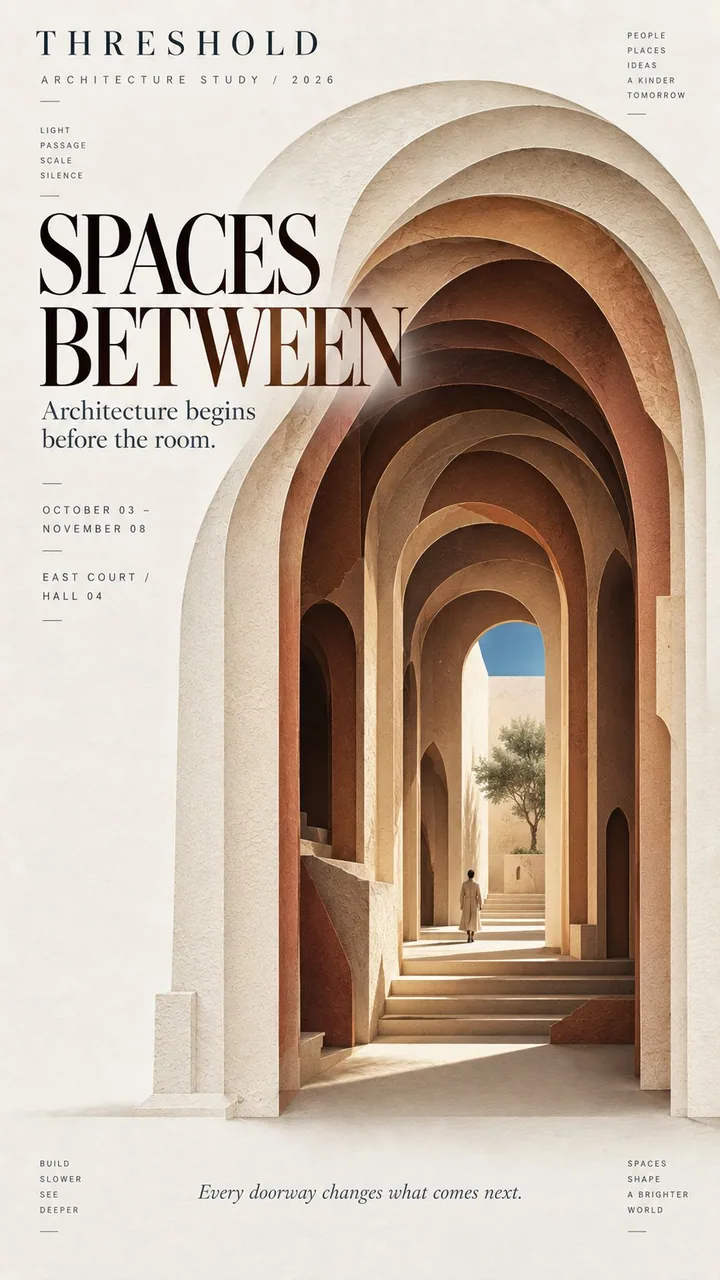
提示词
Theme: {fashion / ocean / memory / architecture / other}
Title: {main title}
Main silhouette: {dress / whale / planet / arch / other bold shape}
Inner world: {runway / deep ocean / memory space / courtyard / other scene}
Color palette: {3–5 restrained colors}
Editorial tone: {fashion / cultural / artistic / architectural}
Aspect ratio: 9:16

Create a refined layered paper-cut editorial poster built around one bold, instantly recognizable silhouette.

Let the main silhouette occupy around 60–70% of the composition. Inside it, create 6–9 layers of cut paper that gradually open into a deeper space. Each layer should follow the overall shape while changing naturally in scale, direction, and contour. Avoid perfectly even or mechanical concentric layers.

At the deepest point, reveal a small narrative scene related to the theme, such as a runway, underwater world, observation platform, courtyard, or another meaningful environment. Add one very small human figure when appropriate to create scale and a sense of discovery.

Use matte art-paper textures, clean cut edges, subtle natural paper fibers, and soft shallow shadows between layers. Keep the result visually flat and editorial rather than heavy 3D, foam-board, plastic, or CGI.

Use a restrained palette of 3–5 colors, moving from lighter outer layers to deeper, darker inner layers. Keep colors clean, solid, and consistent rather than using digital gradients or distressed textures.

Leave generous negative space for typography. Use a clear editorial hierarchy with one strong title, a small project or issue name, and only a few supporting details. The typography should feel like an art magazine, exhibition poster, fashion editorial, or cultural publication.

The visual rhythm should be: bold silhouette first, layered depth second, hidden inner world third.

From a distance, the poster should read as one strong shape. Up close, the viewer should discover the layered paper structure and the small world hidden inside.
中文译文
主题:{时尚 / 海洋 / 记忆 / 建筑 / 其他}
标题:{主标题}
主体剪影:{连衣裙 / 鲸鱼 / 星球 / 拱门 / 其他醒目形状}
内部世界:{T 台 / 深海 / 记忆空间 / 庭院 / 其他场景}
配色:{3–5 种克制的颜色}
编辑调性:{时尚 / 文化 / 艺术 / 建筑}
宽高比:9:16

围绕一个醒目、一眼就能辨认的剪影,创作一张精致的多层剪纸编辑海报。

让主体剪影占据构图的约 60–70%。在它内部,制作 6–9 层剪纸,逐层向更深处敞开。每一层都应遵循整体外形,同时在尺度、方向和轮廓上自然变化。避免完全均匀或机械的同心层。

在最深处,露出与主题相关的小型叙事场景,例如 T 台、水下世界、观景平台、庭院或其他有意味的环境。适当加入一个极小的人物,以营造尺度感与发现感。

使用哑光艺术纸纹理、干净的裁切边缘、微妙的自然纸纤维,以及层与层之间柔和的浅阴影。整体保持视觉上的平面感与编辑感,而不是厚重的 3D、泡沫板、塑料或 CGI 质感。

使用 3–5 种克制的颜色,由较浅的外层过渡到更深、更暗的内层。颜色保持干净、纯色、统一,而不要使用数字渐变或做旧肌理。

为字体排印留出充裕的留白。采用清晰的编辑层级:一个有力的标题、一个小的项目或期号名称,以及仅少量辅助信息。字体排印应让人感觉像艺术杂志、展览海报、时尚大片或文化出版物。

视觉节奏应为:先醒目的剪影,再层叠的纵深,最后是隐藏的内部世界。

远看时,海报应读作一个强烈的形状。近看时,观者应发现层叠的纸结构,以及藏在其中的小世界。
溯源
- 原作者
- MrLarus
- 发布日期
- 2026-09-11
- 原始出处
- 查看原帖 ↗
- 收录来源
- xianyu110/awesome-gpt-image2.5 · 2098408977008676918 · MIT