叠穿コーデ 全套可替换 prompt
日系叠穿长文配方,单品可拆换。电商穿搭图与小红书 OOTD 直接改货号。
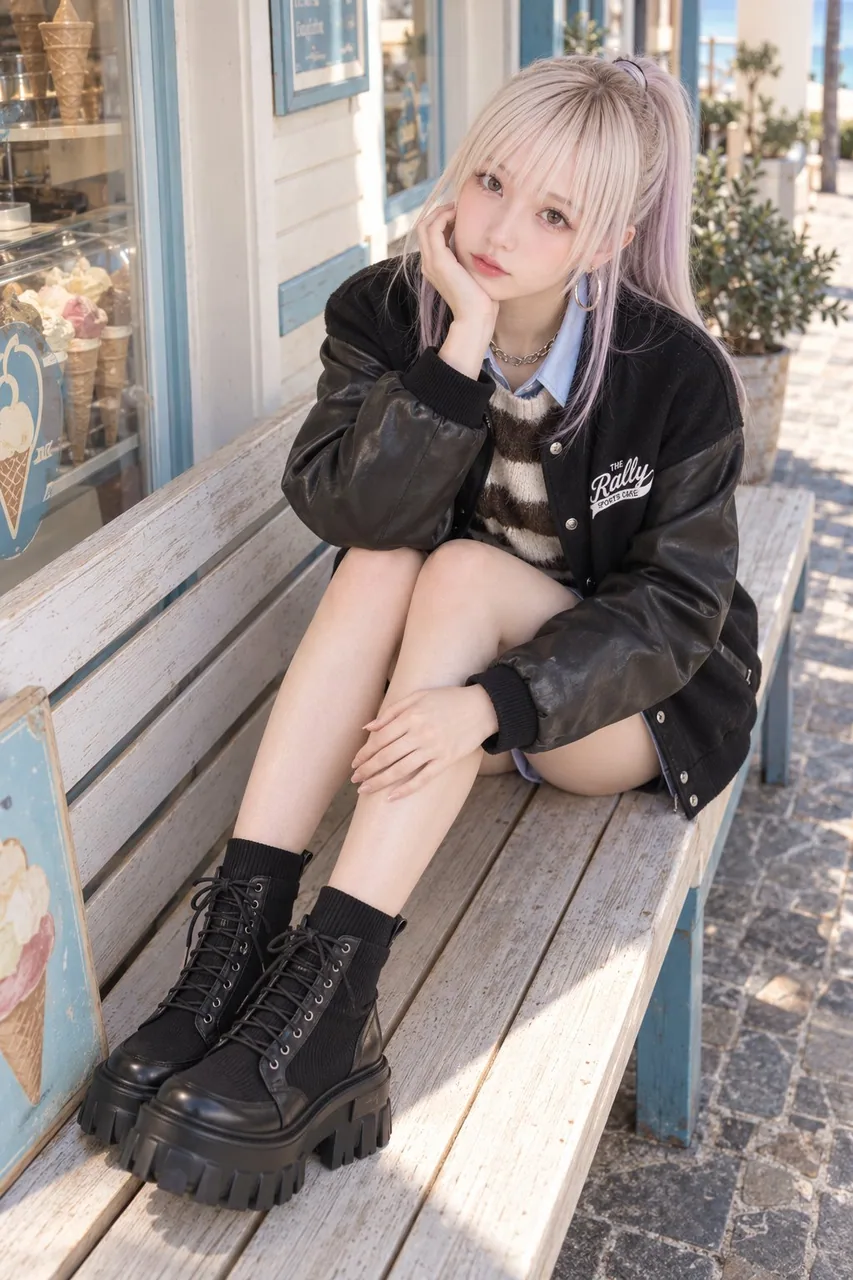
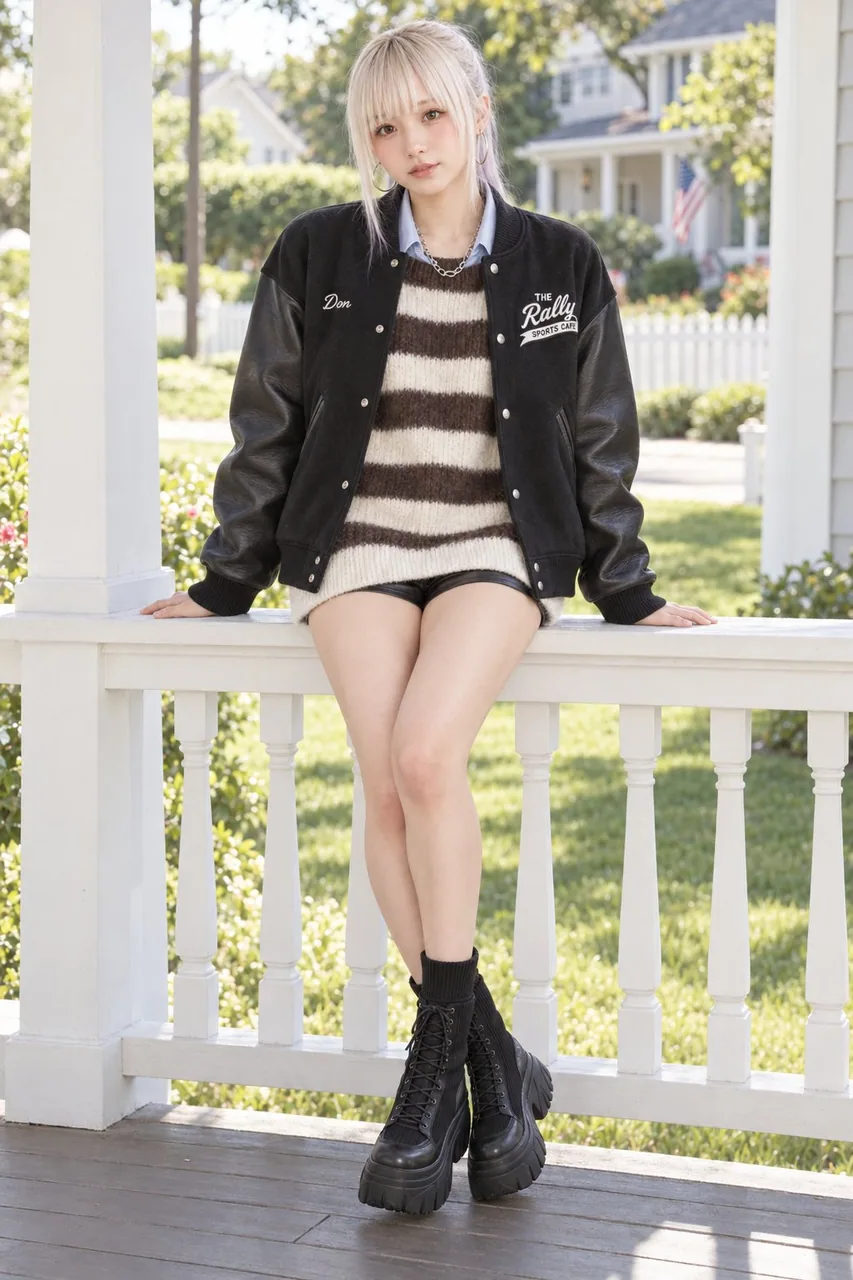
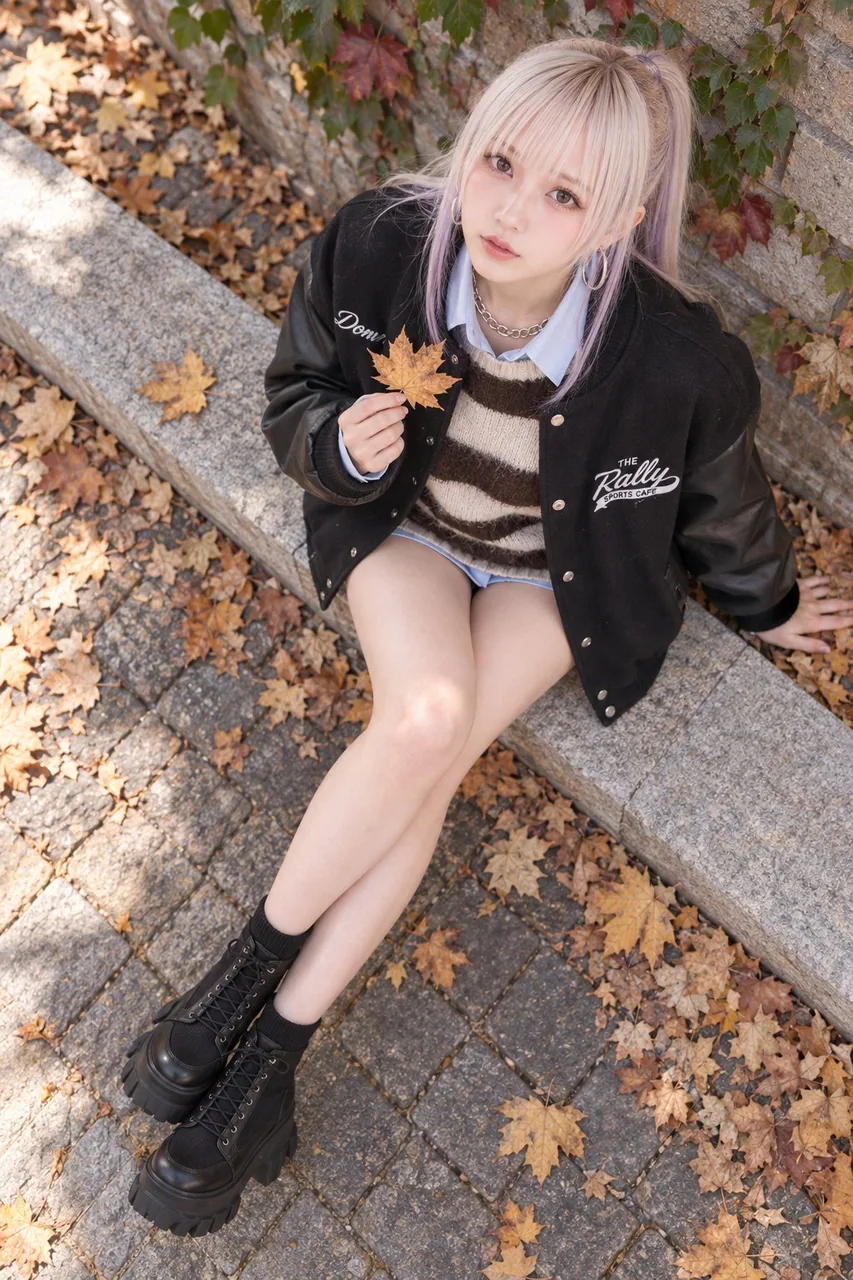
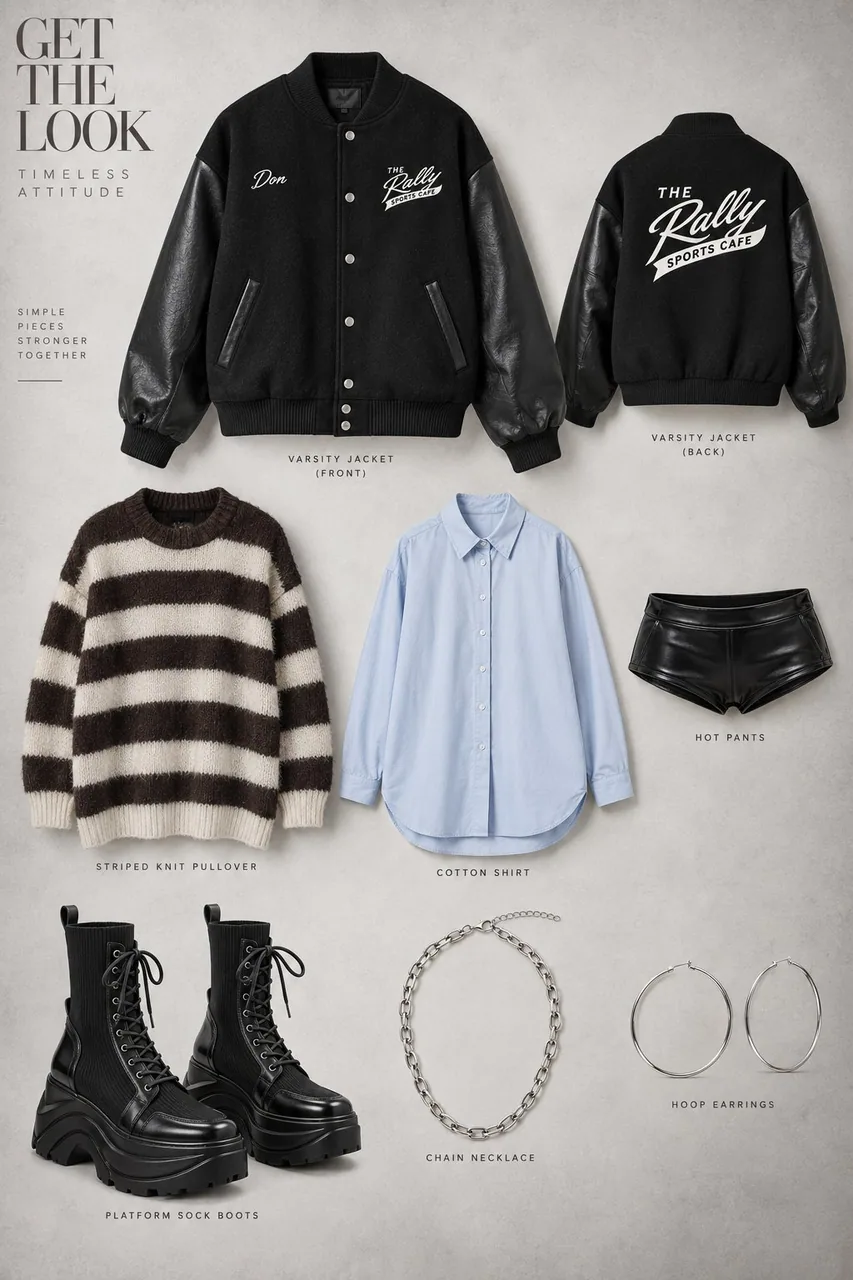
提示词
Photorealistic fashion portrait of a single adult woman, vertical 2:3, strongly person-dominant.

POSE AND LEG GEOMETRY:
Sit lengthwise on a deep storefront bench. Keep the pelvis toward frame-right and extend both lower legs forward along the seat toward frame-lower-left.
The knees stay close together and bent, but both ankles are placed well forward of the knees instead of tucked underneath them.
Keep the knees in front of the lap rather than pulled back against the chest.
Show long descending shin lines: each knee-to-ankle segment slopes approximately 25–35 degrees toward frame-left from image vertical.
Both feet rest fully on the bench top, with complete sole contact and visible seating surface beneath them. Keep the feet inside the seat perimeter rather than hanging over its front.
Preserve natural anatomy and the rounded knee bends; do not substitute completely straight legs.

ANATOMICAL LEFT/RIGHT LOCK:
Keep the anatomical left leg nearer the camera and on frame-right within the pair. Keep the anatomical right leg farther from the camera and on frame-left.
Both legs remain uncrossed. The left foot sits slightly farther forward, appearing slightly lower in the image.
Rest the anatomical right elbow on the right knee through a slight forward torso inclination. The right palm supports the right cheek.
Gently tilt the head toward anatomical right, with a calm direct gaze.
The anatomical left forearm drapes diagonally across the knees; the left hand rests along the anatomical right shin, fingers directed toward the right ankle.
Do not mirror, reverse, or exchange these relationships.

CAMERA AND COMPOSITION:
Full-frame camera with a 45mm rectilinear lens.
Camera height approximately 1.60 meters and horizontal distance approximately 1.90 meters from the hips.
Front-left-quarter viewpoint, approximately 35 degrees toward anatomical left from frontal. Photograph across the bench’s outer long side, not straight along the legs.
Downward pitch approximately 24 degrees; roll 0 degrees; optical axis near the waist.
Keep the bench running from lower-left foreground to upper-right background.
Include the full seated figure and both feet at approximately 86–90% of frame height.
Aperture f/5.6, shutter 1/320 sec, ISO 200. Focus on the eyes, with both lower-leg directions and sole-to-seat contacts clearly readable.

WARDROBE-VISIBILITY NON-OPTIMIZATION:
Do not modify knee bends, forward leg extension, foot contacts, arm positions, torso orientation, camera azimuth, height, pitch, focal length, crop, or scale to reveal clothing, footwear, accessories, graphics, or hardware. Preserve natural concealment and original detail placement. Do not rotate the feet for display. The setting must fit the pose.

BACKGROUND AND LIGHTING:
A seaside gelato-shop veranda with a deep wooden or painted bench, pale cream walls, airy coastal trim, a large shop window, and restrained glimpses of blue sky and greenery at the arcade edge. Keep the coastal setting secondary rather than opening into a landscape. Clean coastal daylight and soft sky fill illuminate the face. Background signs are fictional and unreadable.PROTECTED WARDROBE RULE — HIGHEST PRIORITY: Treat each garment description below as its immutable final product identity. Preserve construction, parts, hardware, material, pattern, and every registered graphic or marking—its surface, side, orientation, scale, colors, content, spelling, and count. FINAL WORN STATE overrides only the scoped item's use, position, side, orientation, fastening, layering, folds, tucks, knots, and drape. A SOURCE GARMENT label describes the unstyled item, never the completed silhouette. Do not redesign, add, remove, mirror, duplicate, relocate, or redraw protected details.

Wardrobe:

Hair — final selected state: HAIR GEOMETRY AUTHORITY — Every selected axis below replaces the source hair geometry only on that axis; retain source geometry only for axes explicitly set to Preserve.
TEXTURE CHECKSUM — Straight. Form continuous root-to-tip straight strands with natural body and no wave, curl, or coil pattern. At normal portrait scale, smooth straight strand direction with natural body must remain readable across multiple visible strand groups; one gravity or gathering arc is allowed, but repeating S-waves, ringlets, tight coils, and frizz are not. FRINGE — Keep the exact selected fringe visibly straight with natural body; do not add an S-wave, ringlet, or tight coil pattern to it; apply this to every selected-fringe strand without changing its roots, density, coverage, part, direction, route, or endpoint. MAIN HAIR — apply the same texture consistently to every declared visible hair-bearing cut-excluded section, the complete root-to-anchor scalp lead-in, and the arrangement's final visible tail, bun, twist, or other gathered mass. Texture changes strand path and surface relief only; keep the selected cut silhouette, fringe route, arrangement topology, and endpoints, create no hair merely to display texture, and never texture a shaved or scalp-close skin field. Reject a hybrid result in which only a terminal tail, bun, crest, panel edge, or endpoint carries the selected straight texture while another visible hair-bearing domain remains wavy, curly, coily, or frizzy. GATHERED LAYER CHECK — apply straight strand behavior through every scalp-following route, gathered section, braid, tail, bun, or twist surface; do not release reachable hair merely to display underlying layer endpoints.
CUT VISUAL TARGET — RELEASED SOURCE REFERENCE FOR FULL ARRANGEMENT — Medium layers: Length — collarbone perimeter; Front — shorter jaw-to-upper-neck layer endpoints; Side — intermediate shoulder-side endpoints; Rear — connected upper-neck-to-collarbone progression; Dominant perimeter weight — lower collarbone length remains visible; Layer topology — connected increasing layers with readable front, side and rear endpoints.
FULL ARRANGEMENT CUT VISIBILITY — The released cut geometry is not a competing final hairstyle. Hide every released endpoint belonging to arrangement-assigned hair inside the final gathered structure. Keep the exact selected fringe, selected face framing, every cut-specific arrangement-excluded zone, and every scalp-close or shaved field visible exactly as declared; never hide those retained zones merely because the arrangement mode is full.
ARRANGEMENT VISUAL TARGET — Mid ponytail: Final worn silhouette — exactly one full-volume tail emerging from one middle-occipital center-back anchor; Underlying cut priority — CUT VISUAL TARGET and Cut describe only the source strand lengths and layer topology when fully released before styling; this full arrangement controls the final visible silhouette, so no arrangement-assigned released endpoint may remain visible merely to display the cut, length, or texture; Arrangement mass priority — include every physically reachable arrangement-assigned strand in the declared structure; no reachable assigned hair may remain as an undeclared parallel loose mass; Loose-hair boundary — outside the final gathered structure permit only the exact selected fringe, the exact selected face-framing sections, only structural zones explicitly excluded by the cut-specific arrangement scope, only selected-cut layers genuinely unable to reach their required anchor or local braid pickup; Every exception must stay inside its declared rooted cut zone and must not recreate a duplicate loose version of arrangement-assigned hair, a parallel long curtain, or an undeclared second mass; Reject — a high top-knot, low nape anchor, second tail, loose underlayer, parallel rear curtain, or detached tail; Straight texture — permitted loose exceptions and gathered lead-ins remain straight, with no S-wave, curl, or rippled loose sheet.
Front sections: Fringe — Form a sparse airy fringe from fine separated strands across the forehead, keeping the eyebrows readable and avoiding one solid blunt edge. Keep all wispy strands on the forehead; none becomes a separate face-framing tendril. Face framing — Release exactly one narrow continuous section rooted at each temple and curve it beside the corresponding temple or cheek, ending no lower than the jaw within the selected haircut's available length; create no additional wisps. Keep every face-framing section outside the hair assigned to the Mid ponytail and independently rooted from its main routed structure. Root ownership — The fringe uses only the frontal hairline zone; selected face-framing uses one separate narrow temple-rooted band; all other roots remain in the main cut.
Preserve the natural hairline and exact source hair colors, including roots, highlights, lowlights, accents, and gradients; preserve all unselected hair attributes.
Cut: RELEASED SOURCE REFERENCE FOR FULL ARRANGEMENT — When released, form connected collarbone-length medium layers. Keep the longest lower perimeter at both collarbones; let shorter crown and upper-side layers end around the jaw and upper neck, then pass through intermediate shoulder-side and rear tips in one readable cascade into the collarbone edge. Preserve balanced crown lift, visible jaw-to-upper-neck and shoulder transitions, and a softly weighted collarbone perimeter in the front, sides, and rear. Do not flatten the cut into a one-length lob or turn it into a choppy shag, wolf cut, or pointed nape. Keep one naturally rooted haircut with no retained longer source underlayer, extension, wig edge, or duplicate hair mass.
Arrangement: Arrangement-assigned hair excludes the exact selected fringe and selected face-framing sections. For this varied-length cut, assign every arrangement-assigned strand within the geometry-declared source that can reach its corresponding declared hairstyle anchor from its own root; evaluate reachability to that anchor, not against the complete route or the final tail, braid, bun, or twist length. Keep only strands genuinely too short to reach their corresponding anchor at their selected rooted zones, without extending or reclassifying them; those exceptions must not recreate a duplicate loose version of arrangement-assigned hair, a parallel long curtain, or an undeclared second mass. Use all arrangement-assigned hair; draw both sides symmetrically backward along the scalp toward the middle occipital area. At the hairstyle anchor, use one center-back anchor halfway between the nape hairline and crown apex; let exactly one tail emerge continuously from that base. leave no other free side or back section; create no high top-knot, low nape anchor, second tail, loose underlayer, or detached tail. The route, anchor, result, free-section, and integrity clauses apply only to arrangement-assigned hair; keep every cut-excluded structural zone in the final haircut state declared above.
Measure the selected length on fully extended strands only to calculate underlying source mass and route reachability before gathering; do not compensate for wave, curl, or coil shrinkage when calculating that source mass; the full arrangement, not the released endpoints, controls the final visible silhouette.
Apply the selected texture within the declared arrangement; do not release gathered hair merely to display length or texture.

Outerwear / layers:

A relaxed hip-length black varsity jacket with a dense matte wool-blend body, dropped shoulders and full black leather sleeves with a supple, softly grained sheen. A low black rib-knit stand collar, ribbed cuffs and a broad ribbed waistband frame the boxy shape. Silver-tone snaps close the front, with a closely spaced lower pair at the waistband, and diagonal welt pockets sit at both sides. Small white cursive embroidery reading "Don" sits on the wearer's right chest. The left chest carries a compact white composition reading "THE" above "Rally" in flowing slanted script; the terminal stroke sweeps into a white underline ribbon containing black serif capitals reading "SPORTS CAFE", with a split pointed tail at the ribbon's left end. The same composition appears much larger across the upper back, surrounded by generous black space. Smooth black satin lining completes the interior.

Final worn state:
- Layering: Final state: keep this garment the complete outer layer over the second selected Top item; open only its original center-front fastening run within existing endpoints. Preserve source neckline, collar, front/rear panels, selected shoulder, sleeve, and body positions, plus fastening inventory, receiver mapping, order, spacing, endpoints, and placket length; add, remove, move, or extend nothing. FINAL FASTENING STATE: change only the source-registered primary closure mechanism inside its exact original endpoints. Preserve that mechanism, all original parts, its source length, and the garment construction beyond both endpoints; do not reinterpret a seam, fold, rib, placket, or panel edge as an extension, and add, duplicate, remove, or relocate nothing. Only layer order, contact, occlusion, and optical transmission change. Every visible garment boundary follows the outer item's source geometry or separately selected fold-return line; inner contours remain optically behind it. Keep panel contact shallow. Relaxed handling within this same operation: Use light stable contact and broader material-correct ease without changing the selected layer order.

Top:

An oversized long crew-neck pullover in thick, loosely knitted mohair-blend yarn with a soft shaggy halo and visible stockinette stitches. The straight relaxed body reaches the upper thighs, with dropped shoulders and roomy long sleeves. Ten broad horizontal bands alternate dark chocolate brown and ivory across the torso in approximately equal widths, starting with a brown band interrupted by the neckline and ending with ivory at the hem. The same stripe scale continues around the back and along the sleeves, with softly feathered color boundaries. A brown ribbed crew neck, ivory ribbed cuffs and a broad ivory ribbed hem finish the knit.

A relaxed long light-blue cotton-poplin shirt with a crisp pointed collar on a narrow stand and a full front placket of small pale buttons. The lightly structured woven fabric forms a roomy straight body, long sleeves with buttoned cuffs and a simple back yoke. Rounded shirttails reach the upper thighs, rising at the side seams, with the two front tails separating below the final button. The fabric is plain and smooth throughout.

Final worn state:
For the second item description above only:
- Front closure: Final state: within the original center-front fastening run, disconnect only its upper approximately one-third; keep every original below connected in place. Preserve the source count, type, order, spacing, endpoints, and placket length; never extend the run toward the hem or add, duplicate, remove, or relocate any fastening or receiver FINAL FASTENING STATE: every selected closed position is physically connected to its matching receiver; every selected open position is visibly disconnected, and panel overlap does not imitate a fastening. Preserve the source-defined fastening count, type, spacing, endpoints, and placket length; do not extend the fastening run or add, duplicate, remove, or relocate any fastening or receiver. Change only the selected registered state and leave every unselected component and connection unchanged.
- Layering: Final state: place this garment underneath the first selected Top item across the upper body. the first selected Top item remains the outer garment and retains and owns its exact source neckline aperture and edge, armholes, panel connectivity, closure state, straps, sleeves, and selected final hem or fold-return line. This inner garment contributes appearance only through the outer material's existing optical apertures; no inner contour becomes an outer boundary. Only layer order, contact, occlusion, and optical transmission change. Every visible garment boundary follows the outer item's source geometry or separately selected fold-return line; inner contours remain optically behind it. Keep panel contact shallow. Natural handling within this same operation: Use soft stable contact with limited material-correct ease.

Bottom: Low-rise, close-fitting black hot pants in glossy stretch faux leather, with a smooth contoured waistband, shaped front and back panels, a fitted crotch and very short legs. Narrow stitched hems curve upward at the outer hips and beneath the seat, while subtle seam lines shape the opaque body. A concealed side zipper closes the waistband, keeping the exterior clean and unembellished.

Footwear: A pair of black lace-up platform sock boots with close-fitting rib-knit shafts rising above the ankles and broad ribbed cuffs. The knit continues down the sides and across the vamp beneath smooth black leather-look toe surrounds, heel counters and curved lace facings. Round black laces cross through small loops over knitted tongues, and rear pull tabs assist entry. Rounded closed toes sit above extremely thick black molded soles with sweeping wave-like ridges, angular projecting side blocks, a recessed arch and deep segmented tread. Stretch collars, adjustable lacing and cushioned insoles complete the boots.

Necklace: A silver-tone necklace made from medium-sized rounded oval cable links with open centers and softly polished edges. The links alternate in angle to form a supple, moderately substantial chain that falls in a shallow U at the upper chest. A small rear lobster clasp and short matching extension complete the necklace, with no pendant.

Earrings: A pair of large silver-tone hoop earrings made from slender smooth round wire. The polished circular hoops have open centers and a light, undecorated profile, with small hinged posts closing discreetly at the earlobes.
中文译文
写实风格的时尚人像,画面中仅有一位成年女性,竖构图 2:3,人物高度主导画面。

姿势与腿部几何结构:
沿纵深方向坐在一条较深的店面长椅上。骨盆朝画面右侧,双腿小腿沿座面向前伸展,指向画面左下。
双膝保持并拢且弯曲,但两只脚踝都放在膝盖前方较远处,而不是收在膝盖下方。
让膝盖位于大腿前方,而不是向后收拢贴向胸部。
呈现出向下延展的小腿线条:每一段从膝到踝的线段相对画面垂直线向画面左侧倾斜约 25–35 度。
双脚完全踩在长椅座面上,脚掌整体贴合,脚下可见座面。双脚保持在座面范围内,不要悬在座面前缘外。
保持自然的人体结构和圆润的膝弯,不要改成完全笔直的腿。

解剖学左右锁定:
在两条腿中,解剖学左腿应更靠近镜头并位于画面右侧;解剖学右腿应更远离镜头并位于画面左侧。
双腿保持不交叉。左脚略微更靠前,在画面中显得略低。
躯干略微前倾,让解剖学右肘搭在右膝上。右掌托住右脸颊。
头部朝解剖学右侧轻微倾斜,目光平静直视。
解剖学左前臂斜搭在双膝上;左手贴放在解剖学右小腿上,手指指向右脚踝。
不要镜像、反转或互换这些关系。

相机与构图:
使用全画幅相机搭配 45mm 直线校正镜头。
相机高度约 1.60 米,距髋部水平距离约 1.90 米。
采用左前方四分之三视角,相对正面朝解剖学左侧约 35 度。横跨长椅外侧长边拍摄,不要沿双腿方向正对拍摄。
俯仰角向下约 24 度;滚转 0 度;光轴对准腰部附近。
长椅从画面左下前景延伸至右上背景。
完整纳入坐姿人物与双脚,人物占画面高度约 86–90%。
光圈 f/5.6,快门 1/320 秒,ISO 200。对焦在眼睛上,同时保证两条小腿的朝向与脚掌同座面的接触关系清晰可辨。

服装可见性非优化原则:
不得为了露出服装、鞋履、配饰、图案或五金而改变膝弯、小腿前伸、脚部接触、手臂位置、躯干朝向、相机方位角、高度、俯仰、焦距、裁切或缩放。保持自然的遮挡关系与原始细节位置。不要为了展示而旋转双脚。场景必须服从姿势。

背景与光线:
海边意式冰淇淋店的露台,配一条深色木质或涂漆长椅、浅奶油色墙面、轻盈的海岸风格饰边、一扇大橱窗,拱廊边缘仅隐约露出蓝天与绿植。海岸环境保持为次要元素,不要展开成大景观。干净的海岸日光与柔和的天空补光照亮面部。背景招牌为虚构内容且不可辨认。受保护的服装规则——最高优先级:将下方每一件服装描述视为其不可更改的最终产品身份。保留其结构、部件、五金、材质、图案,以及每一个已登记的图形或标记——包括其表面、所在侧、方向、比例、颜色、内容、拼写与数量。最终穿着状态仅覆盖该条目范围内的用途、位置、所在侧、方向、扣合、叠穿、褶皱、塞入、打结与垂坠方式。SOURCE GARMENT(源服装)标签描述的是未做造型的单品,绝不是最终轮廓。不得重新设计、添加、删除、镜像、复制、移动或重绘受保护的细节。

服装:

头发 — 最终选定状态:头发几何结构权威设定 — 下方每一个被选定的轴向只在该轴向上替换源头发几何结构;仅对明确设为“保持”(Preserve)的轴向保留源几何结构。
纹理校验 — 直发。形成从发根到发梢连续的直发发丝,具有自然厚度,无波浪、卷曲或螺旋纹理。在正常肖像比例下,顺直的走向配合自然厚度必须在多个可见发束组中都清晰可辨;允许出现一处受重力或束发形成的弧线,但不允许重复的 S 形波浪、小卷、紧密螺旋卷与毛躁。刘海 — 保持所选刘海的精确形态,可见地顺直并具有自然厚度;不要给刘海添加 S 形波浪、小卷或紧密螺旋卷;将此应用于每一根所选刘海发丝,不改变其发根、密度、覆盖范围、分缝、方向、走向或端点。主发区 — 对每一处已声明的、可见且承载头发的“剪发排除”区域、从发根到锚点的整段贴头皮过渡区,以及造型最终可见的马尾、丸子、扭发或其他收拢发团,一致地应用相同纹理。纹理只改变发丝路径与表面起伏;保持所选剪发轮廓、刘海走向、造型拓扑结构与端点,不要仅为展示纹理而生成头发,也绝不要对剃光或贴头皮的皮肤区域做发丝纹理。拒绝混合结果:只有末端尾发、丸子、冠状束、发片边缘或端点带有选定的直发纹理,而另一处可见的含发区域仍为波浪、卷曲、螺旋卷或毛躁。收拢层检查 — 在每一段贴头皮走向、收拢区、编发、马尾、丸子或扭发表面都应用直发行为;不要仅为展示下层发层端点而放出可达的头发。
剪发视觉目标 — 完整收拢造型下的散开源参照 — 中长层次:长度 — 锁骨线轮廓;前侧 — 较短的从下颌到上颈部层次的端点;侧部 — 介于两者之间的肩侧端点;后侧 — 由上颈部到锁骨相连的渐进过渡;主导轮廓重量 — 锁骨下方长度保持可见;层次拓扑 — 相连的递增层次,前、侧、后端点清晰可辨。
完整收拢造型下的剪发可见性 — 散开的剪发几何结构不是与之竞争的另一款最终发型。将属于收拢造型所指派头发的每一个散开端点隐藏在最终收拢结构内部。精确保持所选刘海、所选面部修饰发、每一个剪发专属的造型排除区,以及每一处贴头皮或剃光区域,与声明完全一致地可见;绝不要仅仅因为造型模式为“完整收拢”就隐藏这些保留区域。
造型视觉目标 — 中马尾:最终穿着轮廓 — 从枕骨中部正后方的一个锚点只伸出一条饱满发量的马尾;底层剪发优先级 — 剪发视觉目标与剪发描述仅在造型前完全散开时描述源发丝长度与层次拓扑;该完整收拢造型决定最终可见轮廓,因此不能让任何属于收拢造型的散开端点仅仅为了展示剪发、长度或纹理而保持可见;收拢发量优先级 — 将每一根物理上可达的收拢指派发丝都纳入声明的结构中;任何可达的指派头发都不得作为未声明的平行松散发团留存;散发边界 — 在最终收拢结构之外,只允许精确的所选刘海、精确的所选面部修饰发区、剪发专属造型范围明确排除的结构区,以及所选剪发层次中确实无法到达其所需锚点或局部编发抓取点的部分;每一处例外都必须留在其已声明的发根剪发区内,且不得重新制造出收拢指派头发的重复松散版本、平行的长发帘或未声明的第二个发团;拒绝 — 高丸子头、低颈后锚点、第二马尾、松散内层、平行后发帘或脱离的发尾;直发纹理 — 允许的散发例外与收拢过渡区保持顺直,不得出现 S 形波浪、卷曲或波纹状松散发片。
前区:刘海 — 用细而分离的发丝在前额形成稀疏轻盈的刘海,保持眉毛清晰可见,避免形成一整片厚实的齐平边缘。所有细碎发丝都留在前额上,任何一根都不要变成独立的面部修饰发绺。面部修饰发 — 在两侧太阳穴各放出一束精确的、窄而连续的发束,沿对应太阳穴或脸颊弯曲,在所选发型可用长度内终止位置不低过下颌;不要额外制造细碎发丝。让每一束面部修饰发都位于指派给中马尾的头发之外,并从其主要走向结构上独立生根。发根归属 — 刘海只使用前发际线区域;所选面部修饰发使用一条独立的、以太阳穴为发根的窄发带;其余所有发根都留在主剪发区内。
保持自然发际线与源头发的精确颜色,包括发根、挑染、暗染、点缀色与渐变;保持所有未被选定的头发属性。
剪发:完整收拢造型下的散开源参照 — 散开时形成相连的锁骨长度中长层次。最长的下缘保持在两侧锁骨处;较短的头顶与上侧部层次在下颌与上颈部附近结束,再经由肩侧与后侧的中间发梢,以一串清晰可辨的层叠过渡汇入锁骨边缘。保持头顶蓬松度均衡、下颌到上颈部与肩部的过渡可见,以及前、侧、后三面锁骨轮廓的柔和重量感。不要把发型压平成一刀切的长波波头,也不要变成参差不齐的碎层 shag(长碎层)、狼尾剪(wolf cut)或尖细的颈后发尾。保持一款自然生根的剪发,不得保留更长的源内层、接发、假发边缘或重复的发团。
收拢造型:收拢指派头发不包括精确的所选刘海与所选面部修饰发区。对于这款长度不一的剪发,在几何结构所声明的源发中,将每一根能够从自身发根到达其对应已声明发型锚点的发丝都纳入指派;可达性以该锚点为判断标准,而不是以完整走向或最终马尾、编发、丸子或扭发的长度为标准。只在各自所选发根区内保留确实短到无法到达对应锚点的发丝,不得拉长或重新归类它们;这些例外不得重新制造出收拢指派头发的重复松散版本、平行的长发帘或未声明的第二个发团。使用全部收拢指派头发;将两侧沿头皮对称地向后梳向枕骨中部区域。在发型锚点处,使用一个位于颈后发际线与头顶最高点正中间的正后方锚点;从该基座连续地只伸出一条马尾。不要留下其他自由散落的侧区或后区;不要制造高丸子头、低颈后锚点、第二马尾、松散内层或脱离的发尾。走向、锚点、结果、自由发区与完整性条款仅适用于收拢指派头发;将每一处剪发排除的结构区保持为上方声明的最终剪发状态。
仅在完全拉直的发丝上测量所选长度,以在收拢前计算底层源发量与走向可达性;计算该源发量时不要补偿波浪、卷曲或螺旋卷造成的缩短;决定最终可见轮廓的是完整收拢造型,而不是散开的端点。
在声明的收拢造型内应用所选纹理;不要仅为展示长度或纹理而放出已收拢的头发。

外套 / 叠穿层:

一件宽松的及臀黑色学院风夹克(varsity jacket),衣身采用厚实的哑光羊毛混纺面料,落肩设计,整条袖子为黑色皮革,质地柔软、带有细腻的粒面光泽。低矮的黑色罗纹立领、罗纹袖口与宽幅罗纹下摆勾勒出方正廓形。银色按扣闭合前襟,下摆处有一对间距较近的按扣,两侧各有一个斜向嵌线口袋。穿着者右胸有一处白色小字草写刺绣,内容为 "Don"。左胸有一组紧凑的白色图案文字:上方为 "THE",下方为流畅斜体手写体的 "Rally";末笔扫出并延展成一条白色下划线绶带,绶带内为黑色衬线大写字母 "SPORTS CAFE",绶带左端有一个分叉的尖角尾。同一组图案以更大尺寸出现在上背部,四周留有大面积黑色空白。内部以光滑的黑色缎面里布收尾。

最终穿着状态:
- 叠穿:最终状态:在第二件所选上装之外,将本件作为完整的外层;仅在原有前中扣合行程的既有端点范围内将其打开。保持源领口、衣领、前/后片、所选肩部、袖子与衣身位置,以及扣合件清单、对应扣位映射、顺序、间距、端点与门襟长度;不得增加、移除、移动或延长任何部分。最终扣合状态:仅在精确的原始端点范围内改变源登记的主闭合机构。保持该机构、所有原始部件、其源长度以及两端点之外的服装结构;不要把接缝、褶裥、罗纹、门襟或衣片边缘重新解释为延长部分,也不得增加、复制、移除或移动任何部件。只有叠穿顺序、接触、遮挡与光学透射发生变化。每一处可见的服装边界都遵循外层单品的源几何结构或另行选定的翻折线;内层轮廓在光学上仍位于其后方。保持衣片接触浅薄。同一操作内的松弛处理:使用轻微而稳定的接触与更宽裕的、符合材质的活动量,不改变所选叠穿顺序。

上装:

一件超大版型的长款圆领套头毛衣,采用粗支、松散编织的马海毛混纺纱线,带有柔软的蓬毛光晕与清晰可见的平针针目。平直宽松的衣身垂至上大腿,落肩设计,袖子宽松且偏长。躯干上有十条宽幅横向条纹,深巧克力棕与象牙白以大致相等的宽度交替;起始的棕色条纹被领口打断,下摆以象牙白结束。相同的条纹比例延续到背后与袖子,颜色交界处柔和羽化。棕色罗纹圆领、象牙白罗纹袖口与宽幅象牙白罗纹下摆完成整件针织衫。

一件宽松的长款浅蓝色棉质府绸衬衫,窄立领座上配有挺括的尖领,前襟为完整门襟,缀有一排浅色小纽扣。略带骨架感的梭织面料形成宽松平直的衣身、带纽扣袖口的长袖与简洁的后过肩。圆弧形衬衫下摆垂至上大腿,在侧缝处上提,前襟两片下摆在最下方纽扣之下分开。整件面料素净光滑。

最终穿着状态:
仅针对上方第二件单品的描述:
- 前襟闭合:最终状态:在原有前中扣合行程内,仅断开上方约三分之一;下方每一处原有扣合保持连接原位。保持源扣合数量、类型、顺序、间距、端点与门襟长度;绝不要将扣合行程向下摆方向延长,也不得增加、复制、移除或移动任何扣合件或扣位。最终扣合状态:每一个所选闭合位置都与其对应扣位物理连接;每一个所选打开位置都可见地断开,且衣片重叠不得伪装成扣合。保持源定义的扣合数量、类型、间距、端点与门襟长度;不要延长扣合行程,也不得增加、复制、移除或移动任何扣合件或扣位。只改变所选登记状态,保持每一处未选部件与连接不变。
- 叠穿:最终状态:将本件穿上身时置于第一件所选上装之下。第一件所选上装仍为外层衣物,并保留且拥有其精确的源领口开口与边缘、袖窿、衣片连接关系、闭合状态、肩带、袖子,以及所选最终下摆或翻折线。本内层单品仅通过外层材质既有的光学开口贡献外观;任何内层轮廓都不会成为外边界。只有叠穿顺序、接触、遮挡与光学透射发生变化。每一处可见的服装边界都遵循外层单品的源几何结构或另行选定的翻折线;内层轮廓在光学上仍位于其后方。保持衣片接触浅薄。同一操作内的自然处理:使用柔和稳定的接触与有限的、符合材质的活动量。

下装:低腰紧身黑色热裤,采用有光泽的弹力仿皮材质,配平滑贴合的腰头、经过塑形的前后片、贴合的裆部与极短的裤腿。窄幅车缝下摆在髋外侧与臀下向上弯起,细微的缝线勾勒出不透光的衣身。隐藏式侧拉链闭合腰头,使外观保持干净无装饰。

鞋履:一双黑色系带厚底袜靴(sock boots),贴合脚踝的罗纹针织靴筒向上延伸,配有宽幅罗纹靴口。针织面料沿两侧向下延伸并覆盖鞋面中部,其上覆有光滑的黑色仿皮包头、后跟稳定片与弧形系带片。圆形黑色鞋带穿过针织鞋舌上方的小环交叉系合,后跟拉环便于穿入。圆润的封闭鞋头位于极厚的黑色模压鞋底之上,鞋底带有流畅的波浪状凸脊、棱角分明的侧向凸块、内凹的足弓与深的分段式大底纹路。弹性靴口、可调节系带与缓震鞋垫构成整双靴子。

项链:一条银色项链,由中等大小的圆润椭圆形电缆链环构成,链环中心镂空、边缘经柔和抛光。链环以交替角度相接,形成柔软且略有分量的链条,在上胸处呈浅 U 形垂落。后方配有一个小型龙虾扣与一段短的配套延长链,无吊坠。

耳环:一对大号银色圈形耳环,由纤细光滑的圆线制成。抛光圆环中心镂空,轮廓轻盈且无装饰,小型铰链耳针在耳垂处低调闭合。
溯源
- 原作者
- MoodLock_JP
- 发布日期
- 2026-09-10
- 原始出处
- 查看原帖 ↗
- 收录来源
- xianyu110/awesome-gpt-image2.5 · 2097937963523145829 · MIT